From Connection to Completion: Advancing High School Graduation in Salt Lake City
Overview
Promise Partnership Utah is aligning resources and relationships to ensure every student graduates prepared.
Promise Partnership Utah’s team, Granite School District, and two Promise Communities — Promise South Salt Lake and Millcreek Promise — are committed to an ambitious shared goal known as the 100% Promise. The goal aims to ensure that 100% of students in South Salt Lake and West Millcreek graduate high school with a career plan and have their basic needs met by 2028.
-
Community partnership fuels success
School districts, nonprofits, philanthropy, businesses and community members are coordinating approaches for stronger impact.
-
Targeted strategies meet student needs
Partners supported students to overcome obstacles beyond academics and increased access to tutoring, extracurriculars and mentorship.
-
Wins for refugee students show what’s possible
Graduation rates for refugee students at one school rose from below 50% to above 90%.
National Background
High school graduation is a critical milestone on the path to economic mobility. Finishing high school leads to stronger employment and earnings outcomes. In 2024, workers without a high school diploma had the highest unemployment rate at about 6.2%, compared with lower unemployment rates for workers with higher levels of education, according to federal labor data. Graduation is also linked to better health and wellbeing. National public health research from the U.S. Department of Health and Human Services shows that adults who complete high school are more likely to report good health, experience lower rates of chronic disease and live longer than those who do not. These benefits extend across generations: when more adults complete high school, their children are more likely to succeed academically and experience stronger social outcomes.
High school graduation is critical for kids’ future economic success, but it’s not the destination.
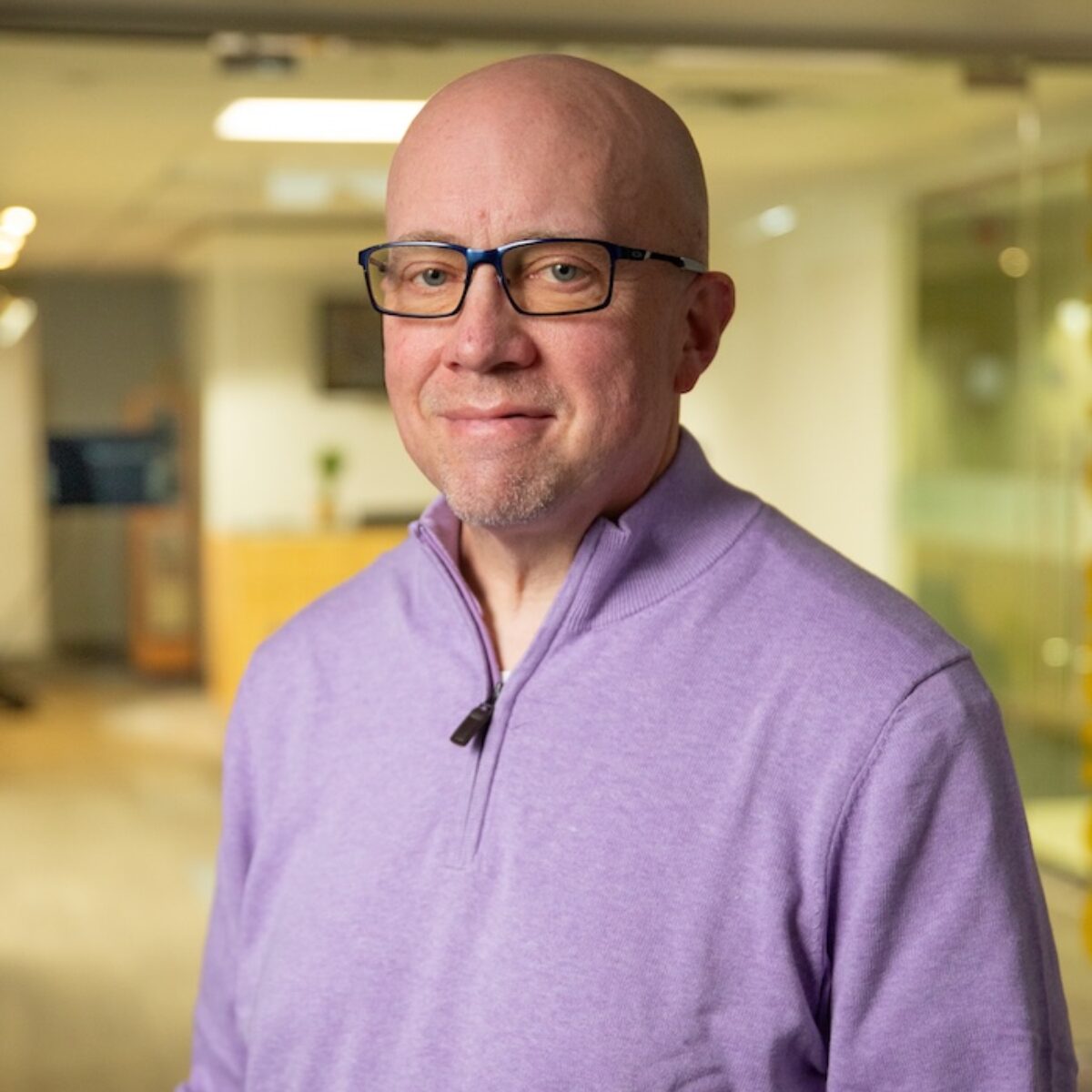
Bill Crim, president and CEO of United Way of Salt Lake and Utah’s Promise
Salt Lake City, Utah
Local Context
These national patterns are reflected locally. In Salt Lake City, Utah, high school graduation is a key gateway outcome within the cradle-to-career continuum, shaping access to postsecondary education, workforce opportunities and long-term stability. Promise Partnership Utah leads this work as the region’s place-based partnership, bringing together school districts, cities, nonprofits, philanthropy, businesses and community members to advance economic mobility for children and families.
As a member of the StriveTogether Cradle to Career Network, the partnership applies the StriveTogether Theory of Action to align systems, use shared data to drive decisions and coordinate action for population-level results. Through the Network, Promise Partnership Utah also benefits from coaching and peer learning alongside 70 communities nationwide, strengthening its ability to accelerate progress on high school graduation.
In 2023, Promise Partnership Utah’s backbone team, Granite School District, and two Promise Communities — Promise South Salt Lake and Millcreek Promise — committed to an ambitious shared goal known as the 100% Promise. The goal aims to ensure that 100% of students in South Salt Lake and West Millcreek graduate high school with a career plan and have their basic needs met by 2028.
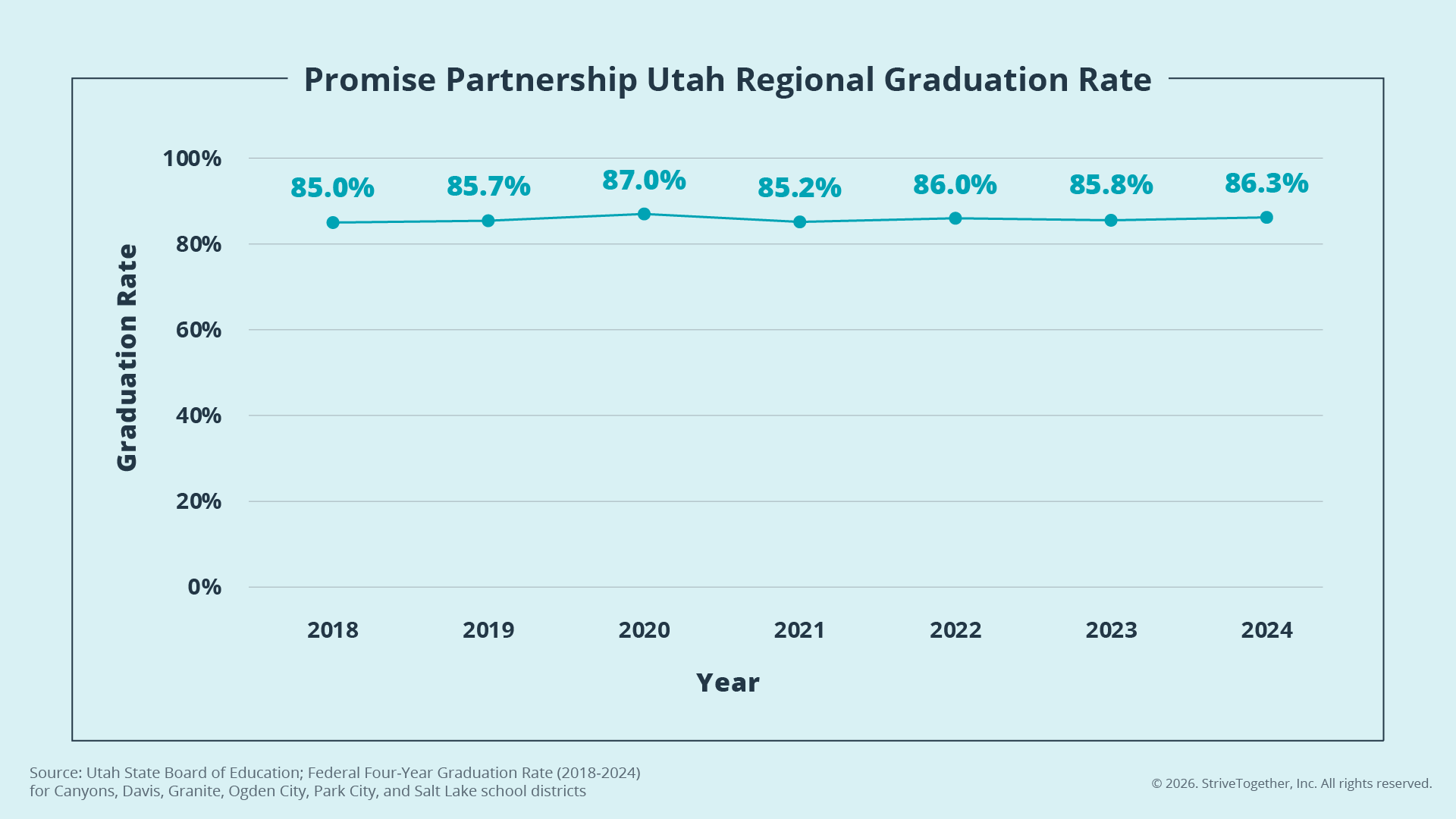
Across the Salt Lake region, graduation data shows modest improvement over time, but progress has been incremental. The Promise Partnership Utah region’s four-year graduation rate increased from 85.0% in 2018 to 86.3% in 2024, reaching its highest point in 2020 at 87.0%. Overall, rates have fluctuated within a narrow range, underscoring how difficult it is to improve graduation outcomes at scale without targeted, aligned strategies. In response, partners are focusing on coordinated approaches that strengthen the path to graduation for every student.
When Systems Align, Graduation Improves
District-level data from the Utah State Board of Education shows that while graduation rates have slowly increased in recent years, many communities have seen little change over time. These trends highlight the limits of isolated efforts and point to the need for more coordinated, system-level approaches. Graduation outcomes affect more than individual students. The economic benefits of graduation for young people lead to regional vitality. That’s why strengthening the path to graduation requires a coordinated approach from schools and communities.
We know that when kids graduate, they earn about 30% more than their peers who do not. That makes a huge difference in terms of the economic viability of a region.
Taryn Roch, senior partnership director with Promise Partnership Utah
Salt Lake City, Utah
This regional context comes into focus at Cottonwood High School, which serves students from South Salt Lake and West Millcreek. Both communities are marked by high levels of linguistic diversity and a significant refugee population. In South Salt Lake schools alone, more than 30 languages are spoken, and Granite School District serves students from more than 100 countries. While this diversity is a strength, it also adds complexity that traditional, school-based strategies alone have not been able to fully address.
For nearly a decade, Cottonwood High School’s four-year graduation rate remained stalled in the mid-to-upper 70% range. From about 2013 through 2022, the trend line stayed largely flat, signaling that existing approaches were not sufficient to improve outcomes at scale. During this period, many students faced barriers that extended beyond academics.
Chronic absenteeism was a persistent challenge. Housing instability, neighborhood safety concerns and transportation barriers made consistent attendance difficult for some students. After the neighborhood high school closed in 2009, students from South Salt Lake and West Millcreek began traveling about six miles to attend Cottonwood High School. While the school offers strong academic and extracurricular opportunities, attending school outside one’s home community created challenges related to belonging and connection for some students.
Students also balanced competing responsibilities. Many worked to support their families, cared for younger siblings or managed long commutes. Without additional supports, these pressures disrupted attendance, credit accumulation and engagement, increasing the risk that students would fall off track before graduation.
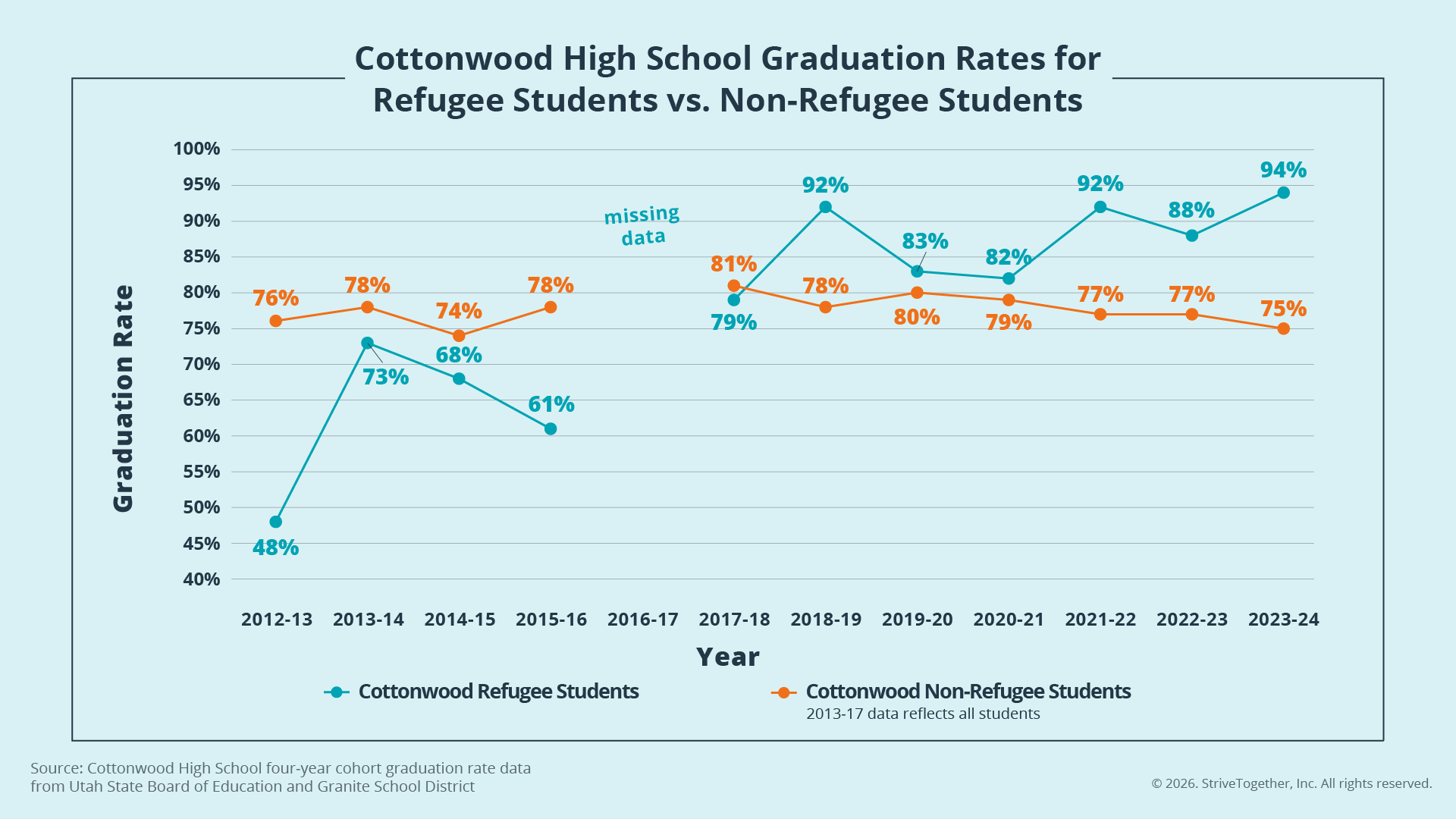
Disaggregated data, however, revealed reasons for optimism. Earlier partnership efforts at Cottonwood High School led to significant gains for refugee students. Graduation rates for refugee students rose from below 50% in 2012–13 to sustained rates above 90% in recent years, surpassing graduation rates of their non-refugee peers. This progress provided a clear proof point: when systems align around student needs, outcomes can improve even for students facing the greatest barriers.
Those gains were driven by aligned supports at both the school and community levels. Cottonwood strengthened community school services, expanded mentoring and increased access to tutoring, extracurricular activities and caring adults. Community partners helped stabilize families through transportation support, basic needs assistance and two-generation services in South Salt Lake and West Millcreek. Together, these efforts reduced barriers to attendance and belonging, helping refugee students persist and graduate.
By 2023, partners recognized that while these gains were encouraging, overall graduation rates remained below what students and families deserved. The data made the case for a new approach, one that moved beyond incremental change toward shared accountability for ensuring every student graduates prepared for what comes next.
Strategy and Impact
Aligning Around Student Success
Promise Partnership Utah and Granite School District aligned their work around a shared understanding: schools cannot meet the full range of student and family needs on their own. Through the partnership, the district has been able to focus on strengthening instruction, supporting educators and creating welcoming school environments, while community partners address barriers outside the classroom.
As Ben Horsley, superintendent of Granite School District, explained, “Too often we expect schools to be the solution to every challenge a community faces. Our experience has shown that schools can’t do it alone, and having a backbone partner helps make sure students and families get the supports they need so schools can focus on learning.”
Imagine a world where every student who graduates from high school feels prepared for and excited about their future. They may not have everything figured out yet, but they know there is a future for them. We envision a world where that sense of excitement and possibility is available to every child, no matter their background or where they live.
Bill Crim, president and CEO of United Way of Salt Lake and Utah’s Promise
Salt Lake City, Utah
Future Vision
Strengthening Systems for Long-Term Impact
The work underway in South Salt Lake and West Millcreek is designed to do more than improve outcomes within a single school network. It is intended to create proof points for how place-based partnerships can drive systems change across entire communities.
In the near term, Promise Partnership Utah and Granite School District are focused on deepening collaboration and increasing gains within the Cottonwood High School network. This includes expanding access to mentoring, strengthening coordination among partners and continuing to refine strategies based on data. Partners are also working to ensure that improvements in attendance, credit accumulation and student engagement translate into sustained increases in graduation rates.
At the same time, the partnership is laying the groundwork to scale this work more broadly. Lessons learned in South Salt Lake and West Millcreek are informing efforts to expand place-based infrastructure across Salt Lake County and beyond. By aligning municipal leaders, school districts and community organizations around shared goals, Promise Partnership Utah is building the capacity to support students consistently across neighborhoods and systems.
Aligned policy and funding will be critical to sustaining and expanding this approach. Partners are exploring opportunities to braid public and private resources, advocate for policies that reduce structural barriers and strengthen the conditions that support long-term student success.
High school graduation is a critical gateway, but it is not the end of the journey. Future efforts will continue to strengthen the full cradle-to-career continuum, from early childhood through postsecondary readiness. Investments in early literacy, family engagement and culturally responsive practices remain central to this work.
Bill Crim shared that StriveTogether has accelerated local learning. “Because of our work with StriveTogether, we’ve learned from dozens of other communities building place-based partnerships. We’ve accelerated staff training and gained insight into what works and what does not.”
That learning has helped the partnership move from pilot efforts to broader scale. “Our work with StriveTogether has made it possible for us to spread and scale excellent interventions that work,” Ahrens Terpstra said. Exposure to lessons from other communities has informed local decision-making and reduced duplication of effort.
Reflecting on the partnership’s long-term vision, Crim said, “Imagine a world in which every student who graduates from high school feels prepared for and excited about their future. They may not have everything figured out yet, but they know there is a future for them. We envision a world where that sense of excitement and possibility is available to every child, no matter their background or where they live.”
That vision is guiding the partnership’s work as it moves from connection to completion. With aligned systems, shared accountability and a focus on both academic progress and basic needs, Promise Partnership Utah is building a pathway to graduation designed to work for every student.
More Stories of Impact
Stronger Future Spotlight: Crayons and Culture in Baltimore