Baltimore’s Promise and the Power of a Connected Data Ecosystem in Maryland
Overview
Data has the power to change a child’s future.
In Baltimore, a child’s ZIP code has long predicted their chances of graduating, finding a good job or reaching economic opportunity. For decades, agencies, schools and nonprofits worked in silos, each holding a piece of the puzzle. Baltimore’s Promise is changing that by building a data ecosystem that connects systems and communities to drive real change for young people.
-
A Data Ecosystem Built for Every Child
Baltimore’s Promise connects data across 100+ organizations to give policymakers, educators and communities a complete view of young people’s needs.
-
From Data Gaps to Opportunity for All Youth
By mapping opportunity gaps, Baltimore’s Promise drove an 83% funding increase for older youth and preserved 4,000+ summer seats through data advocacy
-
Youth Voices at the Center of the Data
From 63 youth reviewers shaping summer funding to young people governing the Data Hub, Baltimore’s Promise ensures data reflects lived experience.
National background
Across the United States, the gap between a young person’s ZIP code and their life outcomes remains stark. Research consistently shows that children from low-income households face barriers to education, employment and economic mobility, the result of underfunding and disconnected institutions failing to work together on their behalf.
Effective decisions and strategies must be grounded in data. As community partners come together to align their work, sharing what data is available to them is critical to identifying those barriers and assessing progress toward a common goal. Data sharing is a central component of the place-based partnership approach and one of the most complex challenges communities face.
Too often, data about children and youth stays in isolated databases, preventing communities from seeing the full picture of how young people are doing. When data stays siloed, the decisions that shape young people’s lives on things like programs, funding and policy are made without the full picture.
But bringing data together is only the first step. The real work is building the infrastructure to do something with it. When partners across education, health, housing, workforce and other systems come together, they turn shared data into shared action, closing gaps and driving real change for kids and families. That requires sustained investment in trust, technology and people who not only collect and connect data, but act on it.
Our vision is for young people in Baltimore to have everything they need to be who they want to be.
Julia Baez, chief executive officer of Baltimore’s Promise
Baltimore, Maryland
Local Context
Baltimore is a city of more than 570,000 people that is vibrant, close-knit and deeply committed to its young people. It is home to institutions like universities, hospitals and nonprofits, a growing economy and community leaders who have dedicated their lives to making Baltimore better. It is also a city where the legacy of racial segregation, disinvestment and discriminatory policy has left lasting marks on neighborhoods, schools and families.
Baltimore City Public Schools educates more than 76,360 students, representing 8.5% of all students in Maryland. And the city has been making real progress. The share of Baltimore young people ages 16–24 disconnected from school and work has been cut in half, from 21.3% in 2015 to 10.6% in 2024, hitting a record low and demonstrating that cross-sector alignment is working.
But 10.6% of Baltimore’s young people are still disconnected from school and work. For a city of Baltimore’s size, that is still thousands of young people without a pathway. Baltimore’s Promise established an ambitious goal to change that, supporting 42,000 Baltimore City youth on their way to economic mobility by 2030.
The urgency behind that goal is clear in the data. Fewer than 5.4% of Baltimore City students scored proficient on the 8th grade math exam in 2024. Postsecondary enrollment, while improving since the pandemic, sits at 52.7% for 2024 high school graduates, still below the pre-pandemic rate of 54.6%. And Black or African American young people ages 16–24 remain nearly 2.4 times more likely to be out of school and out of work compared to their white peers.
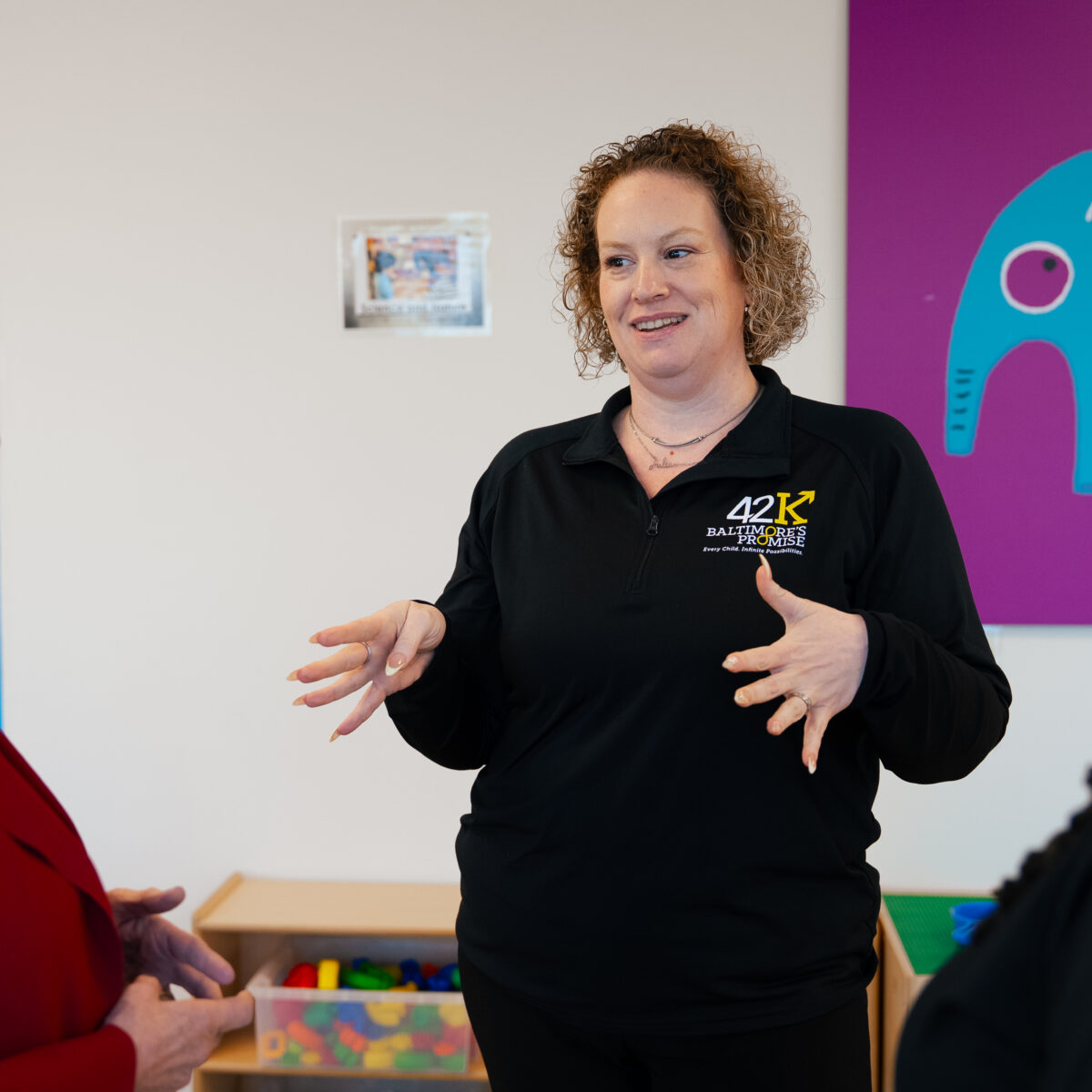
These numbers represent the realities of young people. Baltimore’s Promise is working to change that reality. “Our vision is for young people in Baltimore to have everything they need to be who they want to be,” said Julia Baez, chief executive officer of Baltimore’s Promise. “We want to make sure all of the opportunities, the resources, the people, the places are available to them.”
For years, a barrier stood in the way of that vision. The data about Baltimore’s young people was scattered across dozens of agencies and institutions, with no shared infrastructure to connect it, no community voice to interpret it and no common framework to turn it into action.
Baltimore’s Promise, a place-based partnership and member of the national StriveTogether Cradle to Career Network, set out to solve that problem. Effective data use is at the heart of the place-based partnership approach, and it’s an area where StriveTogether has built deep expertise with communities across the country. Baltimore’s Promise put that approach into action by building a data system that could move people and resources to where they were needed most.
Today, more than 100 organizations, such as Baltimore City Public Schools, multiple offices of the mayor and dozens of community-based organizations, contribute data to that shared ecosystem to improve outcomes for young people.
Young people are whole people, and their data exists in multiple systems because they have experiences that cross all sorts of different sectors. It’s impossible to tell the story of what’s happening with young people in any place if we don’t integrate and bring those stories together.
Julia Baez, chief executive officer of Baltimore’s Promise
Baltimore, Maryland
Strategy and Impact
A Data Ecosystem Built for Impact
Building a data ecosystem that works for young people requires more than a technology database. It requires trust, relationships and a shared commitment to action. Baltimore’s Promise has spent years developing all three. What emerged is a layered system of tools and partnerships that gives the community the ability to understand the full experience of its young people. Each component builds on the last, connecting data to decisions about programs, funding and the policies that shape young people’s futures.
Data in Action: The Summer Engagement Ecosystem
The Data Hub’s first major use case is the Baltimore Summer Engagement Ecosystem, a project that integrates data from multiple partner agencies to build a comprehensive picture of summer programming across the city to understand what programs exist, where they are, who is participating and who is being left out.
The first phase, which began in 2024, focused on a foundational question: could data actually be matched across agencies? The answer was yes and at a high success rate. For the first time, Baltimore was able to match individual participants across programs from different agencies, creating a citywide view of summer opportunity that had never existed before. That matching revealed which populations of young people were accessing opportunities, where geographic gaps existed and which communities were being underserved.
It also surfaced important lessons about data quality, including what information needs to be collected at registration to enable cross-agency matching and how to define attendance consistently across programs, so that future analysis is even stronger.
That data didn’t sit on a shelf. When Baltimore’s Promise identified that the city was heading toward a significant loss of summer programming seats in 2025 that was driven by the expiration of pandemic-era federal funding, it mobilized immediately. The organization held town halls, testified before City Council and secured funding that saved more than 4,000 summer seats. Work like the Youth Data Hub aims to make advocacy efforts like this even stronger — giving Baltimore’s Promise and its partners the data foundation to make the case for investment and push for change.
“With the Summer Engagement Ecosystem functioning, we’ll be in the position to ensure that there is access to opportunities in places tomorrow that are not available today,” said Theresa.
Governance That Centers Community
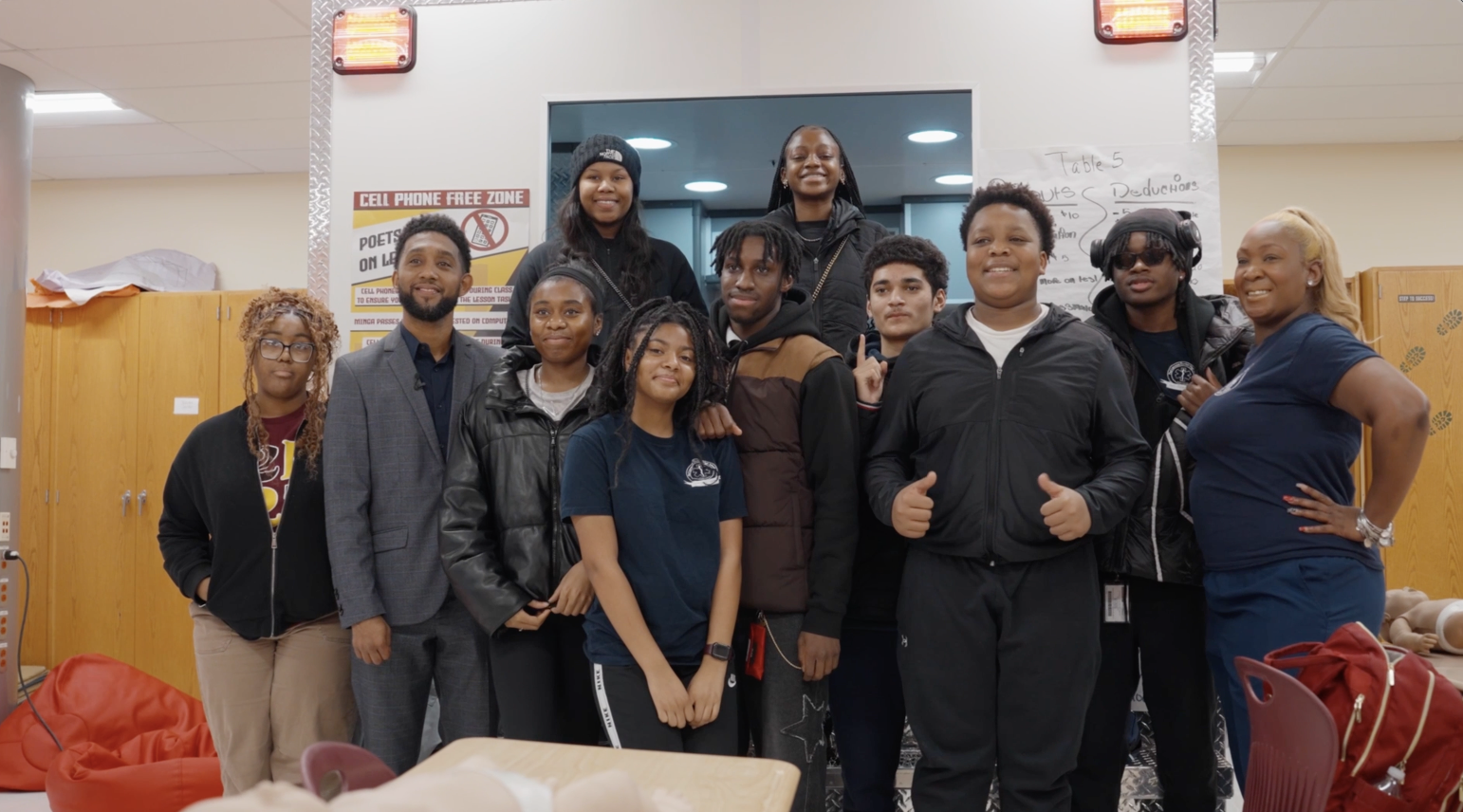
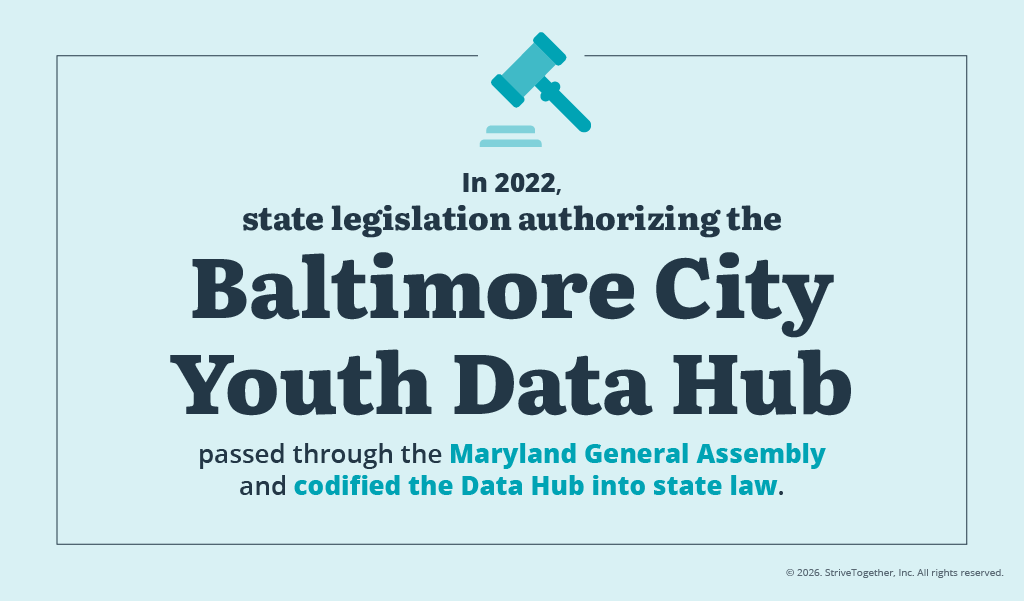
Baltimore’s Promise built the data ecosystem with a foundational commitment to community power at every stage of the data lifecycle. The Youth Data Hub’s governance structure has three layers. The Executive Committee, co-led by the mayor and the chief executive officer of City Schools, provides executive oversight. The Data Oversight Committee brings together data and programming staff from participating institutions to oversee data quality and use. And at the heart of the system sits the Community Research and Action Committee (C-RAC): a body made up of young people and community members who participate directly in setting the data agenda, interpreting findings and ensuring the Hub’s work remains accountable and actionable to the broader community.
“We needed community involved because in the end, it’s their data,” said James. “It belongs to them. They need to be an equal partner in this process.”
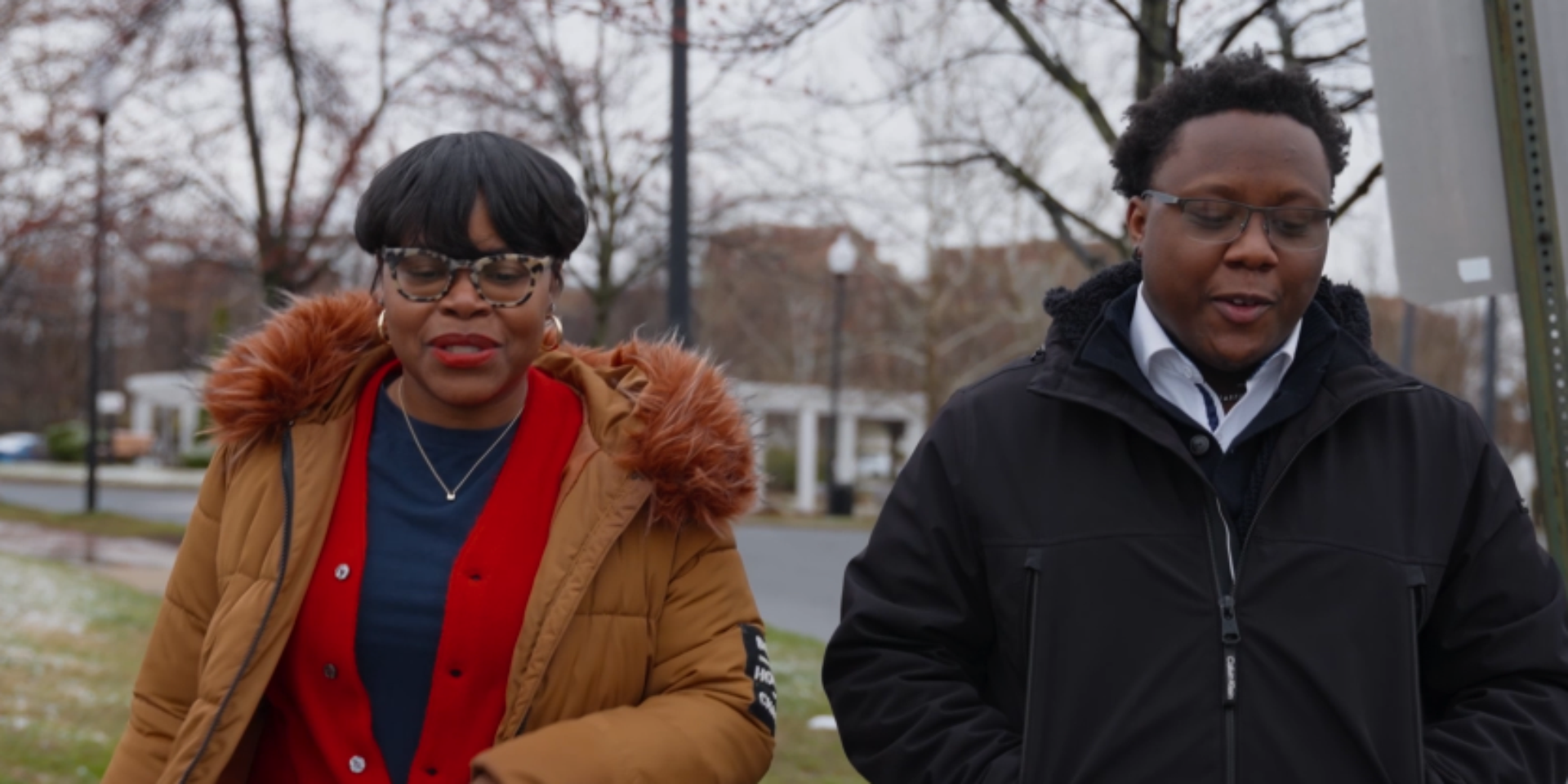
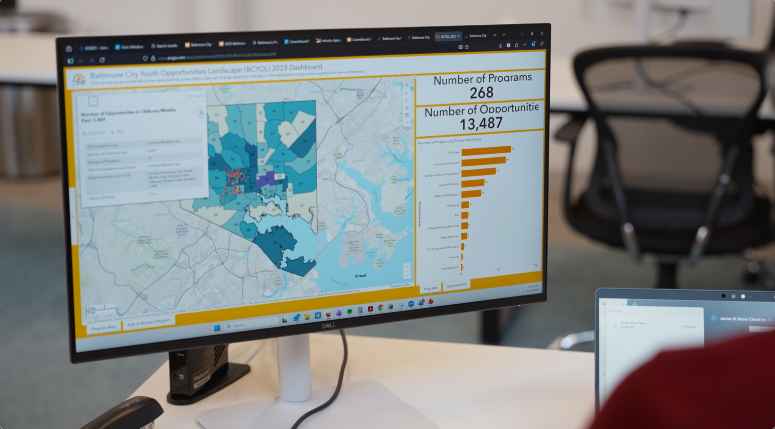
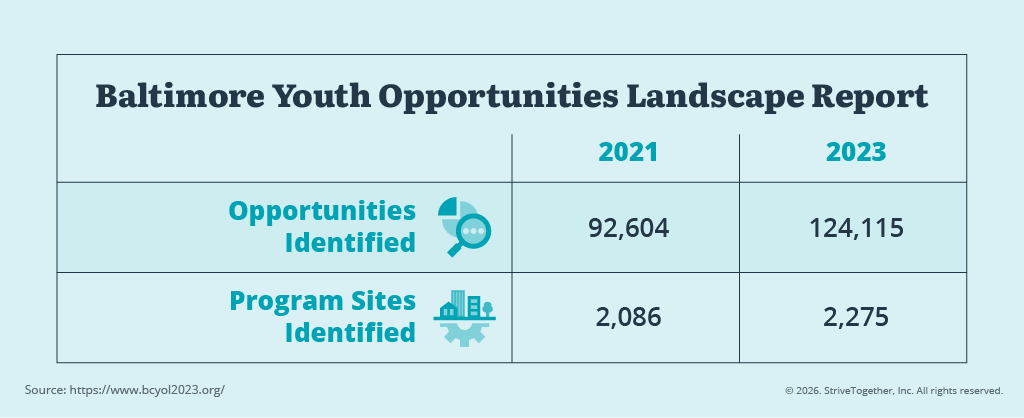
Tobius Nance, a Baltimore native who served as a Youth Grantmaker and now co-chairs Baltimore’s Promise Community Advisory Board, described what the data revealed about the city he thought he knew. “When I got to Baltimore’s Promise, I started looking at the data, especially the Youth Opportunities Landscape, and I saw that when I got to other regions in Baltimore, you would see fewer opportunities depending on the area,” he said. “I now don’t assume. I realized these are the circumstances kids were born into.”
Assi Sy, a Youth Corps researcher and two-cohort Youth Grantmaker, reinforced why young people must be part of the process. “You can’t make decisions about young people without the young people present. Often as adults you cannot really speak to the experience of a young person better than they can.”
Baltimore’s Promise has shown that the most powerful data systems are the ones with the deepest trust. When young people like Tobius and Assi sit at the table — not as subjects of the data, but as interpreters and decision-makers — the work becomes something more than research. It becomes a commitment: that every young person in Baltimore deserves a city that sees them, hears them and builds toward their future wi
Turning Data Into Opportunity
The results of Baltimore’s data ecosystem are tangible and growing.
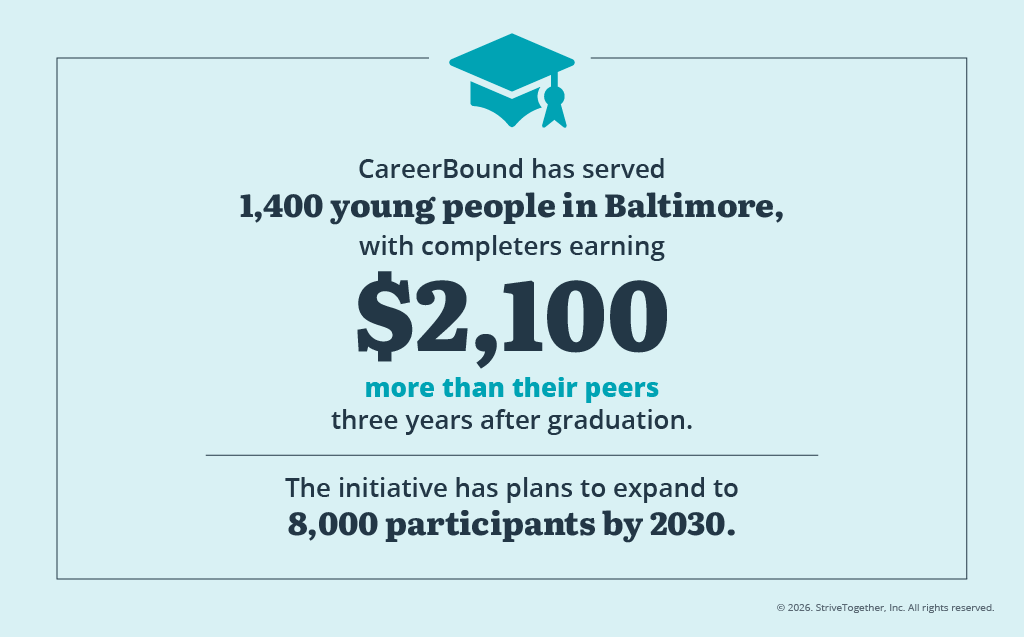
The Grads2Careers initiative was created from a 2018 data study conducted in partnership with the Baltimore Education Research Consortium, which found that 26% of city school graduates did not connect to postsecondary education or work the fall after graduation. It has since evolved into CareerBound, a workforce initiative that aligns education, training and employer needs. CareerBound has served more than 1400 young people, with completers earning $2,100 more than their peers in the third year after high school graduation, climbing to $3,500 more if they obtain a job in the field of their training. The initiative has plans to expand to 8,000 participants by 2030.
And the systems-level data tells an even bigger story. The share of opportunity for youth in Baltimore City, which are young people ages 16-24 not in school or working, has been cut in half, from 21.3% in 2015 to 10.6% in 2024.
The Summer Funding Collaborative, guided by Opportunities Landscape data, has invested $6.2 million in 162 programs over two years, reaching more than 20,000 young people across the city. In 2024, 63 youth reviewers participated in the community review process that determined how those funds were allocated. Between 2023 and 2024, access to after-school and summer opportunities grew, a direct result of data-driven advocacy and intentional investment.
This is what an active data ecosystem looks like in practice: data driving the work at every stage, from identifying the problem to building the solution, measuring impact and driving systems change.
These outcomes are the product of a city that has chosen to govern with evidence and lead with purpose. Baltimore’s data ecosystem works because it was never built for data’s sake alone. It was built to answer real questions about real people: Where are young people falling through the cracks? Where is investment missing? Whose voice has been left out of the decisions that shape their lives?
By grounding every initiative in analysis and community partnership, Baltimore has demonstrated that data, when used with intention and accountability, is the foundation for transforming outcomes at scale. Baltimore’s Promise has seen massive momentum. The work is not over yet but the infrastructure, the partnerships and the proof points are in place to meet what comes next.
Future Vision
Scaling the System, Expanding the Promise
Baltimore’s Promise is building toward scale, ensuring that every young person in Baltimore City benefits from what has been learned and proven over the past decade. The Summer Engagement Ecosystem will continue to deepen with each cycle, and the Data Hub will expand to new use cases beyond summer, building toward the comprehensive, cradle-to-career picture that partners have been working toward for years.
“What’s next for Baltimore’s Promise is scale,” said Julia. “We’ve been demonstrating effective strategies for the last decade and now we’re ready to ensure that all young people in the city of Baltimore are benefiting from what we’ve learned and what we’ve proven is effective.”
For Theresa, the stakes are clear. “There is so much untapped potential in Baltimore, partly because the opportunities haven’t been there. We have an opportunity today to change that course.”
For Tobius, who grew up in Baltimore, went to college on a full scholarship and came back to work for his city, the hope is personal. “I hope that my community gets more of a choice. A lot of times, a lot of people just don’t have a choice. And I want that to be skewed in another direction.”
As Baltimore’s data ecosystem has matured, so too has the vision behind it. A key force in that evolution has been the organization’s partnership with StriveTogether, which has helped Baltimore’s Promise sharpen its practice and expand what it believes is possible for young people in the city.
StriveTogether has been an incredible partner in us building out our data ecosystem — not only providing training, whether that was on Tableau, or making sure that we had access to national data sources that would help us better inform our local strategies. Our work with StriveTogether is making it possible for Baltimore to dream bigger, do better.
Julia Baez, chief executive officer of Baltimore’s Promise
Baltimore, Maryland
Baltimore has always been a city that believes in its young people. What Baltimore’s Promise has built is the infrastructure to prove it, a data ecosystem that measures where young people are and actively works to get them where they deserve to be. Every dataset connected, every gap closed and every seat saved is a promise kept to a child who was counting on adults to pay attention.
These connections help Baltimore’s Promise and its partners refine their strategies, strengthen collaboration across sectors and scale solutions that improve outcomes for young people across the city. Through continued investment in data and community-driven decision-making, Baltimore’s Promise is helping build a citywide ecosystem that supports both economic mobility for individual young people and long-term vitality for Baltimore.
More Stories of Impact
“Baltimore’s Promise, Maryland’s Partner”: How the ENOUGH Act Took a City’s Model Statewide