Fresno Coalition Turns Years of Groundwork Into a $2 Million Childcare Win
For families across the country, childcare is often the first system that fails to meet them where they are. Slots are scarce, costs match college tuition and the workers who provide care are themselves among the lowest paid in the labor market. In Fresno County, where nearly 83,000 children are 5 years old or younger, that gap is big: only 23% of eligible working families have access to a subsidized childcare slot, leaving most who qualify with nowhere to go.
Most communities understand the challenge. Far fewer have been able to translate that understanding into meaningful public investment. In Fresno, that progress didn’t happen overnight. It grew out of years of relationship-building, community engagement, shared data and collaboration across sectors.
Fresno C2C (Fresno Cradle to Career) is a 100-member partnership committed to measurably improving education and health outcomes. The partnership includes leaders from education, health, housing, city and county government, business, philanthropy and community-based organizations, working together around shared principles: engaging the community, encouraging collaboration, collecting and connecting data, and aligning and leveraging resources.
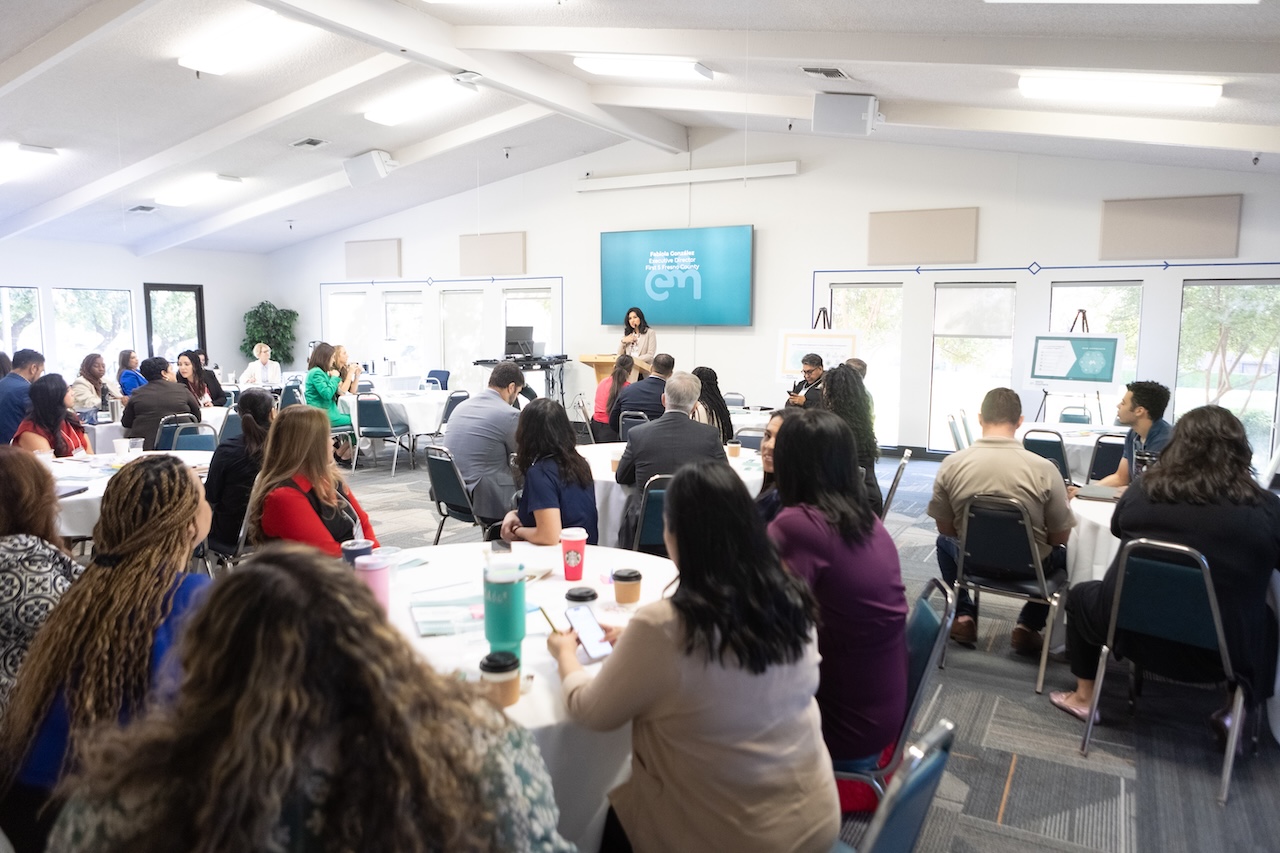
Within that broader partnership sits Early Matters Fresno, a coalition of early childhood organizations backboned by First 5 Fresno County. The coalition grew out of a Packard Foundation grant years earlier that funded an early childhood table, which became the Preconception to Age 5 Network and later Early Matters Fresno. After 2020, the coalition became a Blue Meridian Partners grantee, a milestone that significantly expanded its capacity to invest in bold strategies and systems-level solutions for young children and families. In September 2024 Early Matters Fresno completed a comprehensive investment plan, setting impact goals and strategies for the next three and 10 years.
That groundwork paid off this summer. In a unanimous 7-0 vote, the Fresno City Council approved a $2.56 billion budget for fiscal year 2027 that included $2 million for a new Child Care Pilot Program, along with a separate $125,000 to launch a Child Care Access and Family Affordability Commission. The council named First 5 Fresno County, the publicly funded agency that has administered early childhood dollars in the county for 25 years, as administrator of the pilot. It is the first major early childhood policy win for Early Matters Fresno.
Building the case, one relationship at a time
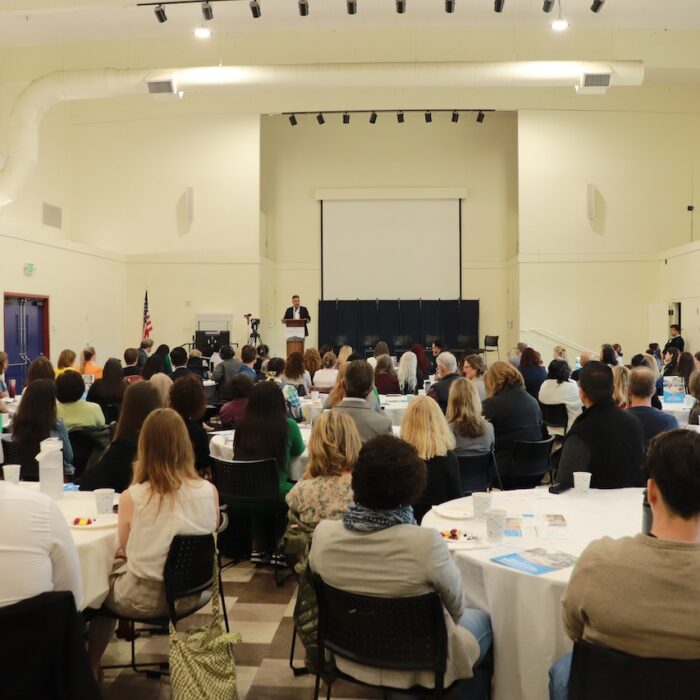
Long before there was a specific ask on the table, the coalition focused on relationships. Last October, it organized its first legislative and funder roundtable, bringing together elected officials, philanthropy and community partners around issues affecting young children and families. That design choice was intentional, and it came from experience.
Each official was given three minutes at the podium to describe how their own work connected to early childhood. The event also led to local officials participating in an ongoing bipartisan policy advisory council.
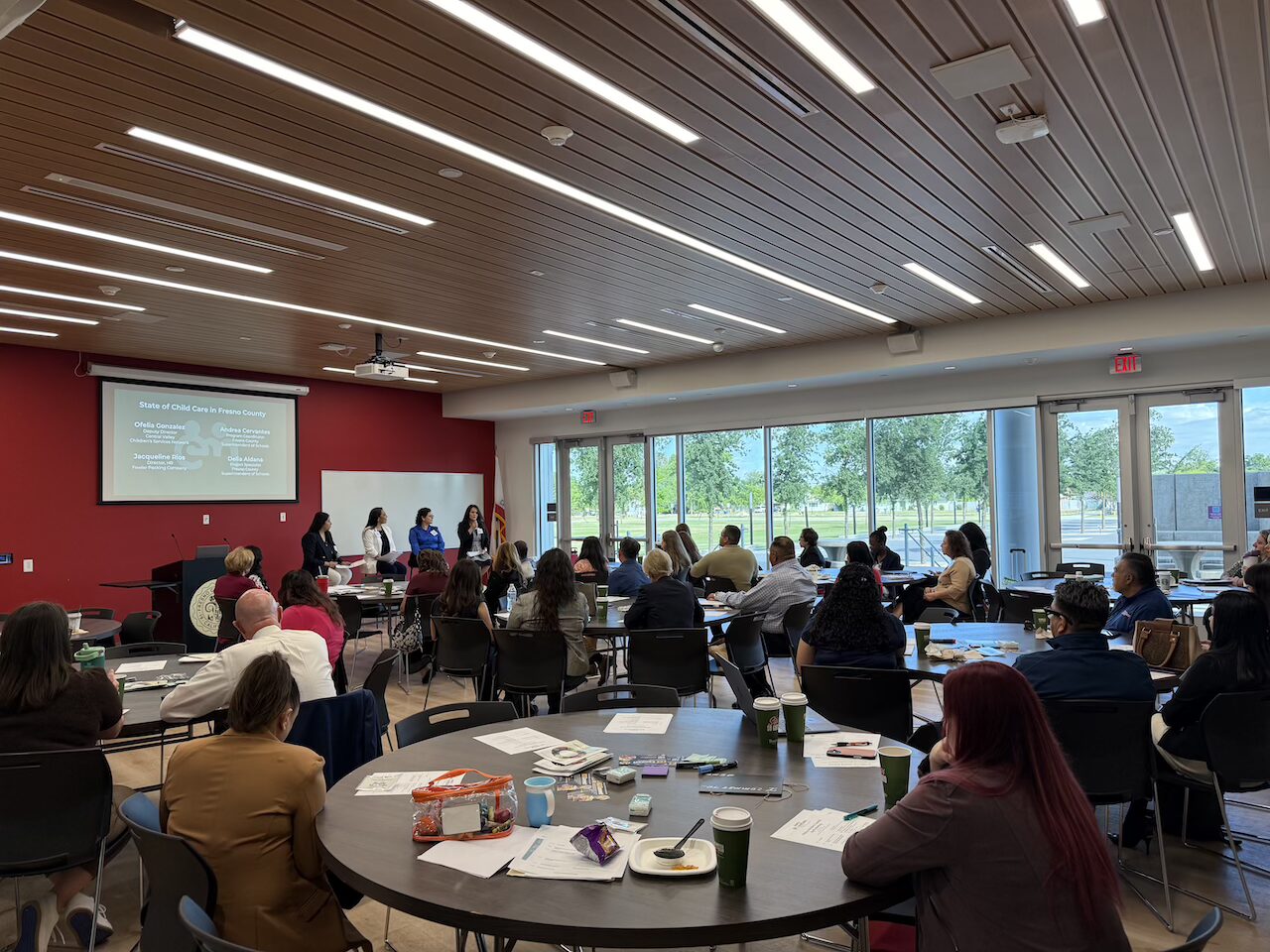
Convening this council sits inside a broader strategy the Early Matters Fresno coalition has kept up for years, which is to keep a sustained focus on early childhood as a foundational piece for economic mobility. “As a member of the C2C Leadership Council I have many opportunities to connect early childhood to a thriving economy and I can’t remember one meeting where something having to do with the early part of the continuum wasn’t part of the agenda,” said Fabiola González, Executive Director, First 5 Fresno County.
Linking the work to Fresno DRIVE, the region’s broader economic mobility initiative, reinforced that consistency. “We’ve just always put a good amount of emphasis on how important the 0 to 5 age group is for everyone else’s success along the continuum,” Linda said. “But we’ve very intentionally done that. It won’t just happen.”
Using Blue Meridian Partners capacity-building funding, the coalition also invested in developing a shared identity and communications framework. Consistent messaging has helped members connect their individual work to a larger, coordinated effort on behalf of young children and families.
Turning a crisis into four categories
Earlier this year, news of potential federal cuts to childcare grants prompted Fresno City Council Vice President Tyler Maxwell, who had attended the October roundtable, to reach out, wanting to understand the local impact. The coalition moved fast, organizing a briefing within 48 hours. Rather than overwhelming him, they distilled a complex issue into four categories: access, affordability, workforce and quality.
The data made the case. Annual infant care can cost up to $23,000, compared to $8,600 for a year of tuition at Fresno State. Across the country, the childcare workforce is paid less than workers from almost every other occupation — in fact, half of Fresno County’s childcare workers rely on public assistance themselves. And with 90% of brain development happening in a child’s first five years, the quality of early care shapes outcomes well beyond kindergarten.. And with 90% of brain development happening in a child’s first five years, the quality of early care shapes outcomes well beyond kindergarten.
That single briefing shaped the coalition’s next policy advisory council meeting in April, built entirely around childcare and featuring a parent describing the cost of care while attending school and a business owner speaking to workforce impacts. By July, Maxwell has proposed a city investment, initially proposing $3.5 million before city budget negotiations settled on the $2 million pilot.
From a pilot to what comes next
Since the vote, Council Vice President Tyler Maxwell has formed the new Commission and brought two additional council members on board to help chart what a longer-term response could look like, with the pilot intended to serve as a proof point for what city government, and eventually county and regional government, could do.
Community voice will stay central to that work, the way it has from the start. “We’ve really had community voice involved from the beginning,” Linda said. “In the planning process, we had 800 people involved in the development of that plan.” Going forward, the coalition will lean on trusted community-based organizations to keep families and childcare providers at the center of implementation. Leaders across the region are already watching the pilot as a possible model for county and regional investment.
It means a great deal to see community leaders listening to providers and families because real solutions come from understanding what children and working parents experience every day.
Delia Aldana, bilingual project specialist for Fresno County Superintendent of Schools
Fresno County, California
“Every day I see families doing everything they can to work and provide for their children while struggling to find care they can afford and trust,” said Delia Aldana, a former family childcare provider and current bilingual project specialist for Fresno County Superintendent of Schools. “It means a great deal to see community leaders listening to providers and families because real solutions come from understanding what children and working parents experience every day.”
Coalition leaders point directly to being part of the StriveTogether Cradle to Career Network as foundational to how they got here. “The StriveTogether Theory of Action and the network’s growing emphasis on systems change have been huge in the Early Matters journey,” Linda said. “It’s helped us think differently about how we move from individual programs to creating the conditions for longer-term change.”
For Fabiola, the moment carries its own weight and a reminder that this work doesn’t end with one win and it should not be mistaken for a lasting fix. “This pilot is a short-term investment for a large issue touching people’s lives in every corner of our community,” she said.
What happened in Fresno is a reminder that policy wins rarely start with the vote itself. They start years earlier, in the rooms where relationships are built and trust is earned, long before anyone knows what the ask will be. A $2 million public investment and a new commission are proof that groundwork pays off, and a signal to other places watching that this kind of change is possible for young people in their communities, one relationship at a time.
Additional Stories
Fresno Coalition Turns Years of Groundwork Into a $2 Million Childcare Win