“Baltimore’s Promise, Maryland’s Partner”: How the ENOUGH Act Took a City’s Model Statewide
Overview
Baltimore’s Promise is aligning schools, city government, employers and community organizations across Baltimore to expand pathways to economic mobility for young people. As a place-based partnership in the StriveTogether network, it unites partners around a shared goal.
These partnerships, championed by Baltimore’s Promise and other leaders for over a decade, are now the model behind Maryland’s ENOUGH Act, a first-in-the-nation law focused on ending childhood poverty.
-
A Model Becomes a Law
Maryland’s ENOUGH Act was signed into law by Gov. Wes Moore in May 2024, reaching 28 communities across 12 counties.
-
A Statewide Network
The ENOUGH Initiative Grant Program funds 28 community quarterback organizations, engaging 550+ cross-sector partners and 18,000+ residents.
-
Funding at Scale
More than $130 million backs the ENOUGH Act: $31.1M in first-round state grants, $100M in philanthropy, plus $80M leveraged by communities.
National Background
Across the United States, a child’s ZIP code remains one of the strongest predictors of their future outcomes, often more predictive than individual effort or ability. It shapes their odds of graduating high school, finding stable employment and achieving economic mobility, in large part because poverty itself elevates a child’s risk of behavioral, social, emotional and health challenges, according to the Annie E. Casey Foundation.
Child poverty also reduces skill-building opportunities and academic outcomes, undercutting a young student’s capacity to learn and succeed in the classroom.
Nationally, 11.4 million kids in the United States are currently living in poverty. For decades, the primary policy response to child poverty has been programmatic. A specific service gets funded, runs for a limited window and hopefully reaches enough people to register as impact before it expires. That approach has a ceiling built into it.
A single program can improve outcomes for the individuals it reaches, but it cannot, on its own, sustain outcomes for an entire population once the funding ends. Only institutions aligned around shared data and held to shared accountability have been shown to move population-level outcomes rather than individual ones.
Local ContextLocal Context
Statewide, roughly 143,000 children, 11% of all Maryland children, live in poverty as of 2024, according to the Annie E. Casey Foundation’s 2026 KIDS COUNT Data Book, concentrated for too long in the same neighborhoods and closing off opportunities before many children have a real chance to pursue them.
In Baltimore City alone, nearly 28,000 children lived in poverty in 2024, according to U.S. Census Bureau estimates, a gap between the city and the rest of the state that is exactly the problem Baltimore’s Promise set out to close.
That mission starts with a vision for what Baltimore’s young people deserve.
Our hope is that young people in Baltimore have everything they need to be who they want to be. We envision a city that has all the opportunities, pathways and possibilities that young people need to be successful and on a path to economic self-sufficiency.
Julia Baez, chief executive officer of Baltimore’s Promise
Baltimore, Maryland
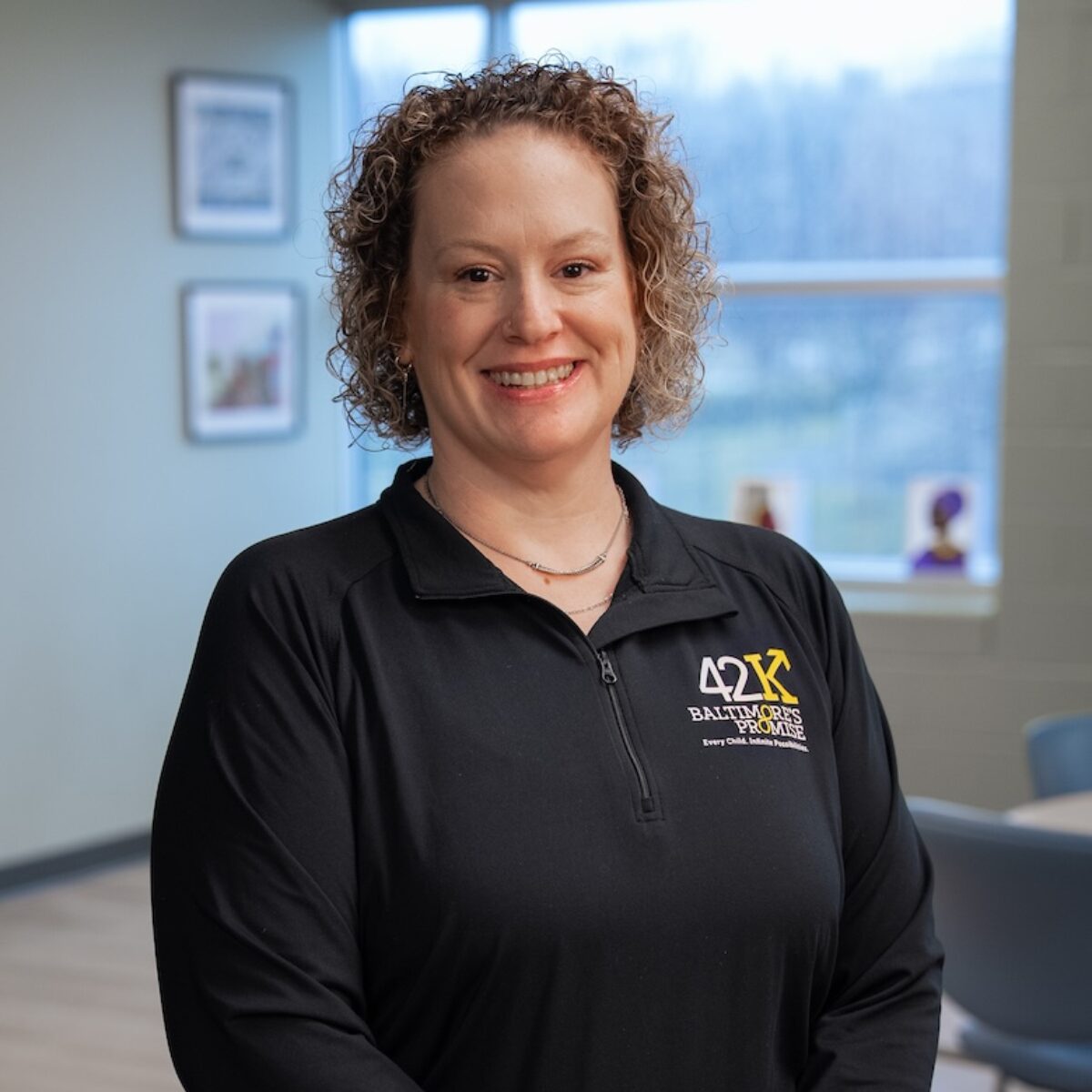
Baltimore’s Promise is the organization built around that vision. A data-driven cradle-to-career organization and StriveTogether network member, it brings together Baltimore City Public Schools, postsecondary institutions, philanthropy, businesses, nonprofits and residents around one shared cradle-to-career goal for the city’s youth, rather than running programs of its own.
That kind of work only holds together through a place-based partnership, which builds on a community’s own strengths rather than working around them. It takes years to build the trust and results that make it work, longer than most grant cycles are designed to support.
A decade of cross-sector coordination work, is what positioned Baltimore’s Promise as a ready partner when Maryland turned to a place-based approach for a new statewide law: the ENOUGH Act.
The ENOUGH Act validates, at the state level, what Baltimore’s Promise had already spent a decade demonstrating in Baltimore City, which is that place-based partnership is the strongest available path to economic mobility at scale.
Strategies and ImpactStrategies and Impact
Signed into law by Governor Wes Moore in May 2024, and formally titled Engaging Neighborhoods, Organizations, Unions, Governments and Households, the ENOUGH Act is a first-in-the-nation, state-led law designed to support community-driven action to eradicate child poverty. It directs public dollars into the neighborhoods hit hardest by concentrated poverty, built on the premise that the people who live in a community are best positioned to lead change in it.
The ENOUGH Act created the ENOUGH Initiative, a pioneering grant program that aims to improve access to four key pillars of development for young people – quality healthcare, safer communities, good schools and good jobs. Today, Maryland’s ENOUGH Initiative, administered by the Governor’s Office for Children, is supporting 28 community-led organizations across 12 counties, representing rural, suburban and urban areas in the state that have been historically impacted by barriers to economic mobility.
Statewide Implementation: Technical Assistance in Practice
Secretary Carmel Martin, who leads the implementation of the Initiative for Maryland’s Governor’s Office for Children, says the decade Baltimore’s Promise has spent convening schools, employers, government agencies and community organizations across Baltimore City directly shaped the building of the ENOUGH Initiative.
“Since the beginning of the implementation of the ENOUGH Act, Baltimore’s Promise has been a core partner in helping us to stand up this program and provided incredible support,” she said. “Baltimore’s Promise has been working in this space well before the ENOUGH Initiative was an initiative and served as a trusted advisor to us in being able to develop the program. They’ve been able to provide support for communities across the state around how to do collective action with community voice at its center.”
Bridget Blount, deputy chief executive officer of Baltimore’s Promise, underscored that partnership. “We support each community in determining what their strategies are. Once those strategies are determined, we really think about who needs to be at the table, what data will help guide the process, and how can they think about what’s the highest leverage points in order for them to reduce childhood poverty.” Under the ENOUGH Act, that work translates into two specific jobs for Baltimore’s Promise. “Baltimore’s Promise serves in two unique roles as a partner to the state under the ENOUGH Act,” said Julia Baez, chief executive officer of Baltimore’s Promise. “We’re a technical assistance provider to all of the community quarterbacks across the state of Maryland, and we also serve as a thought partner to the Governor’s Office for Children.”
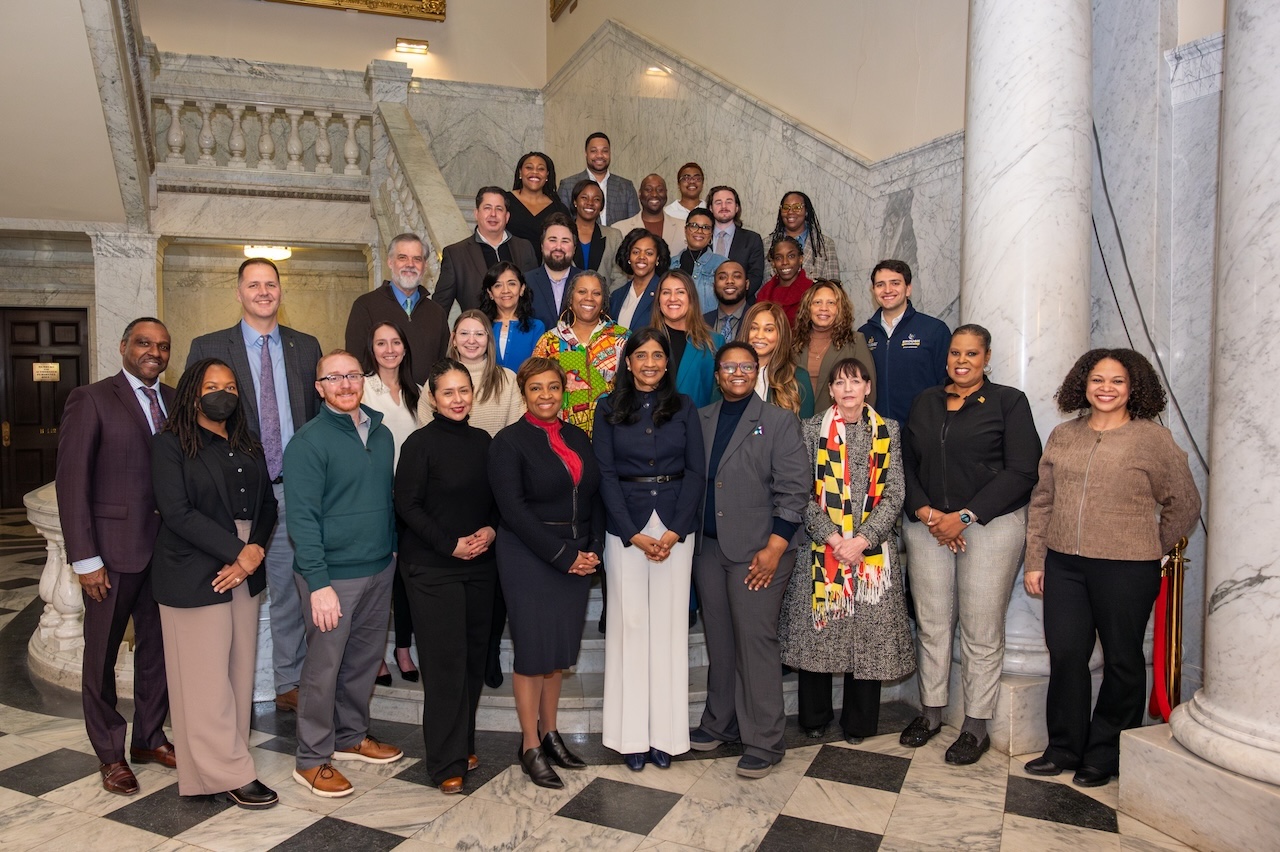
Community quarterbacks bring local people together, gather the data and line up resources to fight child poverty. Without the right skills or support, that work stalls, which is why ENOUGH pairs each community quarterback with a technical assistance provider.
Baltimore’s Promise learned to do this kind of work through its role bringing different groups together for years. “We’ve really learned what it means to convene and be a collective impact organization,” Bridget said. “From that learning, we are able to apply that through our technical assistance work with ENOUGH.” Being a collective impact organization means engaging communities, using data to drive change, and acting as the connective tissue that makes system change possible.
The Training Hub Powered by StriveTogether, a resource Baltimore’s Promise accesses through its partnership with StriveTogether, is one way that knowledge gets delivered to communities that need it. “We found the Training Hub to be an immense resource to community organizations,” Bridget said. “The resource allows for standardization of tools, standardization of information, and allows organizations to pick their learning and apply it to their specific communities.”
Secretary Martin credits the Training Hub for grantee support and progress. “StriveTogether really helped provide us with critical technical assistance in how to stand up a program like this,” she said. “They were able to provide all of our grantees with access to the Training Hub in how to do this kind of work and what were best practices. [These were] really critical resources that were given to each of our communities, and it also influenced the Governor’s Office for Children and how we approached the work.”
After the ENOUGH Initiative launched, StriveTogether built a custom Training Hub page for Maryland grantees, selecting courses aligned to the law’s goals. By the end of 2024, leaders from more than 25 communities had taken courses through it tied to their ENOUGH work.
Taking the Model Statewide: Frederick County
ENOUGH’s support structure enables each of its 28 communities to solve its own unique challenges using residents’ lived experiences, and cross-sector collaboration.
“We’ve got communities from Baltimore to Frederick County and everywhere across Maryland, and none of their strategies look the same, because each is based on that community’s own place-based approach,” Bridget said. “And place-based strategy focuses on what is the data in that community saying that young people and families need in order to be a better person.”
Frederick County’s Golden Mile offers a concrete example of what a strategy built around one community’s own context and strengths looks like outside of Baltimore City. The Golden Mile is Frederick County’s most densely populated area and its most concentrated area of poverty, while also being one of the county’s most historically diverse communities. When it learned it would receive ENOUGH Act funding, the county turned to Baltimore’s Promise rather than building its own approach from scratch.
“We reached out to Baltimore’s Promise because we knew that they have the experience already of place-based strategies, and this is work that we are doing throughout Frederick County, but the ENOUGH Initiative brought it to a deeper level for us,” explained Leshia Chandler, division director of Frederick County Government’s Division of Family Services and the official overseeing the local ENOUGH Initiative. “Baltimore’s Promise having that experience for us was really able to kind of level set the work that we were preparing to do.”
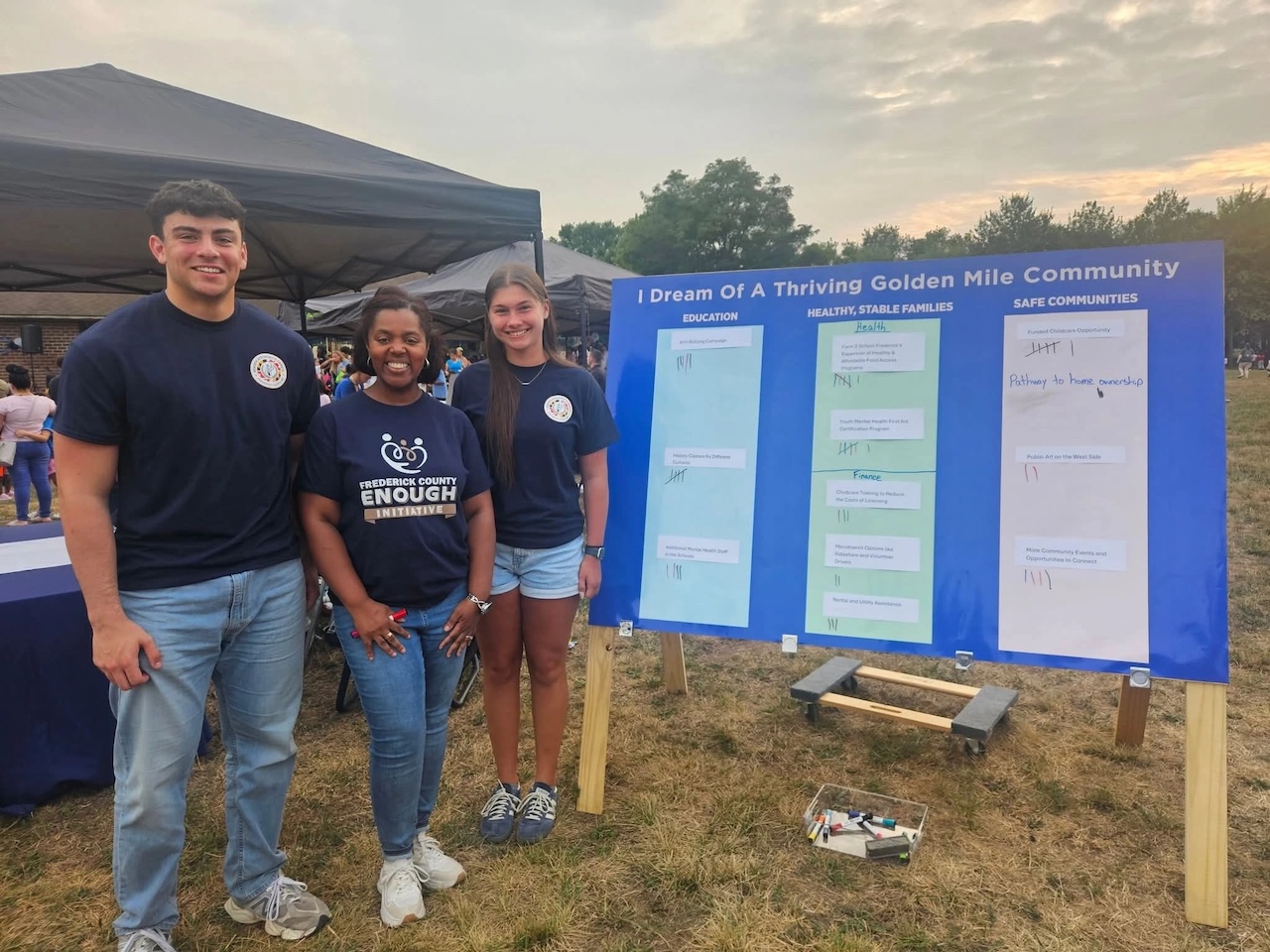
That grounding helped the county’s advisory council, made up of 13 nonprofit agencies already working directly with Golden Mile families, build the trust needed to bring residents to the table. “We were able to then host 13 community convenings within our community, and over 260 families within the Golden Mile community participated, at a specific time where ICE raids were happening and occurring, and we did not think families would actually come out,” Leshia said.
“They came, and we had ages from 6 to 96 supporting us in these convenings, and various languages: we had them in English, we had them in Spanish, we have them in Portuguese, we had them in French dialects.”
Beyond the convenings themselves, Leshia credits Baltimore’s Promise with sharpening how the county measures its own progress. “The resources that Baltimore’s Promise has used for our team that was beneficial to us was enhancement in our results-based accountability utilization, in order to again provide that collective impact for our community,” she said.
Part of that work is an “environmental scan” process to identify who is missing from the table, which Leshia called critical to getting at the root causes affecting the community. She also traces that root-cause focus back to what the county’s own data was showing before the ENOUGH Initiative began.
“We saw significant incline and increases in mental health issues with our youth, families reaching out, also the parents wanting to support their youth and not really understanding how to,” she said. “We knew immediately we needed to focus on these families and see and get down to the root causes of what these issues are.” That focus is already showing up in how families describe their own experience.
“We’re hearing the testimonials of what things are changing for us, we’re seeing the support systems happening,” Leshia said. “It does not take a very long time for us to get connected to a resource that really applies to us, or to actually see family stability or access to jobs.” That first year of work under the ENOUGH Act and their work with Baltimore’s Promise also delivered concrete health outcomes: more than 500 families received immunizations, and of roughly 1,000 elementary-age youth screened for vision, more than 800 received glasses.
“Through the ENOUGH Act and our work with Baltimore’s Promise, we are ensuring that we are hearing our community first and foremost, and we are also addressing some of the significant barriers that we have continuously heard through our data collection within the Golden Mile,” Leshia said. “I hope that we’re able to meet families where they are, to allow them to acquire the resources to live the best life that they choose for themselves.”
Statewide Impact, Rooted in Baltimore
The same grassroots approach seen in Frederick County is also at work back in Baltimore. Crayons and Culture, a Baltimore-based education nonprofit led by founder and executive director Agzja Carey, sits within the Northeast Baltimore Coalition, a group of organizations funded through the ENOUGH Act and led by the Y of Central Maryland. The Y of Central Maryland, one of the ENOUGH Act’s 28 grantees, resourced Crayons and Culture to support its work.
Crayons and Culture’s mission is to academically activate and universally liberate Black children in the city through what Agzja calls its three Cs: centering cultural identities, curating immersion-based experiences, and connecting communities. The organization also draws on Baltimore’s Promise’s Opportunities Landscape, a data tool that maps where opportunities for young people exist and where they don’t across the city. Rather than starting research from scratch, Agzja’s team uses that existing analysis as a starting point, then builds on it with its own deeper look at the community’s specific needs.
Attendance at Crayons and Culture runs well into the 90s, and there are far more families who want in than spots available: last year, more than 105 families applied for just 30 slots within 48 hours of applications opening.
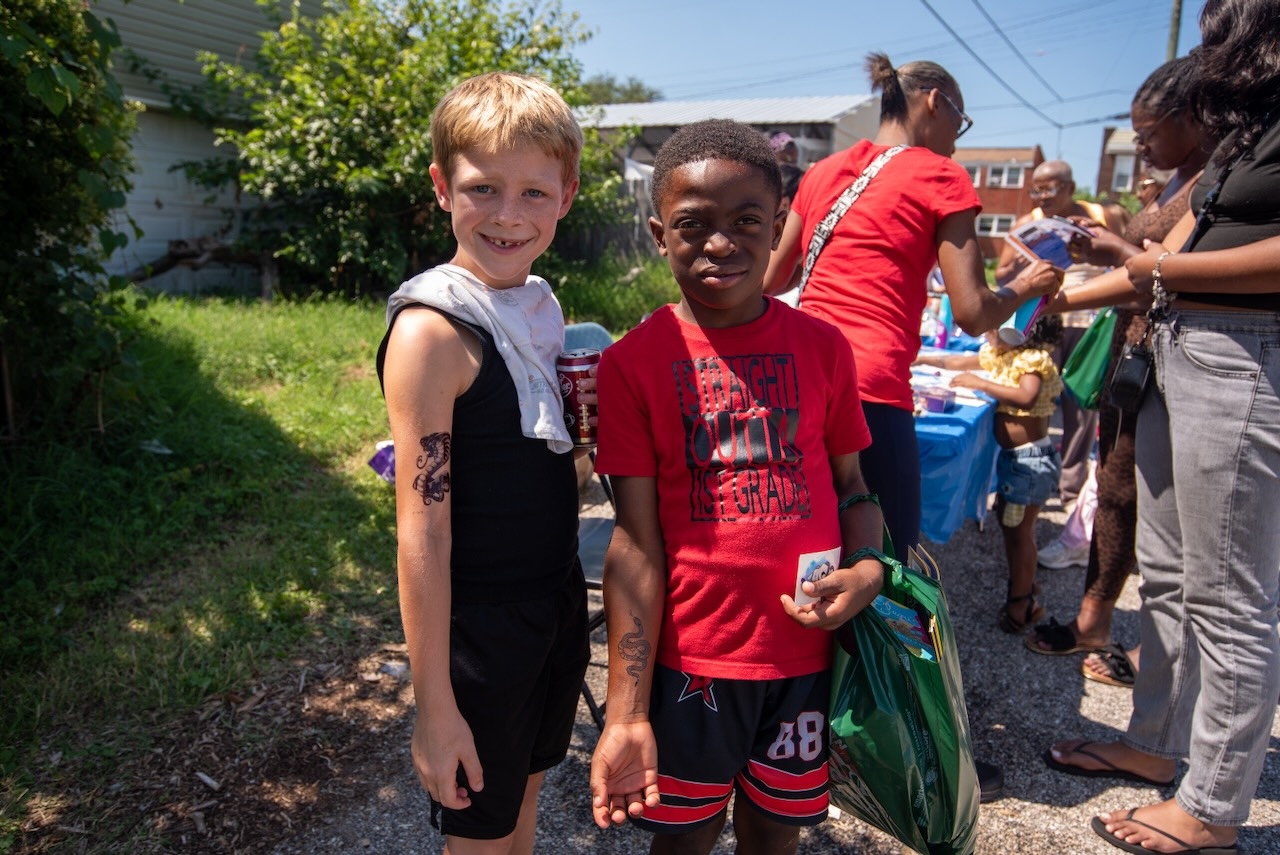
Agzja points to Baltimore’s Promise’s data support as the reason Crayons and Culture can back up its own results with numbers. “This partnership has expedited how confidently we go after funding, how confidently we could speak to the efficacy of our program,” she said.
Crayons and Culture is one proof point. The state’s own numbers tell the same story at scale. That structure has also produced statewide results. In its first year of grantmaking, the state documented a 3-to-1 return on public investment: a $15 million appropriation helped communities leverage roughly $45 million in additional state and private funding, evidence the place-based model produces returns a purely programmatic approach could not. The Governor’s Office for Children reports more than 550 cross-sector partners across the network, over 18,000 Marylanders engaged at the resident level, and 81 evidence-led programs statewide.
Grantee reports from the program’s second year show what that scale looks like on the ground. In Cherry Hill, to tackle chronic absenteeism, the community has launched dedicated attendance intervention teams and is providing reliable, daily transportation to schools for 30 elementary students who are most at risk of being chronically absent. For these students, absences have dropped from the dozens to single digits.
In Park Heights, a summer festival drew an estimated 3,500 residents during the same quarter Park Heights Renaissance opened a new workforce development center. In Hagerstown, ENOUGH and philanthropic funding enabled the opening of a new licensed childcare center, tripling a neighborhood’s childcare capacity from one 8-seat provider.
Future VisionFuture Vision
“Baltimore’s Promise, Maryland’s Partner”
ENOUGH remains in its early implementation phase, and Baltimore’s Promise’s role continues to grow. Bridget describes the next phase as field-building, taking a decade of lessons from convening partners and sharing them with other organizations working toward systems change.
Julia frames Baltimore’s Promise’s next chapter around sustainability and scale. “What’s next for Baltimore’s Promise is really thinking around how we sustain and diversify the revenue in our organization by helping to build the field and accelerate outcomes for others,” she said. “We’ve been demonstrating effective strategies for the last decade, and now we’re ready to ensure that all young people in the city of Baltimore, all young people across the state of Maryland, are benefiting from what we’ve learned.”
Last summer, that ambition got a name. “We came up with the tagline, ‘Baltimore’s Promise, Maryland’s Partner,'” she said, “and for us that means we have a real opportunity to make sure all of the greatness and the learnings here in our city don’t just get left here at home, but we can use those to help accelerate the outcomes for the entire state of Maryland.”
Success would mean that we fundamentally change the relationship between state government and communities and families.
Secretary Carmel Martin, Governor’s Office for Children
Maryland
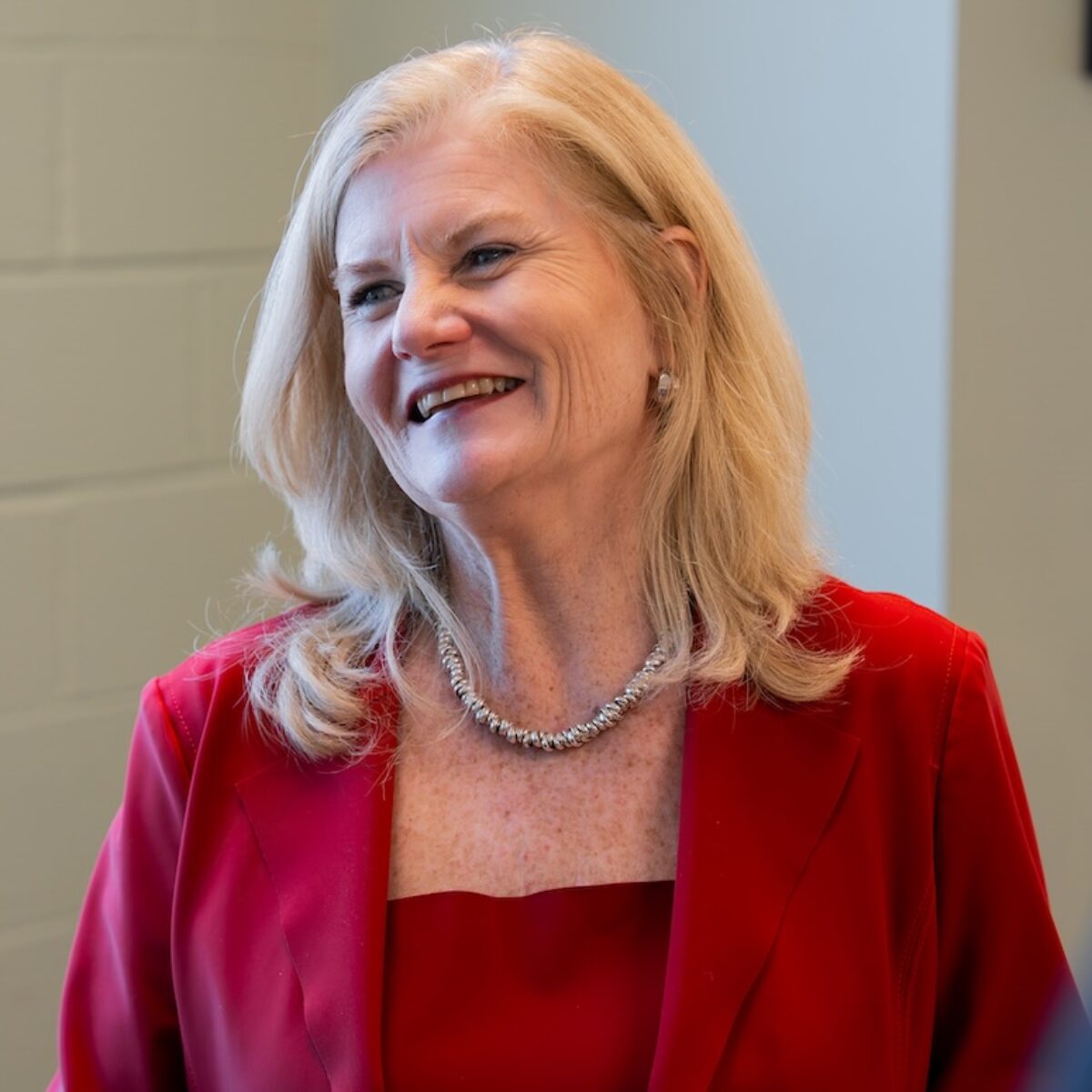
Secretary Martin describes success in similarly structural terms. “Success would mean that we fundamentally change the relationship between state government and communities and families,” she said. “It also means that we will have built a sustainable network between philanthropy, government and community-based organizations around a vision for safe and thriving communities for every child in the state.”
Baltimore’s Promise offers an answer to a question every place-based partnership eventually faces: how do you turn local proof into policy that lasts longer than one grant cycle? The proof has to come first, strong enough that a state is willing to write it into law. The ENOUGH Act is that proof turned into law, evidence that place-based partnership isn’t just one option among many for building economic mobility. It’s the option worth building an entire policy around.
Maryland has always had communities willing to do this work. ENOUGH gives them something they didn’t have before: funding, expert help, and a shared plan that turns local effort into lasting change. Every community partner trained, every meeting held and every dollar raised is a step toward a state where a child’s ZIP code no longer decides their future and individual families can reach economic mobility and help their communities grow stronger for the long run.
Additional Stories
“Baltimore’s Promise, Maryland’s Partner”: How the ENOUGH Act Took a City’s Model Statewide