ImpactTulsa Is Rebuilding the Path to Postsecondary Enrollment
Tulsa has spent the last several years positioning itself as one of the region’s biggest success stories. The city has drawn the largest share of Oklahoma’s recent population growth, and its longtime strengths in energy and aerospace are now being joined by a growing technology sector, backed by nearly $150 million in federal and corporate investment mobilized through Tulsa Innovation Labs, according to the Brookings Institution. Oklahoma City and Tulsa both made U.S. News and World Report’s list of the 150 Best Places to Live in the U.S. for 2025-26, chosen for their value, quality of life and strong job market.
Yet postsecondary enrollment growth among graduating high school students hasn’t kept pace with population and industry sector growth, even as research from the Oklahoma WorkTrends report points to rising demand for it. It is one of the clearest signals of whether a community’s students are moving toward economic mobility, and for Tulsa, that meant confronting a hard trend head on. Enrollment had declined nearly every year since 2014, and the gap was widest for boys and young men of color, who were not enrolling at the same rate as their peers.
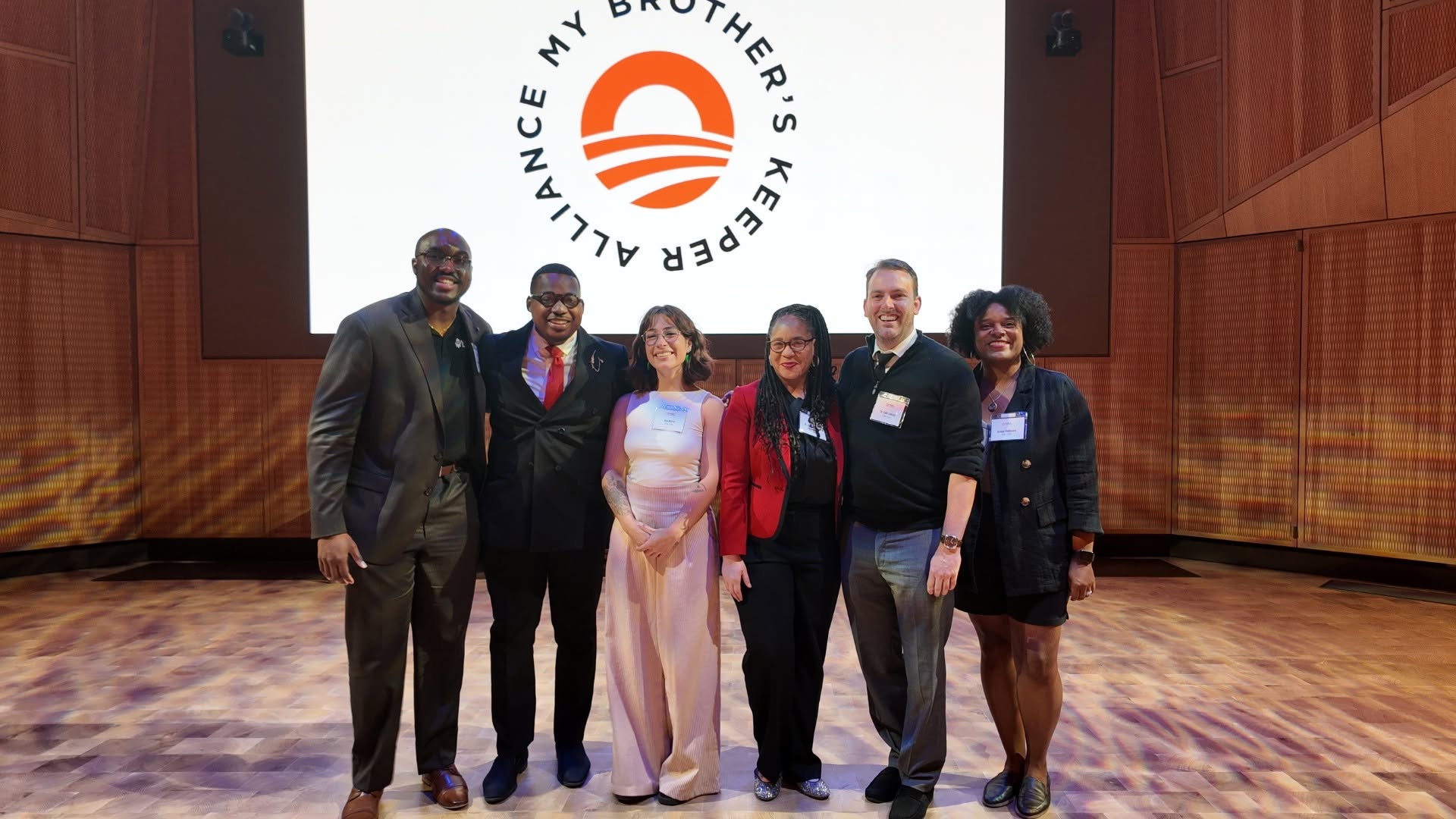
ImpactTulsa in Tulsa, Oklahoma, is a StriveTogether Cradle to Career Network member that brings together 21 school districts and hundreds of community partners across the region. Before 2023, the network member focused most of its energy on kindergarten readiness and high school graduation, where it had already shown it could move the needle. Between 2014 and 2019, ImpactTulsa helped drive a sharp increase in pre-K enrollment across the region, a result significant enough that the Obama Foundation’s My Brother’s Keeper Alliance named Tulsa a national My Brother’s Keeper (MBK) Model Community in 2023.
That designation changed the scope of ImpactTulsa’s work overnight, requiring a new north star, implementation of evidence-based strategies and active partners across all six MBK milestones at once, from early childhood through workforce, rather than the two the team had focused on before. ImpactTulsa received a $1.3 million investment from the Obama Foundation and ongoing coaching from a national advisory firm. Among those six milestones that was identified as a major priority was postsecondary enrollment, and the data laid out exactly why the work needed to be a priority.
Grounding the Strategy in Data
With postsecondary enrollment now a full priority, ImpactTulsa’s team pulled data from the state Department of Education and the National Student Clearinghouse to see exactly where the region stood. The findings confirmed what community and partners suspected. Enrollment had been on a consistent downward slide for years. ImpactTulsa’s College Enrollment and Retention dashboard shows the share of Tulsa County graduates enrolling in an Oklahoma college within one year held at 46.5% in 2020-21, dipped to 45.1% in 2021-22, rose slightly to 45.4% in 2022-23 and climbed to 47.1% in 2023-24. The data also shows that same measure trending back to 2014, with the Tulsa region consistently out-enrolling the rest of Oklahoma over that decade.
There is a genuine bright spot in the same data. Falling remediation rates mean the students who do enroll are arriving more academically prepared, needing less catch-up coursework once they reach college. In 2019, Tulsa’s any-remediation rate held at 41.9% while the rest of the state had already dropped to 32.0%, widening the gap between the two. By 2024, both had fallen further, to 26.7% for Tulsa and 19.5% for the rest of the state, with English remediation showing an even sharper drop, from a peak near 25% around 2018-19 down to under 5% by 2023-24.
Tulsa’s remediation rate has remained persistently higher than the state average throughout the decade, but the steady decline in both averages is real progress, even as overall postsecondary enrollment numbers lag.
With that data in hand, ImpactTulsa aligned on a goal number to see the changes it wanted to make. Guided by its work within the StriveTogether Cradle to Career Network, ImpactTulsa gathered partners for a full day retreat, quantified what real progress would look like and agreed to raise enrollment by roughly 10 percentage points over five years.
Building the Strategy Through Partnership
Only after setting that target did the team turn to strategy, looking at what was working in other Network communities, from Higher Expectations for Racine County to UP Partnership in San Antonio, and landing on college access navigation, a model where dedicated navigators walk students and families through enrollment, from choosing a school to filing financial aid paperwork to registering for classes.
ImpactTulsa looked locally first, searching for a partner already doing similar work before considering anything new. That search led to THE Consortium, Tulsa’s Higher Education Consortium, a group tracing back to 2018, when nine area institutions began working together informally as the Tulsa Collaborative before formalizing into today’s Consortium, joined by seven affiliate organizations, including ImpactTulsa, the city of Tulsa and the Tulsa Regional Chamber.
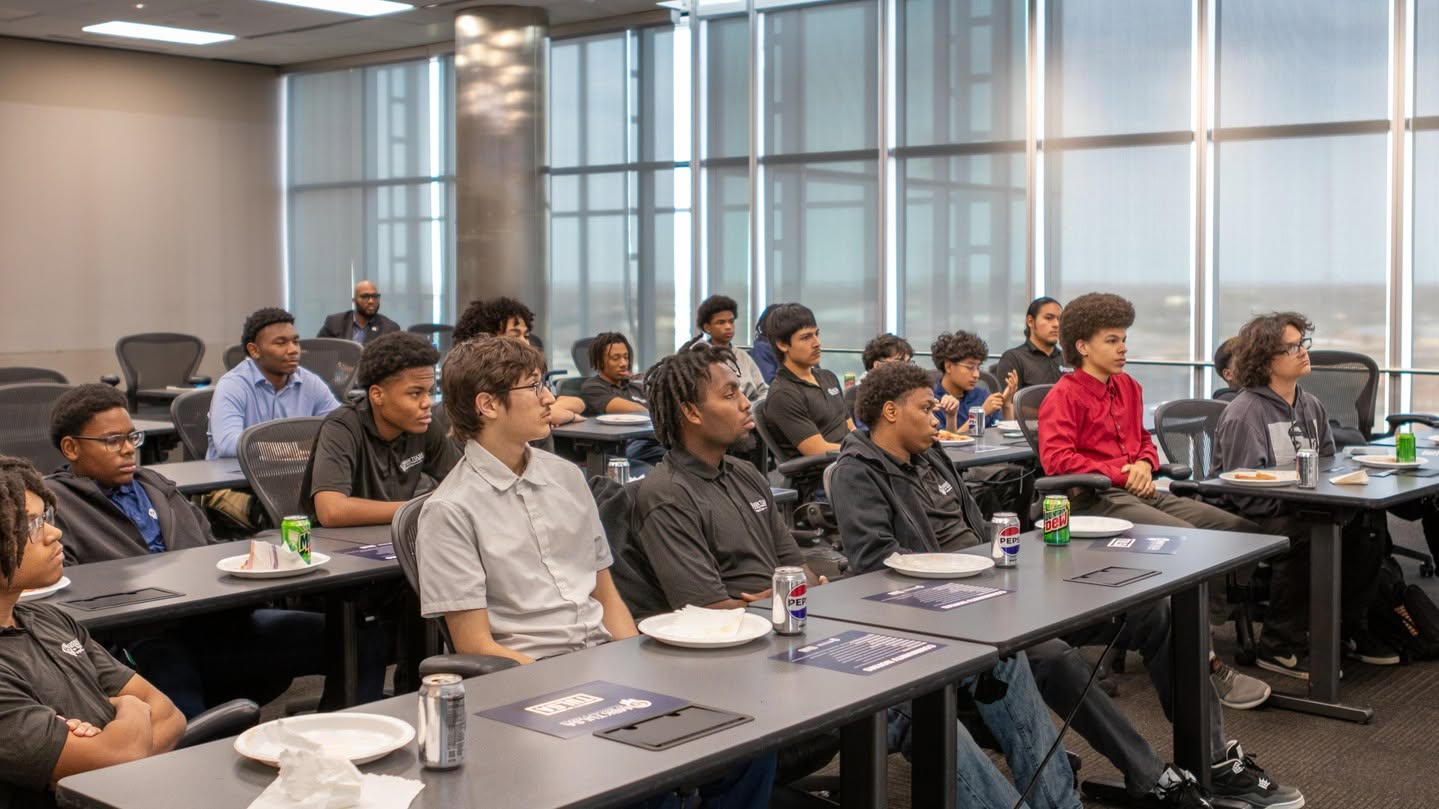
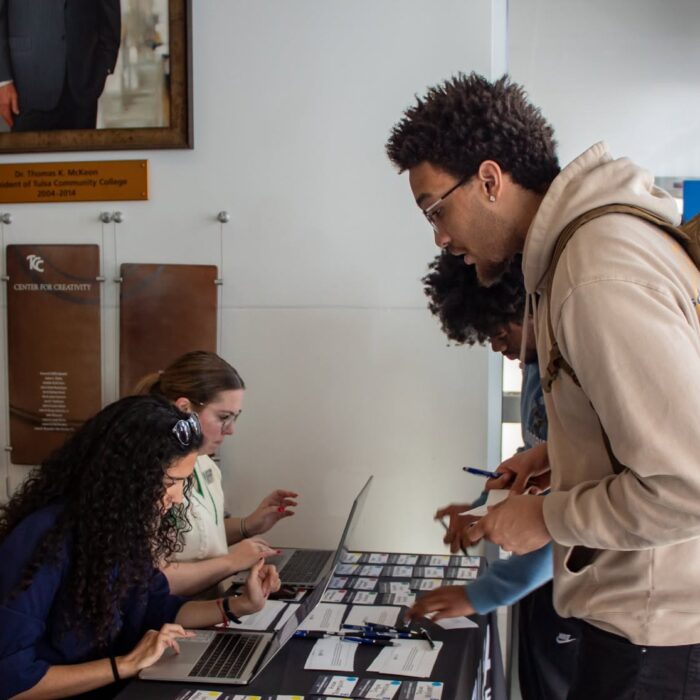
Together, the Consortium’s nine institutions awarded 10,178 degrees and certificates in 2023 and have built 153 transfer pathways to an undergraduate degree, giving ImpactTulsa a partner with real reach across the region. The Consortium was already building out college access navigation as one of its core student services, alongside FAFSA support and Oklahoma’s Promise, so ImpactTulsa and the Consortium joined forces, agreeing that the Consortium would host the navigators while ImpactTulsa helped train them, market the strategy and supply the data behind it.
Filing the FAFSA is one of the steps navigators walk students through, and it is closely tied to whether a student enrolls at all. ImpactTulsa’s own FAFSA dashboard tracks completion rates for Tulsa Region seniors against the rest of Oklahoma each year since 2020. FASFA completion held in the low 50s for several years and dropped alongside the rest of the state to roughly 47% in 2024, then climbed to around 59% for the class of 2025, the strongest year in the range. Because completing the FAFSA determines whether a student can access a Pell Grant, Oklahoma’s Promise or Tulsa Achieves, a navigator’s help finishing that form is often the difference between a student enrolling and a student not enrolling at all.
In north Tulsa, a child raised in a low-income household will earn roughly half as much as an adult as a child raised in a low-income household in south Tulsa, according to Opportunity Atlas data cited by Schusterman Family Philanthropies. College access navigators, working with students across THE Consortium’s institutions alongside other community supports, exist to shift outcomes like that one, one student at a time.
THE Consortium has since added Transfer Touchpoints, a program launched in 2024 that buses Tulsa Community College students to university campuses so a two-year degree does not become a dead end. The stakes are real nationally, fewer than 1 in 6 students who start at a community college go on to transfer and earn a bachelor’s degree, according to the National Student Clearinghouse Research Center.
ImpactTulsa is also exploring an opt-out version of Oklahoma’s Promise scholarship modeled on Tacoma’s approach, where eligible students would automatically receive the award instead of applying separately. As of 2026, that effort is still in early planning, but it reflects the same instinct driving the rest of the work, removing friction between a student and the support they already qualify for.
Where My Brother’s Keeper changed the strategy
College access navigation started as a strategy for every student. That is where My Brothers Keeper (MBK) Tulsa reshaped it. When THE Consortium and ImpactTulsa sat down to plan the rollout, partners raised a concern that a universal navigator program would mostly reach students already headed to college, while missing the students furthest from that path entirely.
MBK’s disaggregated data gave the partnership a different lens. Instead of navigators supporting whichever students showed up, ImpactTulsa and THE Consortium began targeting first-generation students, students from low-income households and students from specific ZIP codes and neighborhoods where enrollment was lowest. That shift is now the connective tissue between MBK Tulsa and ImpactTulsa’s broader postsecondary work. Every outcome area ImpactTulsa tracks is activated through an MBK workgroup with one exception, eighth-grade math.
College isn’t just an institution to me. It’s a harbor, a place where boys and young men of color can go for safety and stability, away from some of the pressures they’re navigating at home. I want it to be the expectation for every one of them, not an isolated story.
BerThaddaeus Bailey, managing director of My Brother’s Keeper Tulsa
Tulsa, Oklahoma

For BerThaddaeus Bailey, managing director of MBK Tulsa, that targeting is not abstract. “College isn’t just an institution to me. It’s a harbor, a place where boys and young men of color can go for safety and stability, away from some of the pressures they’re navigating at home,” BerThaddaeus said. “I want it to be the expectation for every one of them, not an isolated story.” Bailey has described TRIO, the federal college support program, as central to his own ability to stay enrolled at the University of Oklahoma as a first-generation student, the youngest of 11 children, the kind of continuum of support MBK Tulsa is now trying to build for the students its navigators reach.
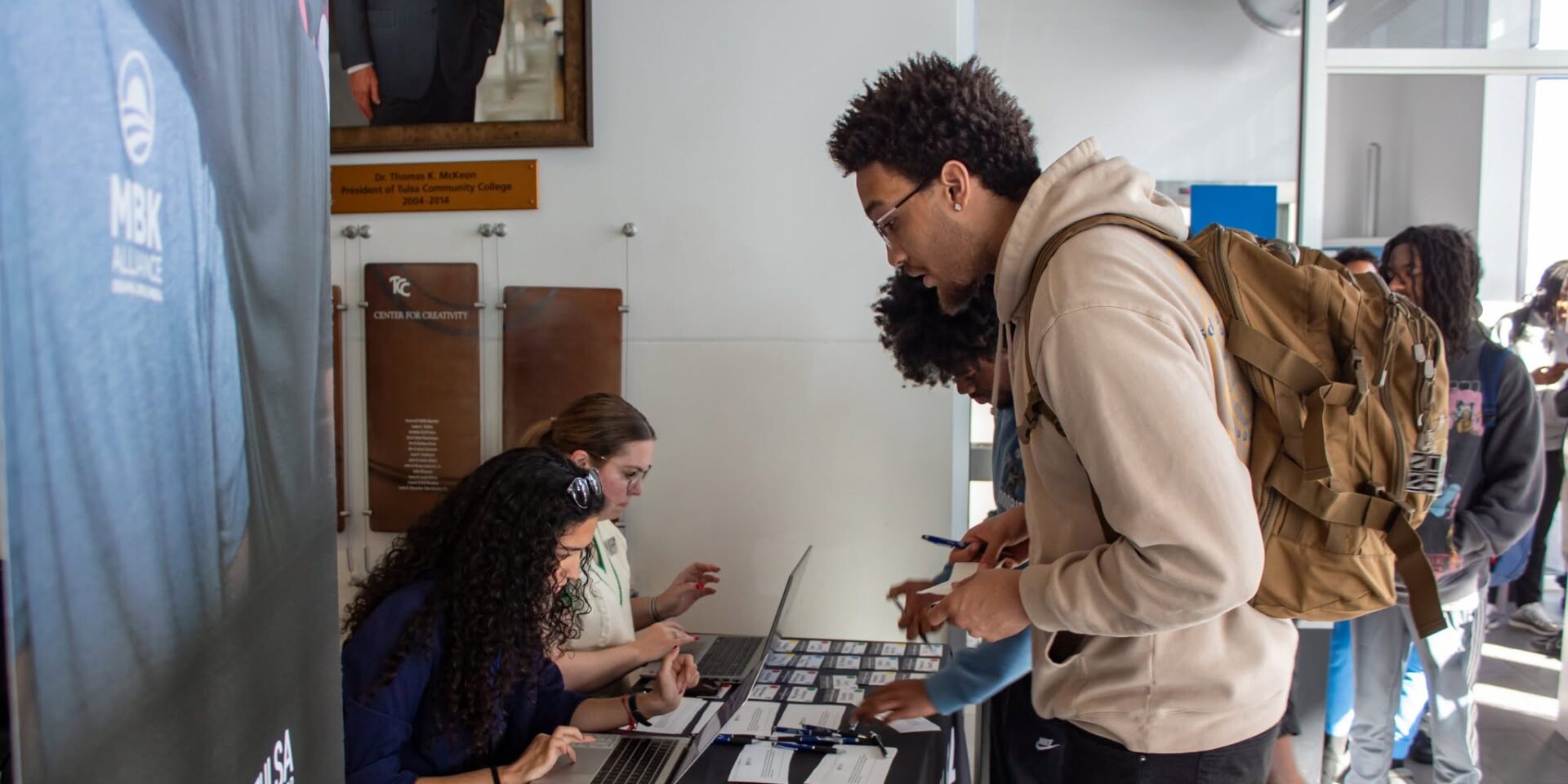
Today, ImpactTulsa is actively supporting 1,321 students through college access navigators, a meaningful reach for a city Tulsa’s size. Navigators are still stretched thin, carrying caseloads that resemble the overload high school counselors already face. Expanding the number of navigators, and the partners willing to host them, is the clearest next step.
What comes next
The next chapter for ImpactTulsa includes continuing to get students enrolled as well as keeping them there. Students are increasingly making it through the front door of college, and staying enrolled once they arrive is the next challenge. The partnership is designing what it calls a sheltered pathway, a support system that follows a student from ninth grade through their first year in the workforce, with a specific handoff at each stage.
High school counselors identify students who are off track each fall and connect them to college access navigators. In the spring, those navigators work with college recruiters to support enrollment. Once a student is in college, navigators hand off to college and TRIO advisors, who help select majors and courses. By senior year, advisors connect students to a workforce coordinator with the goal of a job in hand within three months of graduation.
The shift from two outcome areas to six, from a general navigation program to one targeted at the students furthest from opportunity, and from enrollment alone toward persistence reflects a partnership that keeps advancing its approach with each new result. What has not changed is the number ImpactTulsa set out to move in that first retreat, and the conviction, sharpened through MBK Tulsa, that reaching it means serving the students most likely to be overlooked by a one-size-fits-all approach. It’s how postsecondary enrollment in Tulsa finally starts to reflect the promise the city is building for itself.
Additional Stories
ImpactTulsa Is Rebuilding the Path to Postsecondary Enrollment