Stronger Future Spotlight: Crayons and Culture in Baltimore
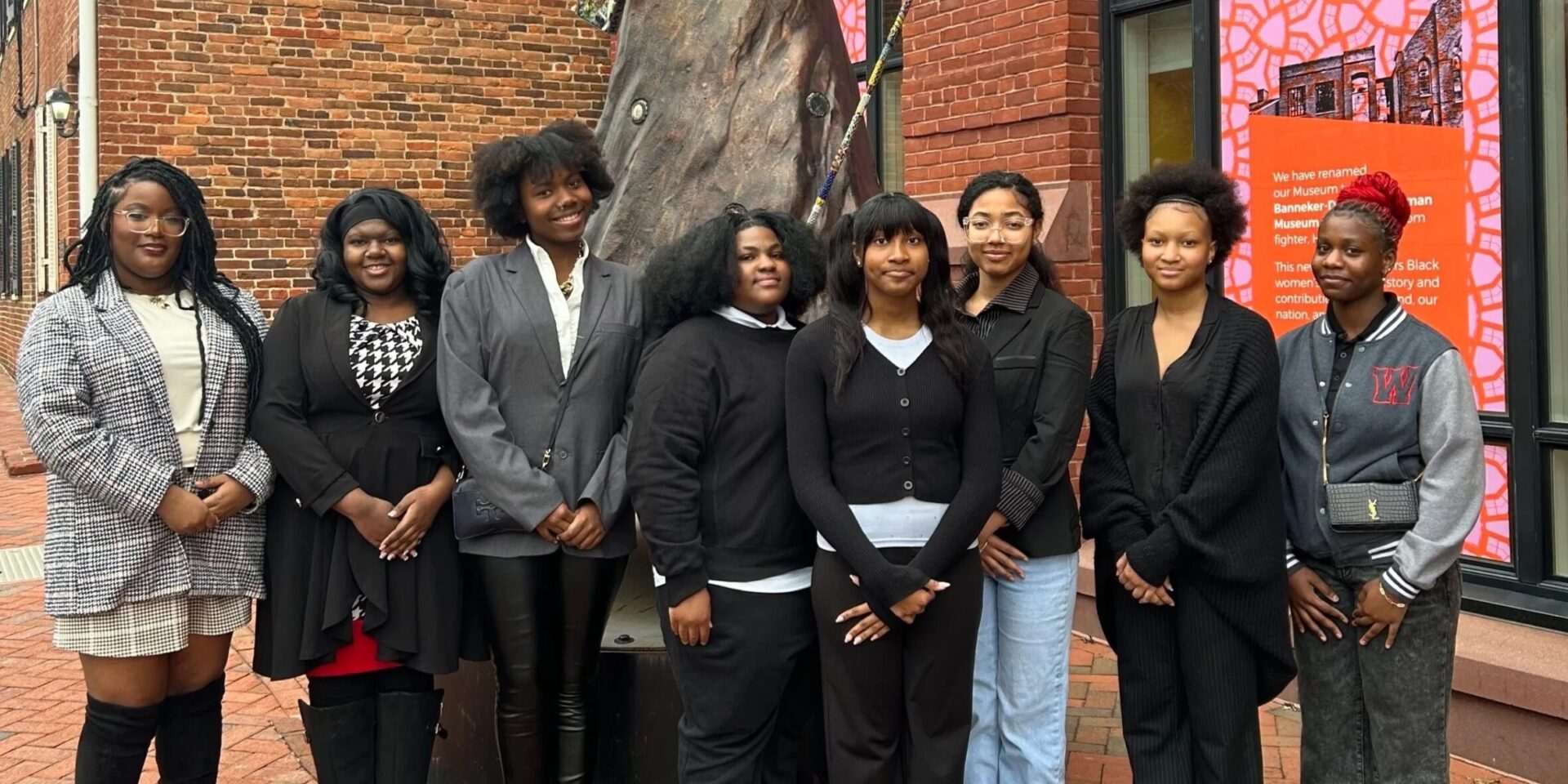
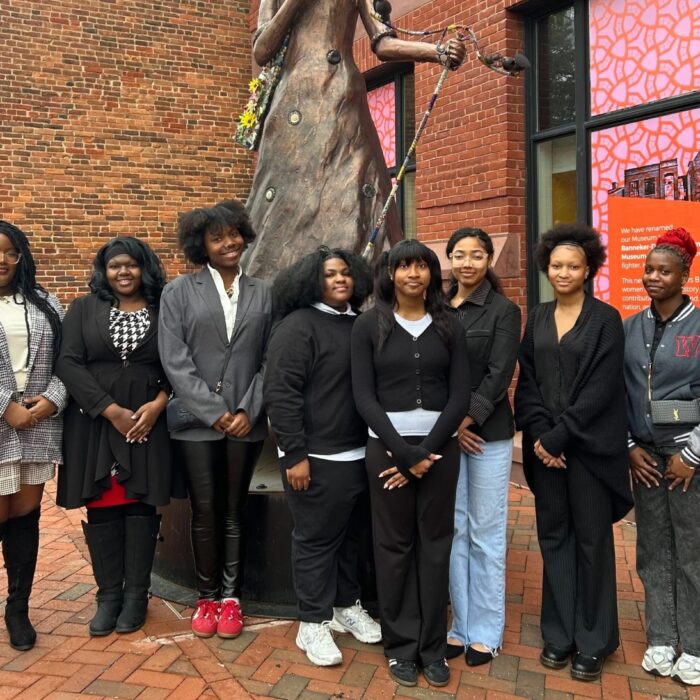
On a field trip, students from Crayons and Culture performed the story of the Great Migration through dance and movement rather than reading about it in a book. Then, they turned the lens on their own families — one student tracing a great-grandmother’s path from the Eastern Shore while another followed their family’s route through South Carolina and New York before settling in Baltimore.
“There’s direct learning, and then there’s learning through life, through community, through dreams,” said Agzja Carey, executive director and founder of Crayons and Culture. “We want children to go back into the classroom with schema and awareness of the world.” It is this kind of work, multiplied across a city, that a stronger future for Baltimore’s children depends on.
That immersive approach is the foundation of Crayons and Culture, a grassroots education organization in Baltimore City built around what Agzja calls the three C’s: centering, curating and connecting. That means anchoring students in their cultural identities, building immersion-based experiences and linking them to their communities.
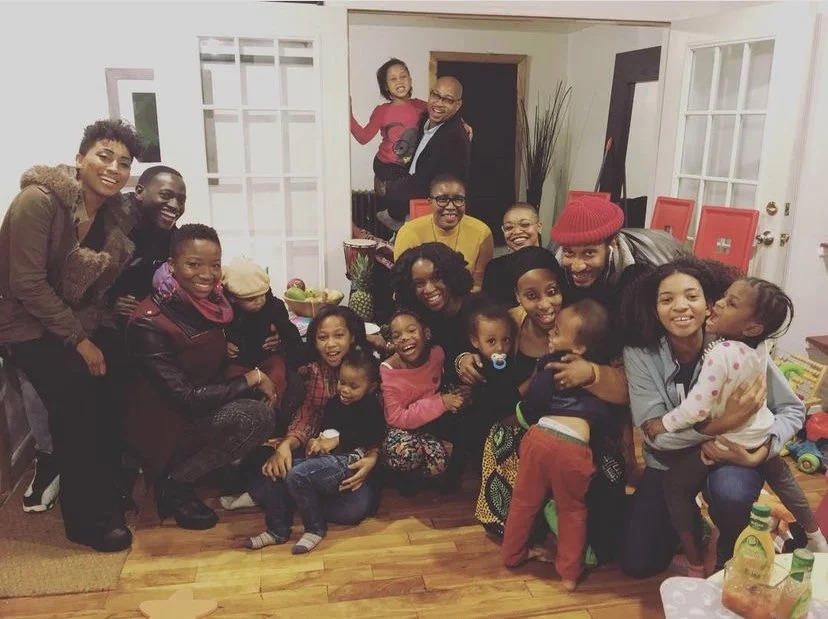
Founded in 2015, the organization runs workshops and community-centered micro-schooling for students of all ages, ranging from infants and toddlers to teenagers. They’re staffed by current and former classroom teachers and community educators who ground everything, from literacy to project-based learning, in culturally relevant teaching practices.
It’s also a piece of a much larger system, one that starts with Baltimore’s Promise and runs through a statewide policy as well as a Northeast Baltimore coalition before it ever reaches a classroom or a student — like the ones on that field trip.
Data That Doesn’t Start From Zero
Baltimore’s Promise, a StriveTogether Cradle to Career Network member, spent more than a decade connecting data across Baltimore City’s schools, agencies and nonprofits so leaders could see where opportunity existed for young people and where it didn’t.
That work is what StriveTogether calls collective impact — aligning a whole community around shared goals and shared data instead of leaving any one program to solve a problem alone. “Our work with StriveTogether is making it possible for Baltimore to dream bigger, do better and really ensure that we hold the long-term vision and result for kids in this city,” said Julia Baez, chief executive officer of Baltimore’s Promise. “By connecting to a national network, folks know we didn’t just come up with this idea someday to do collective impact — it’s grounded in a real theory of change and backed by national expertise.”
That work helped inform Maryland’s ENOUGH Act, a first-in-the-nation state law signed by Gov. Wes Moore in May 2024 that funds 28 community quarterback organizations — local anchor agencies that bring partners together and coordinate the work rather than run it alone. These organizations operate across 12 counties to fight childhood poverty at the neighborhood level. “StriveTogether really helped provide us with critical technical assistance in how to stand up a program like this,” said Carmel Martin, special secretary for Maryland’s Governor’s Office for Children. “They were able to provide all of our grantees with access to a Training Hub in how to do this kind of work and what were best practices.”
One of those quarterbacks is the Y of Central Maryland, selected to lead the ENOUGH Initiative’s work in Waverly, a historic, diverse community in Northeast Baltimore. The Y already served as the community school lead agency for five schools there, and it built a steering committee bringing together those schools, houses of faith, local universities and youth-serving organizations, including Crayons and Culture, around a shared goal.
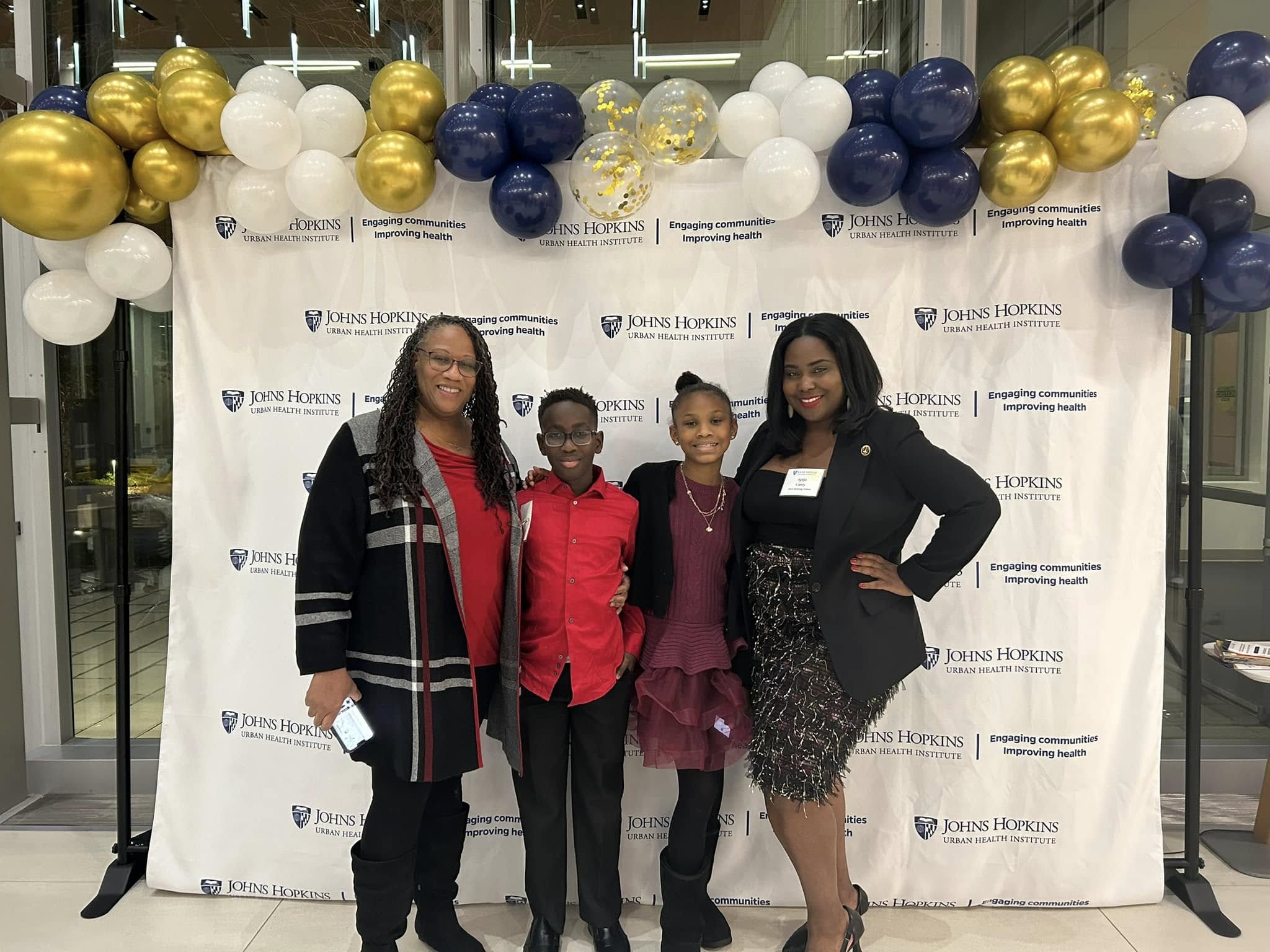
“We recognize that the Y is a legacy institution in our community,” said Derryck Fletcher, chief operating officer of the Y of Central Maryland. “With that scope and scale comes a privilege, and with that privilege comes a responsibility.”
Baltimore’s Promise serves as the Y’s technical assistance partner, helping build the shared governance model the steering committee uses to make decisions, and giving it access to the same data infrastructure that was built for the city. “What excites me most is that we are creating work in real time that is data informed,” Derryck said. “The Data Hub lets us track short-term gains over a longer period, so this work can be sustainable for our community and scaled for others.”
That access matters just as much for a small nonprofit like Crayons and Culture, which sits on the coalition’s resource committee and receives a share of the Y’s ENOUGH Act planning dollars. Rather than starting from scratch, Crayons and Culture builds directly on Baltimore’s Promise’s Opportunities Landscape, which maps where opportunities for young people exist and where they’re missing, then layers its own community listening sessions on top.
“Before we have to start from ground zero, we are already looking at what Baltimore’s Promise has identified as far as where the opportunities are and where they’re lacking, and then we go deeper from there,” Agzja said.
Proof, Powered by Partnership
For a founder running a grassroots nonprofit, that support is not abstract. In 2025, funded through the Summer Funding Collaborative — a group of private and public funders, administered by Baltimore’s Promise, that pools resources to support high-quality summer programming for Baltimore City youth — Crayons and Culture was required to report back attendance and survey data.
Baltimore’s Promise builds that kind of reporting into its funding by design. “Oftentimes what happens in communities is we work off of a lot of assumptions and good feelings, which can get us to some good places, but doesn’t get us to the sustainable change we need to see for young people over time,” Julia said. “What a data ecosystem allows us to do is to know better, to do better.”
For Crayons and Culture, that meant clear proof, in the form of daily attendance in the 90s and satisfaction surveys that came back overwhelmingly positive.
“This partnership has expedited how confidently we go after funding, how confidently we could speak to the efficacy of our program,” Agzja said. “Can I say that 98% of our students had a daily attendance average? Not without this partnership.”
The demand speaks for itself. In 2025, when Crayons and Culture opened applications for its summer program, 105 families applied for just 30 slots in less than 48 hours, forcing the organization to close applications early. This year, families were asking for a spot before the application had even gone live.
“When I see there is an overwhelming demand for this type of programming, that’s the motivation for us to continue building infrastructure and to scale,” Agzja said.
Career Exposure, Early and Often
Through the Northeast Baltimore Coalition, Crayons and Culture receives funding for career-exposure opportunities tied to what students are already passionate about. In its flagship summer program, students spend their days at local businesses instead of a classroom, learning directly from the entrepreneurs who run them. Middle schoolers get first exposure to industries; high schoolers move into fellowships and internships built toward ownership, not just employment.
“We don’t just show them careers. We show them power, and how power moves,” Agzja said. “The earlier they’re socialized to think, ‘I’m the owner and not the employee,’ the more they seek out opportunities that way.”
That mission is personal for Agzja. Growing up in Brooklyn, she watched her mother prioritize her education above all else. Agzja was eventually enrolled in a college-prep private school in California, where she discovered just how far behind her public school education had left her.
“We don’t just show them careers. We show them power, and how power moves. The earlier they’re socialized to think, ‘I’m the owner and not the employee,’ the more they seek out opportunities that way.”
Agzja Carey, executive director and founder of Crayons and Culture
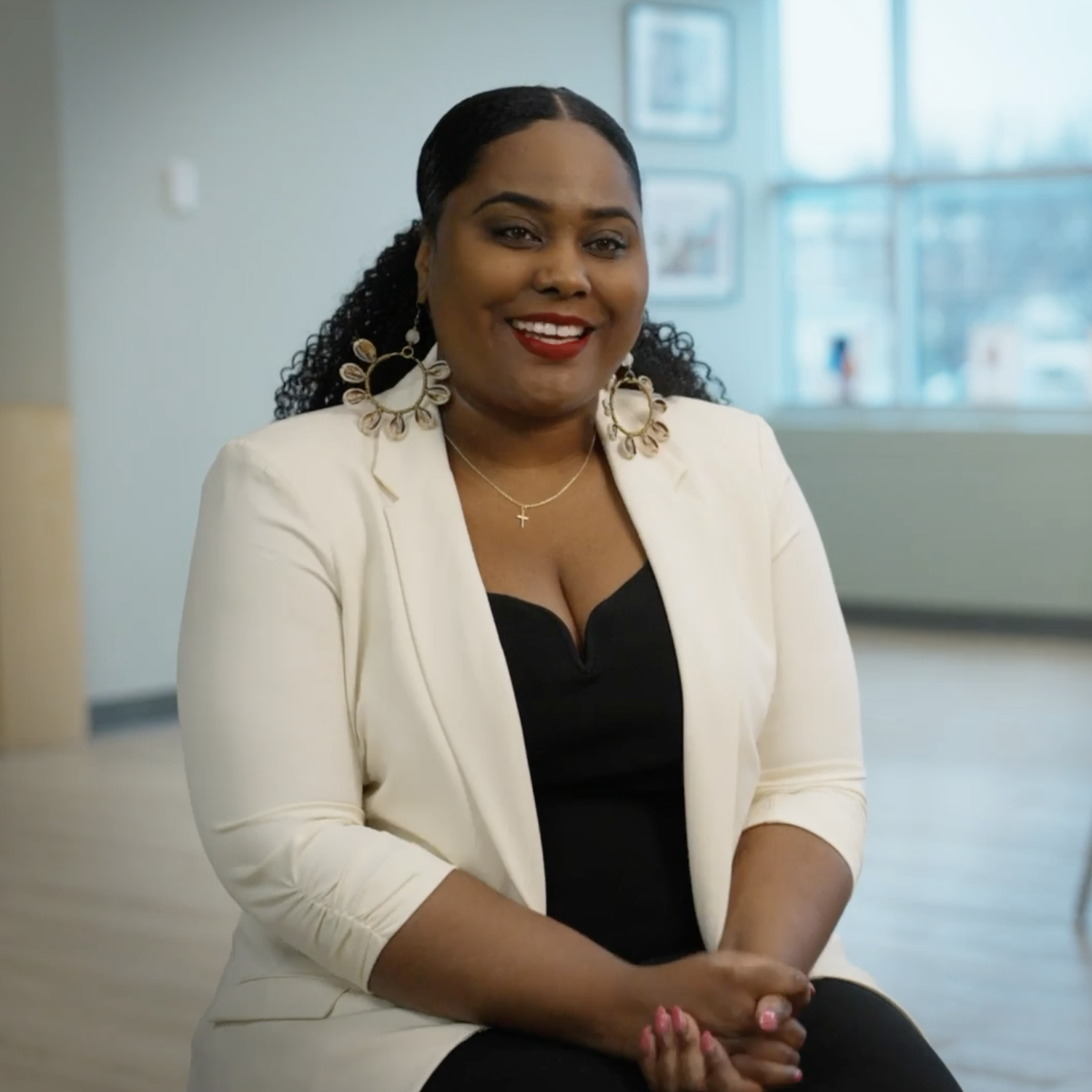
“I had the intelligence. I had the desire,” she said. “But the exposure to go deep wasn’t there until I was placed in that school.” She doesn’t want that gap between a child’s ability and a child’s access to define any student who comes through Crayons and Culture.
That layered approach is what a place-based partnership is designed to do. A legacy institution like the Y brings the size and standing to gather a community. A data-driven network member like Baltimore’s Promise brings the infrastructure that makes that gathering useful. And a grassroots organization like Crayons and Culture brings the trust and cultural specificity to reach the students who need it most.
“One thing that’s really powerful that I’ve learned working with Baltimore’s Promise is that you have an institution dedicated to data,” Agzja said. “We’re not starting from scratch. There’s an institution that already has that done and codified and made it accessible for us, so we can see the gaps in the ecosystem and provide innovative, disruptive solutions.”
A Stronger Future for Baltimore’s Children
Crayons and Culture is now preparing to scale, building the internal systems and team it needs to serve more students without losing what makes its model work. For Agzja, that growth depends on the same infrastructure that got the organization here.
“Access to this data informs our grant applications, our strategies and our partnerships,” she said. “As a small nonprofit, we don’t have the in-house team to compile data and put it back out there. This partnership provides that internal infrastructure.”
For Derryck, success is broader than any one organization: “It’s not enough to work to change the odds. We should be working to change the odds for young people in our community, quite literally.”
That’s what a place-based partnership makes possible: a decade of data work at Baltimore’s Promise turns into a state law, a state law empowers a legacy institution rallying a historic neighborhood. That neighborhood-level work supports a grassroots founder teaching students to see themselves as owners of their own futures. Crayons and Culture is one proof point in a system built to create many more.
Additional Stories
Stronger Future Spotlight: Crayons and Culture in Baltimore