Stronger Future Spotlight: Trinity from Dayton
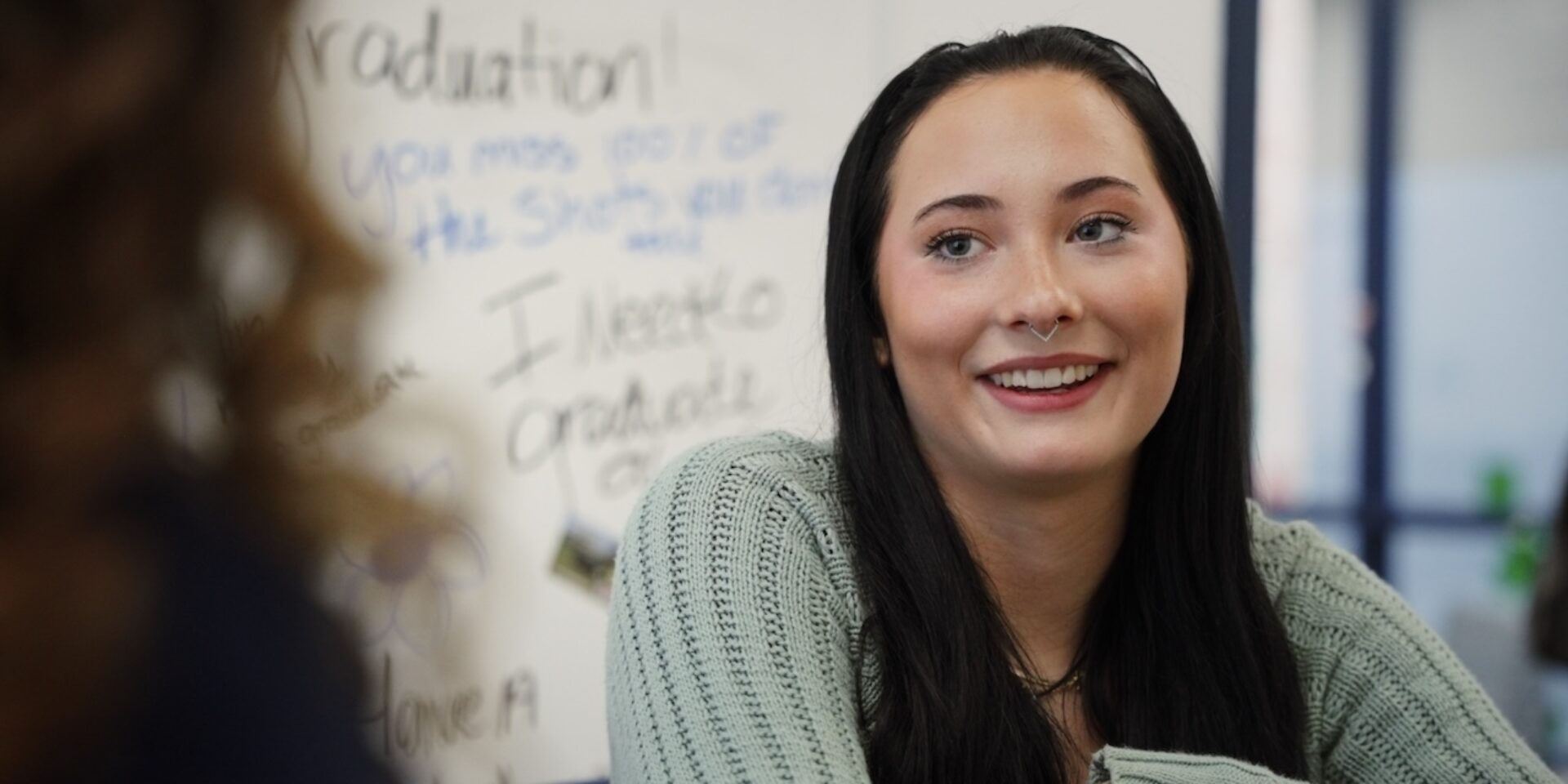
Trinity has been working since she was 15. By the time she was 17, she had moved out of her family home and was supporting herself while still finishing high school. She knew she wanted to be in health care. She just did not know there was a door already open for her.
Then, during a scheduling meeting her junior year, her principal asked her a question that changed her path: What if I could get you a job in a hospital?
“I said, what do I have to do? Like immediately, yes,” Trinity recalls.
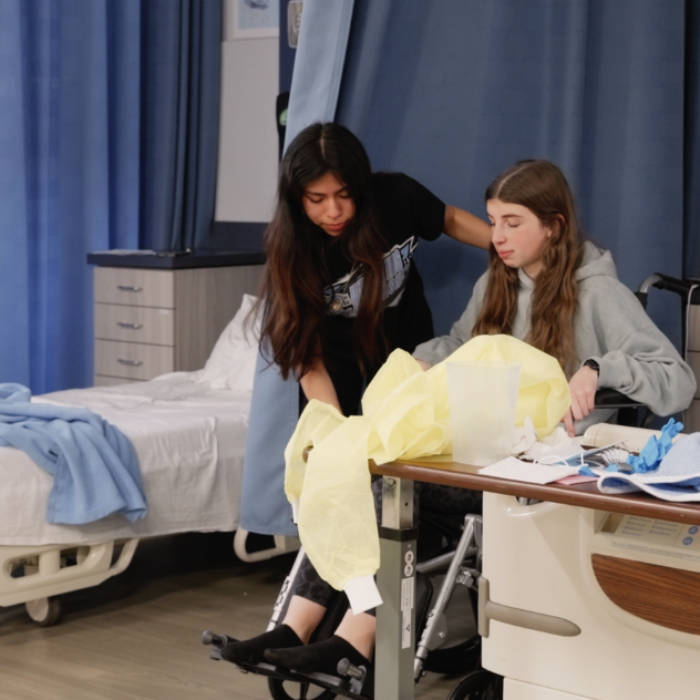
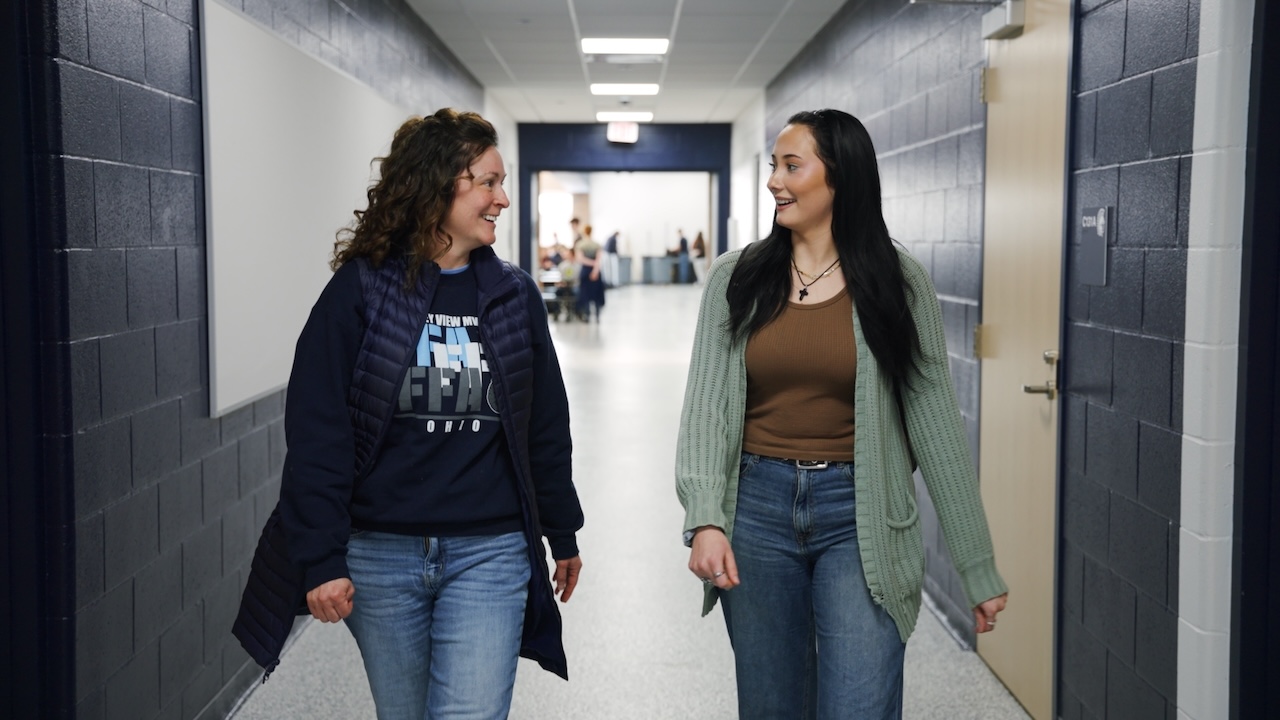
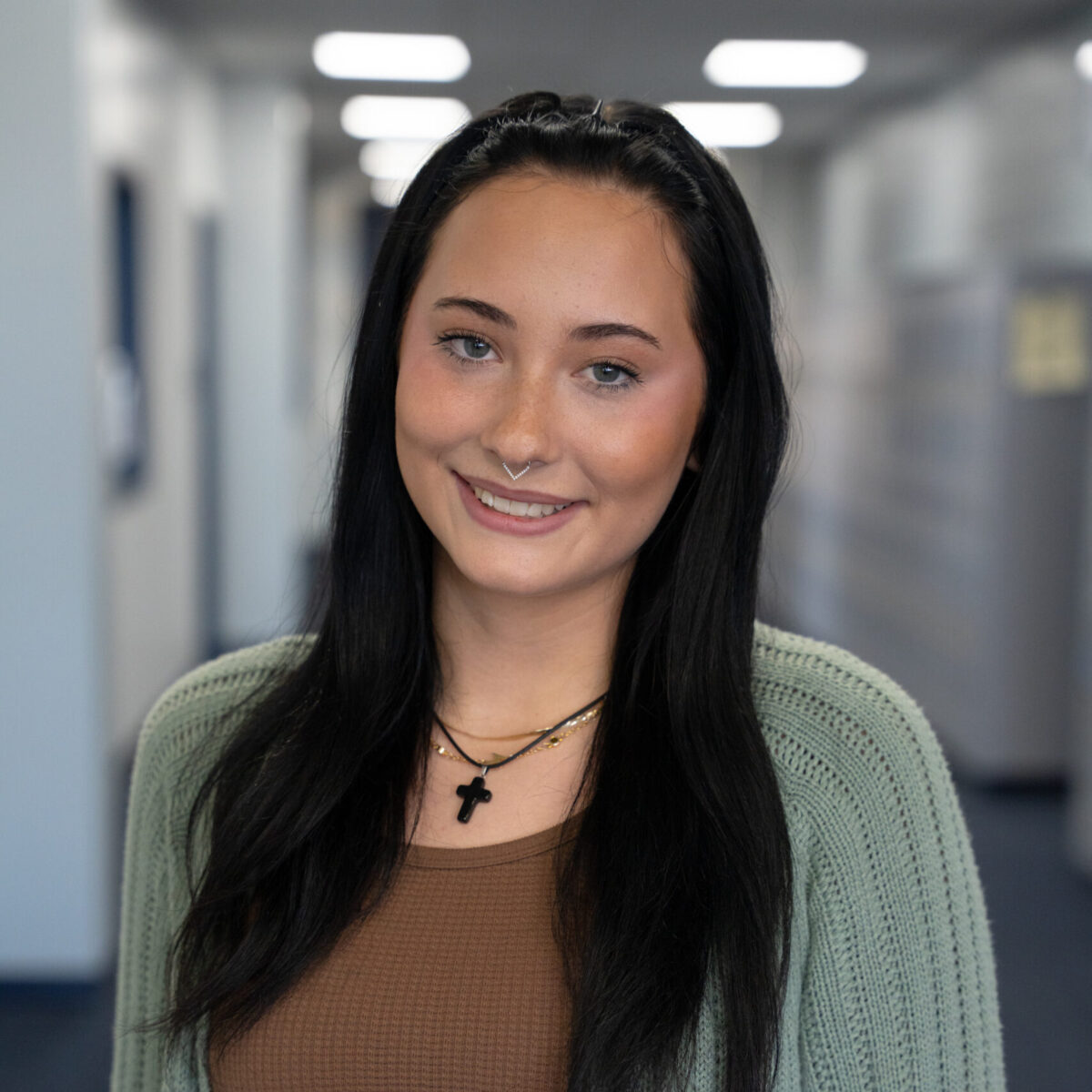
Within weeks, her counselor and principal helped her pull together her resume and create a class schedule that would allow her to work in the hospital. A few months later, she landed an interview at Miami Valley Hospital and she got the job. Today, as a senior at Valley View High School, Trinity works as a safety companion who spends 12-hour shifts at the bedside of patients who need someone present, attentive and steady. She charts their moods and meals every hour. She helps with meals, repositioning and daily care alongside nurses and patient care techs. She is, at 18, already on the path she plans to follow for the rest of her life.
“Every day is different, and I’m learning something new every single day,” she says.
A Door by Design
Trinity’s story did not happen by chance. It happened because a counselor and her principal knew about a partnership, and a partnership existed because a community and eventually a state had decided that it should.
On January 8, 2025, Governor Mike DeWine signed Senate Bill 208 into law, making Ohio the first state to permanently mandate and fund regional cradle-to-career partnerships across all seven of its Jobs Ohio economic development regions. The law is the result of more than a decade of work by Learn to Earn Dayton, a place-based partnership in the StriveTogether Cradle to Career Network built to support students in Montgomery County from early childhood through career, connecting families, schools, employers and community partners around shared outcomes.
SB 208 takes the Learn to Earn Dayton Regional Partnership approach and makes it the standard for every region in Ohio. Through that legislation, regional cradle-to-career partnerships are now written permanently into Ohio law as section 3301.85, accountable to the Ohio Department of Education and Workforce and responsible for connecting state education priorities from early literacy to career-connected learning to FAFSA completion to local practice in every region.
The legislation was designed with longevity in mind. “We don’t just need money to fund them and have to keep going back for money,” said Representative Andrea White, who helped lead the legislation. “We need to institutionalize into Ohio Revised Code the premise that we need to commit to regional cradle-to-career partnerships so that we are truly moving the needle, not just in one budget cycle, but that we are institutionalizing this in the Department of Education and Workforce so that our state is committed to having cradle-to-career partnerships well beyond my time in the General Assembly.”
Learn to Earn Dayton is working every day to create a future where every student in our region has the access to opportunities and the resources they need to achieve economic independence.
Stacy Schweikhart, CEO of Learn to Earn Dayton
The region Learn to Earn Dayton serves needs it. Dayton once had five Fortune 500 companies. Today it has none. Wright-Patterson Air Force Base, now with 38,000 employees, is the largest single-site employer in Ohio, anchoring a defense and aerospace economy growing faster than at any point since World War II. Jeff Hoagland, president and CEO of the Dayton Development Coalition, says the question employers ask first has fundamentally changed and Dayton is in a place to answer yes. “We can pull from multiple labor markets. So, when we are working with companies and answering the question of, ‘Do you have the talent? Do you have the workforce?’ The answer is yes. We have to define with them what are they looking for. Are they looking for engineers? Are they looking for mechanics? Are they looking for construction workers, etc.? But once we get them to the table and once they realize that, okay, they do have the workforce that we need, then we get into the, ‘Okay, here are some buildings. Here’s some land.’ And then, ‘Here are the incentives.'”
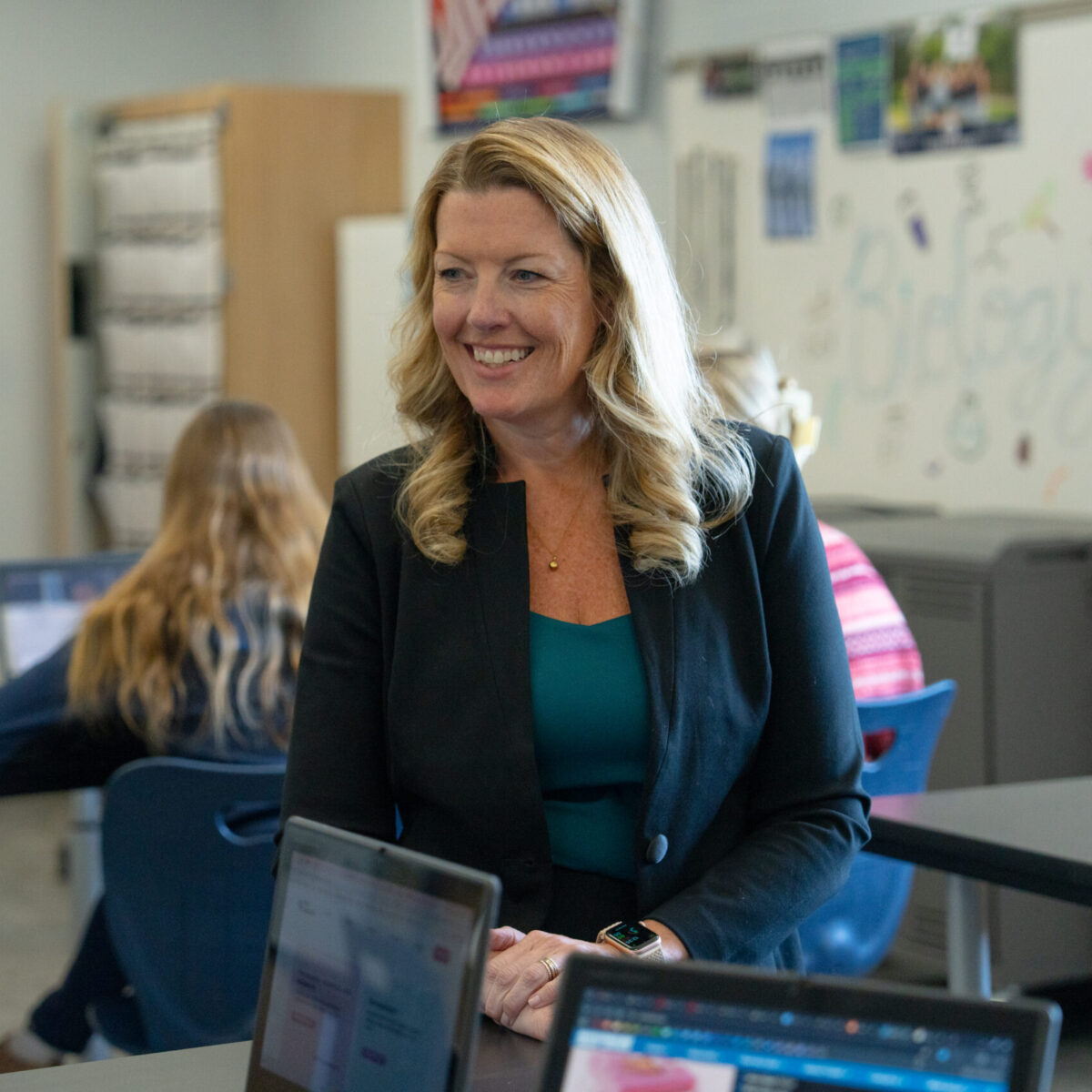
Those buildings and incentives only matter if there are young people who have had the support, from their earliest years through graduation and beyond, to be ready for what comes next. That is where Learn to Earn Dayton comes in. “Learn to Earn Dayton is working every day to create a future where every student in our region has the access to opportunities and the resources they need to achieve economic independence,” says Stacy Schweikhart, CEO of Learn to Earn Dayton.
For Trinity, that system showed up in a single conversation. And because of Senate Bill 208, more communities across Ohio are now building the cradle-to-career infrastructure to create that same kind of connected opportunity, regardless of where young people live.
From Policy to Patient Care
Trinity describes herself as a hands-on learner. Traditional school, she says, has never been her strongest environment. The hospital is different.
“I have to see it in person and work with it. I can’t just imagine it, I have to actually do it.”
That is exactly what career-connected learning is designed to provide. It provides real work experience, tied to a real career pathway, before a student ever leaves high school. For Trinity, it meant landing a paid internship at Miami Valley Hospital through a school partnership that would not exist without the infrastructure Learn to Earn Dayton spent years building. Without that connection, a teenager working to support herself might have graduated with health care ambitions and no idea how to act on them.
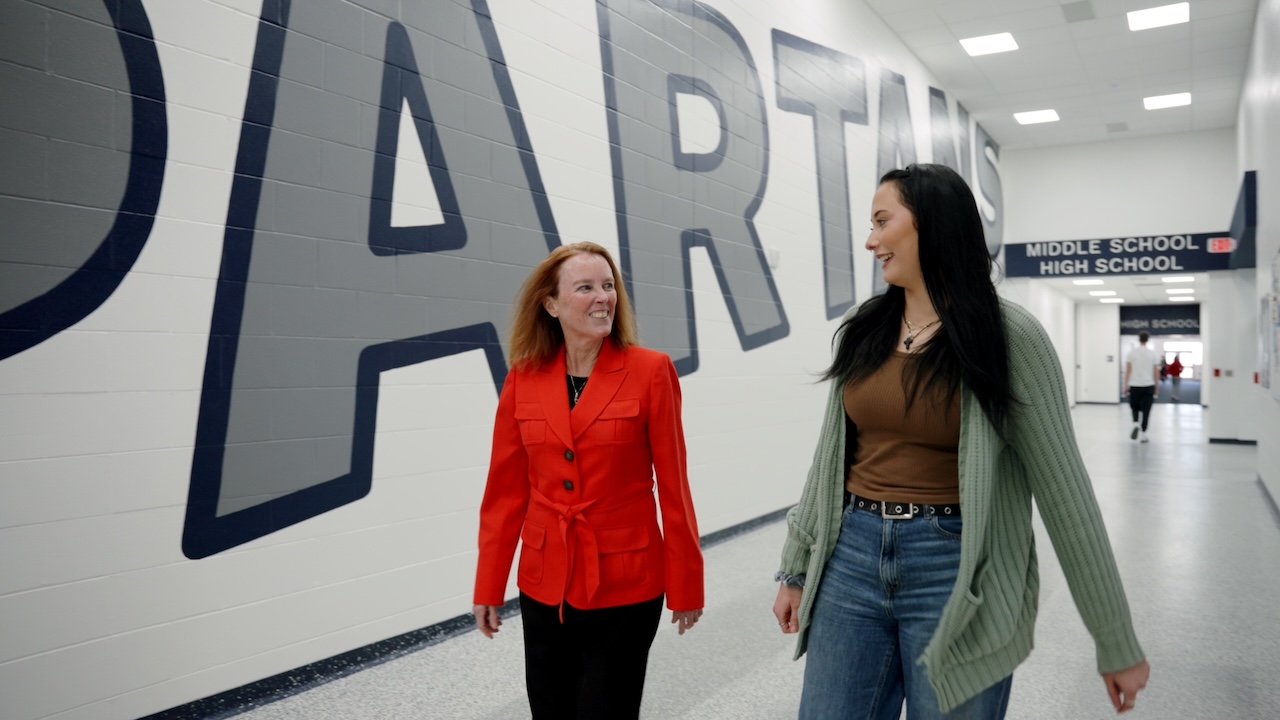
Instead, she is working. While working on the float pool, which is a different unit every shift, no familiar faces and a new set of challenges every day, she has learned more about herself and her future than any classroom could have taught her. She has learned that she can handle pressure. That she can care deeply without losing composure. That working with the most critically ill patients is something she can do, but not something she wants to do forever. That knowledge matters.
“Working on the float pool has helped me realize that I do want to work in labor and delivery,” she says.
She has found her reason. “I just think that labor and delivery is so beautiful because there’s birthday parties every day. There’s someone getting born every day. You’re not surrounded by sickness and death every single day. And yes, that is people’s everyday job, but that’s just not what I’m interested in. I can do it, but I just know that labor and delivery, it would be my strong suit.”
That clarity of knowing not just what you want but why, and what it actually takes, is the point of the pathway. Her next steps are already mapped. After graduation, this paid internship becomes her full-time job. Over the summer, she plans to earn her state-tested nurse aide license, which will allow her to become a patient care tech at Miami Valley. From there, she will pursue her nursing degree at Sinclair Community College and work toward her goal of getting a position as a labor and delivery nurse at Kettering Hospital.
Each step is connected and each one builds on the last. That is the design and SB 208 is now ensuring that more regions across Ohio have the partnerships in place to support every young person, from their earliest years through the start of their careers.
The Policy Behind the Pathway
Trinity is 18, living independently and already earning a paycheck in the field she plans to spend her life in. That is not the story for most young people in Montgomery County who share her circumstances.
The students Learn to Earn Dayton serves are navigating real obstacles from the start. Only about 60% of third graders in the county are reading proficiently and in the highest-poverty districts, that number falls to between 30 and 40%. Research shows that students who are not reading proficiently by third grade are significantly more likely to struggle academically through middle and high school, which means those early gaps have long term impact. By the time a student reaches high school, years of unaddressed need can shape everything from which courses they are placed in to and whether anyone ever sits down with them and maps out a future beyond graduation.
Of the roughly 8,900 hours in a year, Ohio law requires just over 1,000 to be spent in school. That leaves nearly 4,900 waking hours when a student either gets additional academic support or doesn’t. Learn to Earn Dayton works across all of those hours, connecting out-of-school partners to the same evidence-based practices used in classrooms so that learning does not stop at the school door. For a teenager who has already moved out and is working to support herself, that continuity of care and connection is what makes the difference. The question of whether a school counselor knows about a hospital internship, has a relationship with that employer and thinks to make the introduction is not a small thing. For Trinity, it was what made the difference.
SB 208 was built to ensure that communities everywhere have the partnerships in place to support young people at every stage, not just in districts lucky enough to have built those connections on their own.
Tom Lasley, director of policy and advocacy at the Montgomery County Educational Service Center and founder of Learn to Earn Dayton, names what the law was built to change. “Before some of the recent legislation, the problem was where a student lived dictated what opportunities might be provided,” said Tom. “We’re trying to move beyond zip code opportunities to uniform practices that allow all students, regardless of where they live, rural, urban or suburban, we’re trying to create opportunities for them all to be successful.”
Getting there required years of demonstrated results. Learn to Earn Dayton had already helped make the case for the Science of Reading at the state level, work that helped Ohio commit $168 million in its 2023 budget to evidence-based literacy instruction.. More than 300 educators in Montgomery County alone have since been trained in those practices, and Ohio’s third grade reading proficiency rose from 66% to 68% between 2022 and 2024. Dayton Public Schools, starting from a baseline of 38%, also gained two points over the same period.
That track record showed what was possible when place-based partnerships had the resources and relationships to do sustained, coordinated work across a community. SB 208 was built to make that kind of partnership permanent, formalizing regional collaborations across Ohio as long-term infrastructure rather than temporary initiatives.
Representative Andrea White, who sponsored the original House Bill 312 that eventually was included in SB 208, is clear about where the model came from. “Frankly, there would be no legislation without Learn to Earn Dayton. They showed me the way. They showed me how it could work, and they basically role modeled for so many others in the state what it takes.”
What the law now protects is the kind of moment Trinity had. As an inaugural grantee of the Pathways Impact Fund catalyzed by StriveTogether, which invests in place-based partnerships across the country working to improve outcomes for young people from cradle to career, Learn to Earn Dayton is already expanding that work into two neighboring counties, adding more than 2,500 students to career-connected learning pathways. The goal is that no student’s future is shaped by their zip code.
Working in real life situations has definitely made me more comfortable for life after high school because I already know what I’m going to be doing for the next few months.
Trinity Bridenbaugh, Valley View High School Student and safety companion at Miami Valley Hospital
A Stronger Future for All
Trinity moves through her days with the kind of clarity that comes from experience rather than aspiration. She knows what the work feels like, she knows she can do it and she knows what comes next.
“Working in real life situations has definitely made me more comfortable for life after high school because I already know what I’m going to be doing for the next few months,” she says.
That confidence, grounded and earned and pointed toward something specific, is what Learn to Earn Dayton and partnerships like it are building to create for young people. SB 208 is what makes that possible beyond Dayton. Through its passage, regional cradle-to-career partnerships are now written permanently into Ohio law under section 3301.85, ensuring more regions across the state have the infrastructure to support young people from their earliest years through the start of their careers regardless of any future administration or budget cycle.
Stacy says the StriveTogether network is central to how that work grows. “Being part of the Strive Together Cradle to Career Network has given us access to our colleagues doing this work across the country. We learn so much from our peers. Even though communities are different, we all hold the same passion, the same commitment, and we’re working towards the same goals.”
Tom sees StriveTogether’s national reach as what helped turn Dayton’s proof into Ohio law. “Being a part of Strive Together has allowed us to show that a national organization is advocating for something that really is supportive of what we’re trying to do locally. You need the national advocacy, you need the national presence in order for the local efforts to be successful.”
Representative White sees what that combination of local results, national backing and permanent policy means for young people who come after Trinity. “When this takes hold across the nation, you’re going to see even more young people of all socioeconomic backgrounds coming together and saying, ‘I’ve got access to opportunity. I’ve got a future.’ We’re going to see more young people who truly realize their dreams, who truly see that people care, that people are invested in their future, and that they have a pathway to an opportunity that will help themselves thrive.”
Trinity already knows what it means to have someone show up for her, and she carries that into every shift. “I enjoy being able to provide at least a little bit of comfortability to my patients,” Trinity says, “because I know that not every patient has someone with them the entire time.”
Dayton built a system and Ohio made it law so that more young people will have someone in their corner. Trinity’s story shows what happens when it works.
More Stories of Impact
Stronger Future Spotlight: Crayons and Culture in Baltimore