A strong start sets children up for future success. Kindergarten readiness is linked to later outcomes, like third-grade reading, high school graduation, college attendance and earnings. Communities can improve early outcomes through high-quality early learning, engaged caregivers, access to health care, and safe, inclusive schools.
This is part 9 of StriveTogether’s Cradle-to-Career Outcomes Playbook: Kindergarten Readiness. The playbook synthesizes research and practical guidance communities can use to improve kindergarten readiness.
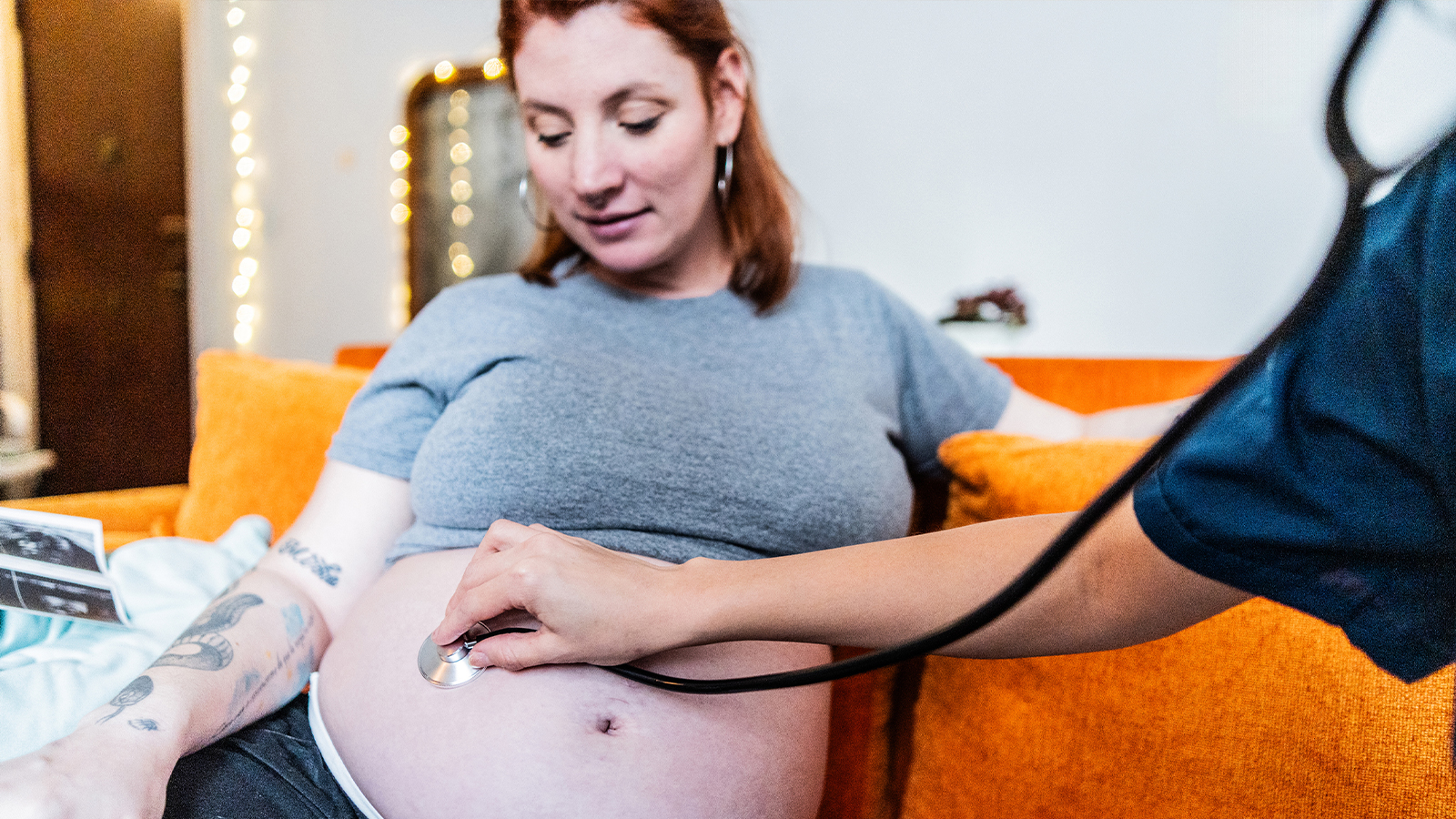
Early experiences and environments, such as access to quality prenatal and neonatal care, are crucial for supporting the healthy development of babies, ensuring maternal health and equipping families with the knowledge and resources needed for a healthy start.
New to the Kindergarten Readiness Playbook?
Learn how to get the most value out of the Kindergarten Readiness Playbook by reviewing the below resource.
Question 14: Do expecting parents have access to quality prenatal and neonatal care?
Why it matters
Quality prenatal care: Early, comprehensive prenatal care improves the chances that a child will be born healthy. Prenatal care presents a critical opportunity to identify and treat maternal health conditions that threaten the birth of a healthy child. Mothers who receive good prenatal care are less likely to have preterm or low birthweight infants and are more likely to obtain regular pediatric care for their young children (Rhode Island Kids Count). Having access to quality prenatal care supports the healthy development of babies and equips expectant parents with knowledge and resources for a healthy pregnancy, how to care for a newborn and how to care for maternal and family’s health postpartum (Rhode Island Kids Count).
Quality neonatal care: All newborns should have access to essential newborn care, called neonatal care, which is critical for all babies in the first days after birth. This care includes delayed cord clamping, assessment of breathing, skin-to-skin contact and initiating breastfeeding (World Health Organization).
Contributing factor
Prenatal, neonatal and maternal health
Percentage of births to women who receive late or no prenatal care (Rhode Island Kids Count).
Group Prenatal Care: A model of care facilitated by a trained health care provider and delivered in a group setting. States can financially support Group Prenatal Care (Prenatal to 3 Policy Impact Center).
Community-based doulas: Specializing in culturally competent perinatal care, they provide families with support and knowledge (Prenatal-to-3 Policy Impact Center).
AVANCE Parent-Child Education Program (PCEP): Nine-month intensive bilingual program for child development (Results for America).
Breastfeeding promotion programs: Provide education and information about breastfeeding to women throughout prenatal and postnatal care (Results for America).
CenteringPregnancy: Group maternity care that provides health assessments, education and support to pregnant women (Results for America).
Clinic-based programs for pregnant and parenting teens: Comprehensive programming focused on delivering medical and social services to new and expecting teen parents (Results for America).
Criando con Amor: Promoviendo Armonía y Superación (CAPAS): Culturally-adapted program for Latine parents focused on reciprocity of positive interaction between parents and children (Results for America).
Family Foundations: Education and skills-based program for first-time expectant parents (Results for America).
Nurse-Family Partnership: Provides home visits by registered nurses to low-income first-time mothers (Resultsfor America).
ParentCorps: Early childhood, family-centered intervention that takes place in schools and Head Start programs (Results for America).
Preschool with family support services: Combination of high-quality early childhood education, parent education and training programs, home visiting and other support services (Results for America).
SafeCare: Skills-based parent training program for caregivers of young children (Results for America).
Triple P – Positive Parenting Program: Offers families simple and practical strategies to help their children foster healthy relationships and manage behavior (Results for America).
Offering varied staffing and delivery sites that are convenient and desirable to expecting parents: Many evidence-based supports are delivered by registered nurses or licensed social workers. Given the diversity of these supports, however, staffing structures can vary significantly. Delivery sites also vary, but most frequently include clients’ homes, health clinics and high schools (Results for America).
Health care access and utilization, prenatal/maternal health and mental health (StriveTogether 2021).
Group Prenatal Care: a model of care facilitated by a trained health care provider and delivered in a group setting. States can financially support Group Prenatal Care (Prenatal to 3 Policy Impact Center).
Perinatal telehealth services: Refers to the use of technology to deliver or enhance health care services in a remote setting (Prenatal to 3 Policy Impact Center).
Increasing access to high-quality health care and education (Results for America).
Smart Start North Carolina: Comprehensive, statewide early childhood initiative providing communities with funding for educational child care, health care and family support services (Results for America).
Medicaid extended postpartum coverage, part of the Consolidated Appropriations Act of 2023, aims to improve maternal health, coverage stability and address racial disparities in maternal health (KFF).
DC Paid Family Leave, which includes 2 weeks of prenatal leave for doctor’s appointments needed during pregnancy, totaling up to 14 weeks of paid leave for pregnant persons (DC Paid Family Leave).
Question 15: Do families live in well-resourced neighborhoods?
Why it matters
Well-resourced neighborhoods: Students and families in lower-income neighborhoods have limited access to resources and opportunities that promote economic mobility. The size of the middle class in an area is associated with levels of upward mobility. Moving to a lower-poverty area before age 13 improves the likelihood of students eventually attending college and earning more as adults. Economic segregation varies by race, with a higher percentage of Black and Latine people from low-income households living in low-income communities compared to white people from similar economic backgrounds (Education-to-Workforce Framework).
Affordable housing: A lack of affordable housing leads to material hardships like reduced access to food, clothing, medicine and transportation, while also negatively impacting mental and physical health, such as increased depression among tenants behind on rent and developmental delays in children living in poor housing conditions. This issue is also linked to higher eviction rates, disproportionately affecting families in low-income households, women and people of color (Education-to-Workforce Framework).
Well-resourced neighborhoods and family well-being: A well-resourced neighborhood, in contrast, has affordable housing in safe communities, diversity of income and demographics, access to technology, transportation and other resources that help families thrive. Affordable, stable and safe housing is foundational to individual and family well-being. Children who grow up in safe and stable housing are more likely to enter kindergarten ready to learn, succeed in elementary and middle school and graduate from high school. Adults living in stable housing are more likely to complete postsecondary training and obtain and keep high-quality employment. And individuals with lower incomes living in mixed-income neighborhoods tend to experience better outcomes at all life stages (Results for America).
Contributing factor | Key source: E-W Framework
Access to affordable housing
Percentage of residential units that are unoccupied, or vacant, in a given year, disaggregated by rentals and homeownership (US Census Bureau).
Average age of housing stock, which helps communities isolate potential issues, like exposure to asbestos and/or lead paint and connect people to resources (US Census Bureau, American Community Survey).
Students experiencing housing instability and changing schools as a result (Data sources: Local SEA, LEA or school records or analysis) (StriveTogether 2021).
Number of students experiencing housing instability that requires changing schools(StriveTogether 2021).
Percentage of families with children under age 6 paying more than 30% of their income for housing (rent or mortgage plus heat and utilities) (Rhode Island Kids Count and StriveTogether 2021).
Number of affordable and available housing units per 100 households with low, very low, and extremely low incomes. This metric reflects the extent of housing options for households with low incomes. Housing is considered affordable when monthly costs fall at or below 30 percent of a household’s income (Urban Institute).
Environmental racism, as measured by air quality index (StriveTogether 2021).
Environmental racism, as measured by environmental health hazards (StriveTogether 2021).
Level of public investment in neighborhoods as measured through programs like Opportunity Zones, Community Development Blocks and tax credits (StriveTogether).
Share of people experiencing poverty who live in high-poverty neighborhoods. A high-poverty neighborhood is where more than 40% of residents are experiencing poverty. This metric reflects the extent of economic segregation in a community (Urban Institute).
Healthy home environment assessments: Professional home inspections evaluating environmental health risks (Results for America).
Proactive inspections to help maintain safe and healthy housing. The foundation of many effective programs is a more strategic deployment of a jurisdiction’s home inspection capacity. Oftentimes, this includes using data analysis to identify high-risk blocks or neighborhoods and then sending inspectors to walk those areas, conduct visual exterior assessments, speak to residents and schedule proactive inspections (Results for America).
Raising tenant and landlord awareness about maintaining safe and healthy housing. Many successful programs include a robust education component — often run by inspectors — to help landlords and tenants identify home hazards and other threats to home safety. This can include written materials, videos and public workshops (for instance, walking through a home to demonstrate an inspection). Such efforts also often include information on how to request a home inspection (Results for America).
Guided play through playscapes, like Play on Purpose sites that encourage children and adults to engage in “guided play” (Results for America).
Housing rehabilitation loan and grant programs: Funding in the form of loans and/or grants to income-eligible owner-occupants to assist with repair, rehabilitation and/or reconstruction of homes (Results for America).
To ensure property owners have the financial capacity to address home hazards, some programs provide income-eligible property owners with grants and/or loans to assist with repair, rehabilitation and/or reconstruction of homes. Funding is often tied to specific forms of home improvement, such insulation, plumbing or mold removal (Results for America).
Lead paint abatement programs: Programs focused on removing lead-based and contaminated surfaces from homes and other buildings (Results for America).
Ratio of the number of affordable housing units to the number of households with low and very low incomes in an area (by city or county). Housing units are defined as affordable if the monthly costs do not exceed 30% of a household’s income. Households with low incomes are defined as those earning below 80% of area median income (AMI), and very low-income households are defined as those earning below 50 percent of AMI (Education-to-Workforce Framework).
Adopting rent regulation, eviction prevention, just-cause eviction and right-to-counsel policies to protect tenants (Urban Institute).
Balancing community development with creating opportunities for residents with low incomes to move to more resource-rich communities (Urban Institute).
Creating affordable homeownership opportunities, including by providing down payment or closing-cost assistance and expanding access to financing, such as through the use of subsidized or shared appreciation (Urban Institute).
Creating more dedicated affordable housing, including by subsidizing affordable housing development, establishing incentives for developers to create affordable units (e.g., density bonuses) and exploring ways to build affordable housing on publicly-owned land (Urban Institute).
Creating permanent supportive housing for individuals and families experiencing chronic homelessness (Urban Institute).
Enacting foreclosure prevention, property tax relief and rehabilitation assistance programs to assist homeowners (Urban Institute).
Expanding affordable housing in resource-rich neighborhoods (Urban Institute).
Increasing the overall housing supply, including by reforming zoning and land-use policies, streamlining permitting processes and creating incentives for developers to build new housing (Urban Institute).
Preserving subsidized and unsubsidized affordable rental housing (Urban Institute).
Providing rental assistance to residents and incentivizing landlords to rent to tenants receiving assistance (Urban Institute).
Reforming property taxes and property assessment processes to ensure that they do not disproportionately burden residents with low incomes (Urban Institute).
Supporting community development in high-poverty neighborhoods, including by addressing vacancy and blight; and investing in schools, transportation and job creation (Urban Institute).
Supporting permanently affordable housing models, such as community land trusts (Urban Institute).
Access to internet and computer/devices and technical support (StriveTogether 2021).
Percentage of the community that has access to a desktop or laptop, a smartphone, a tablet or another computer (Data source: American Community Survey) (StriveTogether 2021).
Percentage of households that have broadband internet subscriptions (Data source: American Community Survey) (StriveTogether 2021).
Percentage of individuals who have both (1) access to at least one desktop or laptop computer owned by someone in the home and (2) reliable broadband internet (Education-to-Workforce Framework).
Share of households with a computer and broadband internet subscription in the home. This metric reflects a community’s digital divide by measuring in-home access to a computer and the internet, including DSL, cable modem, cellular data and fiber connections (Urban Institute).
Local and state coalitions who advocate for access to broadband with city and state officials and by partnering with telecommunications companies (National Council of State Legislatures).
Addressing financial barriers to home broadband internet access, including by providing direct cash transfers or subsidies for the costs of broadband service and devices, such as laptops, tablets and phones (Urban Institute).
Addressing physical barriers to home broadband internet access, such as the lack of appropriate infrastructure or wiring (Urban Institute).
Creating free, public options for accessing the internet, including by providing Wi-Fi in public, accessible spaces like libraries (Urban Institute).
Providing digital literacy training for residents, particularly underserved residents, to close the digital divide (Urban Institute).
State subsidizes broadband subscriptions for families with limited incomes (FCC).
Federal Bipartisan Infrastructure Law: Offers broadband infrastructure and digital equity grants (Connected Nation).
Average travel time to school (Data sources: Local SEA, LEA or school records or analysis) (StriveTogether 2021).
Average travel time to work (Data sources: Center for Neighborhood Technology; American Community Survey) (StriveTogether 2021).
Percentage of workers who commute by walking and by biking (Data sources: Center for Neighborhood Technology; American Community Survey) (StriveTogether 2021).
Trips made to work by mass transit (Data sources: Center for Neighborhood Technology; American Community Survey) (StriveTogether 2021).
Share of income spent on transportation. This metric reflects how much households spend on both public transit and cars (Urban Institute).
Transit trips index. This metric reflects a community’s access to public transportation. It is percentile-ranked nationally based on the number of public transit trips taken annually by an average household earning 80% of the area median income (Urban Institute).
The Low Transportation Cost Index, from the U.S. Department of Housing and Urban Development (Education-to-Workforce Framework).
Complete Streets approach to ensure the design of streets balance the needs of different modes of transportation, support local land uses, economies, cultures and natural environments (Smart Growth America).
Availability of public transportation subsidies for students (Data sources: Local SEA, LEA or school records or analysis) (StriveTogether 2021).
Affordable housing within walking distance from public transportation (Data source: Center for Neighborhood Technology) (StriveTogether 2021).
Transit connectivity index (Data source: Center for Neighborhood Technology) (StriveTogether 2021).
Encouraging housing development near transit, including affordable housing and housing for people with disabilities (Urban Institute).
Expanding transportation options, including public transportation, such as buses and light rails, and active transportation, such as bike lanes and sidewalks (Urban Institute).
Improving the quality and frequency of public transportation (Urban Institute).
Improving transportation accessibility for people with mobility challenges, including by creating paratransit systems and ensuring existing transit is accessible to people with disabilities (Urban Institute).
Reducing barriers to using public transportation, including by providing fare subsidies, making systems easy to navigate (e.g., having clear signage and route maps in multiple languages), and centralizing fares across different modes of transportation (Urban Institute).
Contributing factor
Just policing
Juvenile arrests per 100,000 juveniles. High number of arrests among young people, ages 10 to 17, is a strong indicator of elevated criminal legal system involvement and over policing. This metric includes arrests for any crime or status offense (Urban Institute).
Creating community responder or co-responder programs for nonviolent emergencies, such as mental health or behavioral crises, domestic disputes, traffic safety issues and homelessness (Urban Institute).
Creating diversion programs and other alternatives to arrest, trial and incarceration (Urban Institute).
Improving police officer recruitment, retention and training, as well as addressing officer wellness (Urban Institute).
Minimizing the use of over-policing strategies, including stop-and-frisk, pretextual and non-safety-related traffic stops and “broken windows” policing (Urban Institute).
Shifting funding from police departments to other local agencies where appropriate, such as funding programs in schools to address truancy instead of relying on police officers to enforce truancy laws (Urban Institute).
Shifting toward evidence-based policing, in partnership with communities (Urban Institute).
Supporting greater police accountability, including by publishing data on police misconduct and use of force, advocating for the reform of qualified immunity and creating civilian oversight boards that operate independently of law enforcement agencies (Urban Institute).
Proportion of children with a parent or guardian who has served time in jail (Data source: Health Resources and Services Administration) (StriveTogether 2021).
Rates of reported violent crime and property crime (Data source: Federal Bureau of Investigation) (StriveTogether 2021) (Urban Institute).
Rate of juvenile justice arrests (Data source: Federal Bureau of Investigation) (StriveTogether 2021).
Rate of violent felonies and property felonies by city or county (number of incidents per 100,000 residents) (Education-to-Workforce Framework).
Creating reentry supports for those recently released from jail or prison (Urban Institute).
Implementing restorative justice approaches, which can help reduce recidivism (Urban Institute).
Improving neighborhoods by redeveloping vacant or abandoned properties, installing street lighting and supporting community development activities (Urban Institute).
Improving residents’ financial security, including by strengthening the social safety net and reducing obstacles to accessing public benefits (Urban Institute).
Preventing gun violence by limiting access to firearms and raising awareness of gun safety best practices (Urban Institute).
Promoting community-led violence prevention initiatives, which identify residents at highest risk and intervene before conflict occurs (Urban Institute).
Shifting toward evidence-based policing, in partnership with communities (Urban Institute).
Contributing factor | Key source: E-W Framework
Neighborhood economic diversity
Percentage of children under age 6 living in neighborhoods in which more than 20% of the population lives in poverty (Rhode Island Kids Count).
Percentage of city or county residents experiencing poverty who live in a high-poverty neighborhood (defined as a neighborhood in which more than 40% of residents experience poverty) (Education-to-Workforce Framework).
Percentage of families who have lived in poverty for two generations or more (Brookings Institute).
Contributing factor | Key source: E-W Framework
Neighborhood racial diversity
Neighborhood exposure index, or share of a person’s neighbors who are people of other races and ethnicities (Data source: American Community Survey) (StriveTogether 2021).
Percentage of an individual’s neighbors who are members of other racial or ethnic groups, calculated as a Neighborhood Exposure Index (Education-to-Workforce Framework).
Proportion of community residents who are immigrants (Data source: National Equity Atlas) (StriveTogether 2021).
Ratio of the share of local elected officials of a racial or ethnic group to the share of residents of the same racial or ethnic group (Data sources: American Community Survey; local elections data) (StriveTogether 2021).
Share of the voting-eligible population who are registered to vote and share who turn out to vote (Data source: Census) (StriveTogether 2021).
Index of people’s exposure to neighbors of different races and ethnicities. Racially and ethnically diverse neighborhoods are hallmarks of inclusive communities. This metric calculates separately for each racial or ethnic group the average share of that group’s neighbors who are members of other racial or ethnic groups (Urban Institute).
Narrowing racial homeownership gaps, including by creating affordable homeownership opportunities for households of color (Urban Institute).
Reducing housing discrimination in the private market, including by enacting source-of-income laws and funding fair housing organizations (Urban Institute).
Reforming zoning policies to allow for more diverse, high-density, mixed-income communities (Urban Institute).
Contributing factor
Political participation and representation
Ratio of the share of local, elected officials of a racial or ethnic group to the share of residents of the same group. Political scientists commonly use this metric to capture the extent to which racial and ethnic groups are represented by their community’s elected leaders (Urban Institute).
Share of the voting-age population who turns out to vote. Voter turnout is a well-established and broadly available reflection of political engagement in a community (Urban Institute).
Adopting direct democracy practices, such as participatory budgeting, to empower community members and encourage them to participate in local governance (Urban Institute).
Creating public financing systems for local elections (Urban Institute).
Reducing barriers to voting, including by automatically registering voters, expanding the number of voting sites and their voting hours and offering additional options, such as mail-in, early and absentee voting (Urban Institute).
Restoring voting rights to formerly incarcerated people (Urban Institute).
Scheduling local elections to coincide with state or national elections, which can lead to a more representative electorate (Urban Institute).
Scheduling local elections to coincide with state or national elections (Urban Institute).
Strengthening and diversifying the local government workforce, including by investing in hiring, recruitment, training and compensation (Urban Institute).
Strengthening civics education courses in schools (Urban Institute).
Supporting labor unions and the right to organize (Urban Institute).
Switching from at-large to district elections, adopting proportional representation systems and moving to choice voting or cumulative voting systems to make local governments more representative of their constituents (Urban Institute).
Contributing factor
Civic engagement
Economic connectedness index. This metric reflects the extent to which people with low socioeconomic status and people with high socioeconomic status are friends, as measured through connections on Facebook (Urban Institute).
Number of community membership associations per 10,000 people. Membership associations provide opportunities for people to form robust social networks in a community (Urban Institute).
Creating and maintaining parks and other public spaces such as libraries that give residents the opportunity to interact with one another (Urban Institute).
Encouraging the formation of neighborhood associations (Urban Institute).
Encouraging socialization across socioeconomic groups, including by designing public spaces intentionally and fostering connections across neighborhoods (Urban Institute).
Promoting civic engagement and participation, including by creating connections between neighborhood residents and city leaders (Urban Institute).
Contributing factor
Environmental quality
Air quality. Carcinogenic, respiratory and neurological toxins in the air can harm people’s health. A higher value for this metric indicates better air quality and lower exposure to toxins (Urban Institute).
Addressing home health hazards, such as lead paint and pipes, to foster safe and healthy home environments (Urban Institute).
Developing parks and other green spaces to absorb carbon and improve air quality (Urban Institute).
Improving the quality and frequency of public transportation and encouraging housing development near transit to reduce reliance on personal vehicles (Urban Institute).
Incentivizing private-sector actors to reduce their carbon footprints, including by leveraging government procurement and contracting procedures (Urban Institute).
Investing in green infrastructure, such as permeable pavements, that can help mitigate exposure to environmental stressors like extreme heat (Urban Institute).
Reducing the carbon footprint of all public-sector operations, including by transitioning to clean energy sources, electrifying bus and vehicle fleets, retrofitting city-owned buildings and implementing other energy efficiency measures (Urban Institute).
Question 16: Do families with young children have access to public support?
Why it matters
Access to public support: Families with young children need access to support, especially those facing economic challenges and the persistent effects of racial inequities. Supports include employment services, access to health care, child care subsidies and income support programs.
Access to child care subsidies: Families rely on child care to be able to work and provide the early education experiences needed to prepare their children for school. The high cost of child care puts quality care and early education out of reach for many families, particularly families experiencing poverty. Access to child care subsidies helps families afford higher-quality child care (Rhode Island Kids Count).
Family economic stability: Poverty experienced during early childhood can have negative effects on children’s health and development. On average, children experiencing poverty between the ages of 2 and 5 have significantly lower scores on intelligence and verbal tests than other children. They are more likely to experience behavioral problems that affect their learning and are less likely to be ready for school due to the lack of economic resources in the family. Social factors associated with poverty, such as low parental education, teen parenting and lack of community resources are significant obstacles for young learners and their families to overcome (Rhode Island Kids Count).
Food security: Food security and access to healthy food are related to improved health, emotional well-being and social functioning. Food insecurity is correlated with a host of negative outcomes, including gaps in children’s development. Marginalized populations are more likely to experience food insecurity. For example, food insecurity in Black and Latine households is twice the rate as that in white households. Families experiencing or close to poverty are more likely to be food insecure and have access to less nutritious food. Although participation in the federal Supplemental Nutrition Assistance Program (SNAP) reduces the prevalence of very low food insecurity by about one-third, not all eligible individuals enroll in this program (Education-to-Workforce Framework).
Health insurance coverage: Children and families with health insurance are more likely to access primary health care services that can prevent health problems or address existing chronic or acute health conditions. Lack of health insurance can affect a child’s school attendance and ability to participate in school activities. Lack of health care or delays in treating children’s health problems can negatively affect cognitive, emotional, behavioral and physical development (Rhode Island Kids Count).
Income support programs: Research shows that although income supports, such as WIC, health insurance, food stamps and child care subsidies do not increase a family’s cash income, they do provide real economic resources to families and greatly enhance quality of life. Income support programs increase the chances that young children will have food, housing and health insurance, and that their families can maintain jobs and enroll children in high-quality early education programs (Rhode Island Kids Count).
Percentage of eligible children under age 6 receiving child care subsidies (Rhode Island Kids Count).
Percentage of eligible families receiving assistance to pay for child care through subsidies (Education-to-Workforce Framework).
Governance structures established, like Children’s Cabinets, to promote collaboration across state agencies and improve the well-being of children (National Governors Association).
Contributing factor
Family economic stability (e.g., poverty levels)
Percentage of eligible units with children under age 18 not receiving SNAP (Desired outcome: Families have access to necessary services through expanded eligibility, reduced administrative burden or programs to identify needs and connect families with services) (Prenatal to 3 Policy Impact Center).
Children from birth to age 6 living in families with income below the poverty threshold (Project THRIVE, The National Center for Children in Poverty, Rhode Island Kids Count).
Children from birth to age 6 living in extreme poverty (i.e., family income at or below 50% of the federal poverty level) (Project Thrive, NCCP).
Household income at 20th, 50th and 80th percentiles. This metric captures the financial resources available to low-, middle-, and high-income households and the extent of income inequality in a community. Larger gaps between values for the three income groups indicate greater inequities (StriveTogether 2021 and Urban Institute).
Household income and incarceration for children from low-income households (StriveTogether 2021).
Income segregation and intergenerational mobility across colleges (StriveTogether 2021).
Pay on an average job compared with the cost of living. This metric reflects the supply of jobs in a community that pay enough to meet the local cost of a family’s basic needs (Urban Institute).
Ratio of the share of total home values owned by a racial or ethnic group to the share of households of the same group. This metric shows the degree of racial and ethnic disparity in housing wealth. The larger the difference between the two values, the greater the inequities (Urban Institute).
Share of adults in the community ages 25 to 54 who are employed. This is a common metric for measuring employment levels among prime-age workers, also known as the employment-to-population ratio (Urban Institute).
State child tax credits that are fully refundable (IRS).
Adopting community wealth-building strategies, such as establishing a public bank, supporting cooperatives and worker-owned businesses, implementing progressive procurement policies and supporting community land trusts and other models of collective ownership (Urban Institute).
Establish baby bonds, publicly-funded child trust accounts designed to address racial/ethnic wealth inequality (Prosperity Now).
Creating a local living-wage ordinance that requires employers to pay wages higher than the federal minimum wage (Urban Institute).
Creating programs that allow renters to earn equity through their rent payments and share in the long-term appreciation of their homes (Urban Institute).
Creating workforce development programs that support workers in reskilling and upskilling, such as public-sector apprenticeships (Urban Institute).
Creating matched savings accounts for residents with low and moderate wealth (Urban Institute).
Establishing a local reparations program to make amends for historical harms and address the structural roots of ongoing wealth disparities (Urban Institute).
Helping families with low and moderate incomes overcome barriers to homeownership, such as by providing down payment assistance (Urban Institute).
Helping parents access high-quality and affordable child care (Urban Institute).
Helping residents access financial services and build credit safely, including by regulating predatory lending practices, such as payday loans (Urban Institute).
Increasing wages for local government workers (Urban Institute).
Investing in infrastructure and other amenities (e.g., roads, public transit, parks and schools), which both creates jobs and enhances longer-term employment opportunities for residents (Urban Institute).
Investing in baby bonds and other child development accounts (Urban Institute).
Investing in job placement services and supports to help residents find stable jobs, including transitional and reentry support programs (Urban Institute).
Leveraging public procurement processes to incentivize employers to pay living wages (Urban Institute).
Partnering with large community-serving institutions, such as universities and hospitals, to funnel capital and resources toward improving local communities (Urban Institute).
Prioritizing job quality in addition to wages, such as by supporting employee-owned businesses, integrating job-quality requirements in local government contracts and recognizing “high road” employers that pay living wages and provide other elements of high-quality jobs, such as paid leave, workplace flexibility and stable scheduling (Urban Institute).
Providing local entrepreneurs and small-business owners with the support they need to succeed, including capital and technical assistance (Urban Institute).
Providing direct cash transfers to residents, such as through guaranteed income programs or local tax credits (Urban Institute).
Providing financial education and counseling services to residents (Urban Institute).
Reforming government fines and fees, which disproportionately affect residents with low incomes and wealth (Urban Institute).
Strengthening and diversifying the local government workforce, including by investing in recruitment, training and retention (Urban Institute).
Strengthening the social safety net and reducing obstacles to accessing public benefits, such as asset limits (Urban Institute).
Supporting existing employers, particularly locally-owned businesses, to grow and thrive (Urban Institute).
Supporting residents in accessing and completing postsecondary education (Urban Institute).
Percentage of individuals living in a census tract with low access to healthy food, as defined by the USDA’s Food Access Research Atlas (Education-to-Workforce Framework).
Percentage of individuals with high or marginal food security, as measured by the U.S. Department of Agriculture’s (USDA) Food Security Survey Module (Education-to-Workforce Framework).
Proportion of eligible students participating in the School Breakfast Program (Data source: U.S. Department of Agriculture) (StriveTogether 2021).
States expand access to WIC benefits (e.g., increasing income threshold, extending benefits for postpartum people).
Child and Adult Care Food Program (CACFP): Allows educational programs in eligible low-income areas to serve a free meal and/or snack to students 18 and younger (No Kid Hungry).
Number of people per primary care physician. Primary care providers play central roles in the provision of health services. A lower number of residents per physician suggests better access to essential health services in a community (Urban Institute).
Percentage of parents screened for depression at child well-visits, identified with depression, referred for services and receiving services for depression (North Carolina Early Learning Foundation).
State applies the broadest possible enrollment and reimbursement criteria for in-school Children’s Health Insurance Program (CHIP) and Medicaid programs. (National Education Association)
State ensures the broadest possible enrollment for eligible children in CHIP and Medicaid. (National Education Association)
State has implemented streamlined procedures to facilitate enrollment in CHIP and Medicaid. (National Education Association)
Addressing barriers that prevent residents from accessing health services, including by offering patients transportation to health care and alternative treatment options, such as virtual visits, mobile clinics, or school-based health centers. (Urban Institute)
Creating programs that assist residents in obtaining health insurance, navigating care, and improving their health literacy. (Urban Institute)
Expanding the number of federally qualified health centers, which can provide lower-cost care to underserved residents. (Urban Institute)
Improving access to reproductive health care. (Urban Institute)
Increasing access to mental health services, including substance use treatment and prevention. (Urban Institute)
Investing in building a high-quality, culturally competent pipeline of health workers, including by providing financial incentives to encourage health professionals to serve in rural or otherwise underserved areas and expanding the number of community health workers. (Urban Institute)
Question 17: Do children aged 0-3 have access to the developmental resources they need?
Why it matters
Family reading to young children: Young children who are read to regularly by caregivers develop better early literacy skills, are better readers when they reach elementary school and are more likely to succeed in school. Reading to young children helps to develop imagination, creativity, vocabulary and early literacy skills. Children who are read to on a regular basis and who have books in the home are more likely to enjoy books and to read on their own (Rhode Island Kids Count).
Parent involvement in early care and education programs: Parent involvement in early care and education settings benefits children, families and programs. Parents become more knowledgeable about their children’s development and are more able to continue the learning process at home. Families can receive support and referrals if additional resources are needed. Programs that incorporate parent input and involvement on a regular basis are more likely to improve child and family outcomes (Rhode Island Kids Count).
Children in foster care: Children need stability, permanency and safety in order to thrive. All children, but especially young children in the process of establishing trust with adults, require a safe and stable home and nurturing, permanent relationships. Long-term stays in temporary out-of-home placement can negatively affect children, causing emotional, behavioral and educational problems (Rhode Island Kids Count).
Mother’s education level: Higher levels of maternal education are associated with better school readiness among young children, better health throughout childhood and adolescence, and an increased likelihood of finishing high school and going to college. Higher education levels of parents contribute to a more supportive home learning environment and more involvement in the child’s school (Rhode Island Kids Count).
Teenage parenthood: Children born to teen parents are more likely to be born low birthweight, suffer poor health, experience behavior problems and have limited language and literacy skills. Teen parents are less likely to have the financial resources, social support and parenting skills needed for healthy child development (Rhode Island Kids Count).
Child abuse and neglect: Children who have been neglected or abused are more likely to have cognitive and emotional problems. Abuse and neglect are strongly linked with many negative outcomes for children including poor school performance, frequent grade retention, juvenile delinquency and teenage pregnancy. Children are most at risk of maltreatment if their families are overwhelmed by multiple problems such as inadequate income, lack of a job, inadequate housing, emotional stress, drug or alcohol abuse, mental illness or domestic violence (Rhode Island Kids Count).
Lead poisoning: Young children with elevated blood lead levels are more likely to have a lowered IQ and behavioral challenges, resulting in academic struggles, need for special education services and increased risk of juvenile delinquency. Lead exposure is a significant problem in poor and urban communities. The lack of affordable housing forces many families experiencing poverty to live in older dwellings with deteriorating lead paint, placing children at risk for exposure to lead-based paint chips and lead-contaminated dust and soil (Rhode Island Kids Count).
Maternal depression: Young children with depressed mothers are more likely than other children to demonstrate social-emotional and behavior problems, difficulties in school, trouble with self-control, poor peer relationships and aggression. Parents who are depressed experience feelings of sadness, stress, inability to sleep and other symptoms that can compromise their ability to parent their children effectively. Mothers suffering from depression are less likely to interact with, play with or read to their children (Rhode Island Kids Count).
Physical well-being and motor development: Healthy children are more able to engage in the full range of life experiences that promote early learning. Children’s motor skills and coordination have an important influence on their cognitive and social-emotional development, as well as their academic achievement (Rhode Island Kids Count).
Early intervention screening: Access to developmental screening and assessment throughout infancy and early childhood is critical in order to identify problems early and provide appropriate intervention. A comprehensive developmental assessment that addresses all domains of child development (physical health and motor development, speech and language, social-emotional, cognitive and approaches to learning) is an important component of well-child care for infants, toddlers and preschoolers (Rhode Island Kids Count). Without appropriate support in the early years, children with special educational needs are less likely to be ready for school and are at higher risk for poor educational outcomes. Under the Individuals with Disabilities Education Act, Part C, each state has an Early Intervention program that provides services for infants and toddlers with developmental delays or disabilities (Rhode Island Kids Count). Participation in Early Intervention services can improve children’s cognitive, motor, behavioral and language development, especially for infants born preterm or at a low birth weight, for whom the most rigorous research exists (Prenatal to 3 Policy Impact Center).
Contributing factor | Key source: E-W Framework
Childhood experiences
Children from birth to age 3 with substantiated cases of abuse and neglect referred to Part C Early Intervention (based on CAPTA) (Prenatal to 3 Policy Impact Center).
Percentage of children under age 6 with blood lead levels at or above 10 micrograms per deciliter (Rhode Island Kids Count).
Rate of substantiated child abuse and neglect among children from birth to age 6 (Rhode Island Kids Count).
Deaths caused by injury per 100,000 people. These deaths both reflect and cause trauma in a community. They include planned deaths (e.g., homicides or suicides) and unplanned deaths (e.g., from motor vehicle and other accidents) (Urban Institute).
Lena Early Talk “Pedometer”: A tech-enabled device that measures the quality of interactions between children and adults to deepen early language exposure and development (LENA).
Creating programs to educate parents and families on children’s health, development and care needs (Urban Institute).
Creating targeted supports for vulnerable groups, including children and young people — particularly those in foster care and those returning from juvenile detention — and survivors of domestic or intimate partner violence (Urban Institute).
Fostering positive learning environments for students, including by developing programs that prevent bullying, moving away from punitive disciplinary practices and applying other trauma-informed practices (Urban Institute).
Improving traffic safety by implementing calming measures, building complete streets and creating safer environments for pedestrians and bicyclists (Urban Institute).
Increasing access to mental health services, including substance use treatment and prevention (Urban Institute).
Preventing gun violence by limiting access to firearms, keeping guns out of schools and raising awareness of gun safety best practices (Urban Institute).
Strengthening workplace safety regulations and creating paid sick leave and predictable scheduling laws to enhance worker well-being (Urban Institute).
The First 1,000 Days on Medicaid: A program under NYC’s Medicaid Redesign effort that aims to improve the physical, social and emotional needs of children and their families (NYC Department of Health).
Contributing factor
Other family conditions
Percentage of births to mothers with less than a 12th grade education (Rhode Island Kids Count).
Children from birth to age 6 in out-of-home placement (foster care) that had no more than two placements in a 24-month period (Project Thrive, NCCP).
Percentage of children ages 3 to 5 who were read to by a family member every day in the past week (Rhode Island Kids Count).
Percentage of infants and toddlers (ages 4 months to 35 months) who were read to by their caregivers every day in the last week (Rhode Island Kids Count).
Mothers of children under age 6 who are screened and referred for depression (Project Thrive, NCCP).
Percentage of early care and education programs with multiple strategies to involve and support parents (Rhode Island Kids Count).
AVANCE Parent-Child Education Program (PCEP): Nine-month intensive bilingual program for child development (Results for America).
Triple P Spartanburg (Positive Parenting Program): Free services to help develop parenting skills and understanding of child development (Triple P Spartanburg).
Percentage of 3- and 4-year-olds with age-appropriate skills and behaviors (in each of the five domains of child development) (Rhode Island Kids Count).
Percentage of students in K-12 meeting benchmarks on self-rated surveys of physical health, such as the California Healthy Kids Survey Physical Health & Nutrition module (Education-to-Workforce Framework).
Parents report child exhibits bedtime resistance behaviors that interfere with child’s sleep quality (e.g., needing parent in the room to sleep) (Children’s Sleep Habits Questionnaire).
Parents report child exhibits sleep onset delay (e.g., greater than 20 minutes) that interferes with child’s sleep quality (Children’s Sleep Habits Questionnaire).
Sparkler: Mobile app that helps parents check in on how their child is doing against key milestones with aligned activities (Connecticut Office of Early Childhood).
My Family Bridge: An umbrella of programs to help parents empower themselves as their children’s first teacher (My Family Bridge).
Vroom: An app that helps parents boost their child’s learning during the time they already spend together (Vroom).
Percent of toddlers (ages 13 to 36 months) who receive at least one EPSDT (Early and Periodic Screening, Diagnostic, and Treatment) periodic screen in a year (Project Thrive, NCCP).
Children under 6 receiving developmental and mental health screenings (Project Thrive, NCCP).
Percentage of infants and toddlers with developmentally-appropriate skills and behaviors (in each of the five domains of child development) (Rhode Island Kids Count).
Percentage of children from birth to age 3 in the care of the state child welfare system who received a developmental assessment through Early Intervention (Part C of the Individuals with Disabilities Education Act) (Rhode Island Kids Count).
Percentage of children under age 6 with a comprehensive developmental screening within the previous year (Rhode Island Kids Count).
Percentage of children who have undergone developmental and comprehensive child health screenings (National Education Association).
Percentage of kindergarten children enrolled in special education who were not previously enrolled in Early Intervention (Part C) or preschool special education services (Rhode Island Kids Count).
Percentage of children from focal populations who have an identified need for a learning accommodation (STEP Forward with Data Framework).
Percentage of children from focal populations with identified health or developmental concerns as identified by a developmental screening tool (STEP Forward with Data Framework).
Early and appropriate intervention for children with special needs (Rhode Island Kids Count).
Percentage of children needing special education services in kindergarten who were not identified and connected to services before kindergarten (Education-to-Workforce Framework).
State requires that all school-age children undergo developmental and comprehensive child health screenings (e.g., ear, oral, vision) (National Education Association).