Earning While Learning: Baltimore’s Path to Postsecondary Completion
For a young person leaving high school, a postsecondary credential is often the strongest tool for changing their financial future. A worker with only a high school diploma earns a median of $1.6 million over a lifetime, compared with $2 million for a worker with an associate degree and $2.8 million for a worker with a bachelor’s degree, according to Georgetown University’s Center on Education and the Workforce. Unemployment follows the same pattern: in April 2026, the rate was 2.8% for people with a bachelor’s degree or higher and 6.4% for those without a diploma, according to the U.S. Bureau of Labor Statistics.
Postsecondary completion is what leads to those earnings and employment gains, but nearly 40% of students who enroll never complete a degree or credential, reported the National Student Clearinghouse Research Center, and the national six-year completion rate has held at about 61% for four cohorts in a row. Postsecondary completion is also deeply uneven with only 48.2% of students from the lowest-income neighborhoods finishing a credential within six years, compared with 75.8% of students from the highest-income neighborhoods. Rates ranged from 75.7% for Asian students down to 44.0% for Black students, shared the Clearinghouse’s Yearly Progress and Completion report.
How a college or training program is built shapes completion more than most people assume. Research on “guided pathways” from Columbia’s Community College Research Center finds that completion depends on whether a program gives students a clear path to a credential, and whether support is built into everyday life rather than left for students to find on their own.
The Pathways Impact Fund, catalyzed by StriveTogether’s Commission on Purposeful Pathways, makes a similar case nationally, calling for every student to have access to high-quality advising, accelerated coursework and career-connected learning, and for communities to measure success not by the diploma but by postsecondary completion and economic mobility. A single training slot can help one student, but only systems built on shared data, coordinated support and strong employer ties raise postsecondary completion for a whole group of graduates.
That’s because a diploma alone doesn’t guarantee a young person is set up to keep going, or to finish what comes next.
“High school graduation alone is not enough to ensure economic mobility,” said Julia Baez, chief executive officer of Baltimore’s Promise, “because graduation only looks often at some of the K-12 indicators, while the systems that should connect students to what comes next, employers and higher education institutions, have historically operated in silos.”
Closing that gap has driven a decade of coordinated work in Baltimore between the school system, the city’s workforce agency, and its collective-impact organization, all focused on answering the same question: what happens to a graduate after their diploma is in hand. For Baltimore’s Promise, that means treating graduation not as an endpoint, but as the moment the real work of getting a young person to postsecondary completion actually begins.
Local ContextUnderstanding the broken pathway for disconnected high school graduates
In 2018, Baltimore’s Promise and the Baltimore Education Research Consortium set out to research what happens to Baltimore City Schools graduates after graduation.
Local Context
Baltimore’s Promise is a collective impact nonprofit that unites Baltimore’s schools, employers and civic leaders around a shared goal: putting young people on a path to economic self-sufficiency. The nonprofit is also a member of the national StriveTogether Network. In 2018, Baltimore’s Promise and the Baltimore Education Research Consortium set out to research what happens to Baltimore City Schools graduates after graduation.
Their study found that 26% of the city’s graduates did not show up in postsecondary education or the workforce that fall. “We tend to think of this high school credential as a key credential and pathway to lead to economic self-sufficiency, but that pathway was broken for so many of our young people,” said Dr. James Sadler, chief of actionable data at Baltimore’s Promise. Those disconnected graduates earned a median annual income of roughly $11,000 six years after high school, and fewer than 12% of the Class of 2009 had earned any postsecondary degree within six years.
“A high school diploma is not good enough anymore,” said Eric Jefferson, executive director of secondary success and innovation at Baltimore City Schools. “Our students need to graduate with the skills necessary to be successful in life, to earn livable wages, or to go to college.”
The state has since formalized what’s expected after graduation through the Maryland Works grant program, a $12 million state investment launched in 2022 to build youth-apprenticeship infrastructure in school districts. Baltimore’s Promise received $1 million of that funding to work with Baltimore City Schools on scaling its apprenticeship model. The new mandate states that “45% of all high school graduates must graduate with some type of industry-recognized credential, and one in four of that 45% must also obtain an apprenticeship or an internship with an industry-recognized credential.”
Baltimore City Schools graduates roughly 4,000 students a year, meaning thousands of young people need some form of postsecondary completion, a credential, apprenticeship or job already in hand by graduation.
“Baltimore is a city with lots of opportunity and resources, but we need to open up those doors to young people especially when it comes to postsecondary success,” Julia said. “So our vision is a city where employers and systems and young people are working together to make sure that they have the resources in school and out of school to take advantage of the jobs and opportunities that our city has to offer.”
Baltimore City Schools, the Mayor’s Office of Employment Development (MOED), and Baltimore’s Promise had already spent years building the shared data systems and working partnership behind that vision; one aimed at postsecondary completion. That groundwork found its clearest form in Grads2Careers, launched in 2018, built for the graduates the state’s new mandate was written for.
StrategiesStrategies
Postsecondary completion is one of the strongest levers most people have for changing their economic trajectory yet nearly four in ten students who enroll never finish, reported the Washington Post. Baltimore’s approach to closing that gap starts well before students ever set foot on a campus.
CareerBound represents the best of what Baltimore does when we partner together. CareerBound is led by the school system, by the Mayor’s Office of Employment Development, and Baltimore’s Promise, and we bring in other key stakeholders to work in partnership with us.
Julia Baez, CEO of Baltimore’s Promise
Baltimore, Maryland
Impact
Completion of a degree or credential after high school remains the single strongest lever most Americans have for economic mobility. In Baltimore, that lever is starting to show measurable results.
A Real Wage Gain
The clearest measure of whether Grads2Careers works came from a study Baltimore’s Promise conducted with Johns Hopkins University using the Maryland Longitudinal Data System. G2C completers earn $2,100 more annually than their peers three years after graduation; that figure rises to $3,500 more per year for graduates who completed G2C and obtained a job in their trained field.
“That equates to rent, to food, to stability in the city of Baltimore,” Julia said, “and these are tangible changes, material changes in the lives of kids that this work is leading to.”
Baltimore’s Promise also calculates a return on that investment. In 2025, Baltimore’s Promise reported that 159 G2C participants generated $5.6 million in combined salaries, meaning every $1 invested produced $2.81 in annual wages for participating youth.
James, who led the data work behind these findings, connected it to the question that started this whole effort: what happens to a graduate after the diploma is in hand? “Data from the journey from start to finish shows us where we needed to focus, shows us how we were doing in our initiatives, and finally, are young people better off and how can we improve.”
The reach has grown alongside the results. “To date, Grads2Careers has served over 1,500 young people across the city of Baltimore and in over 12 different career pathways,” Julia said. That growth builds on the program’s original targets of 500 youth in Phase I and 825 more in Phase II.
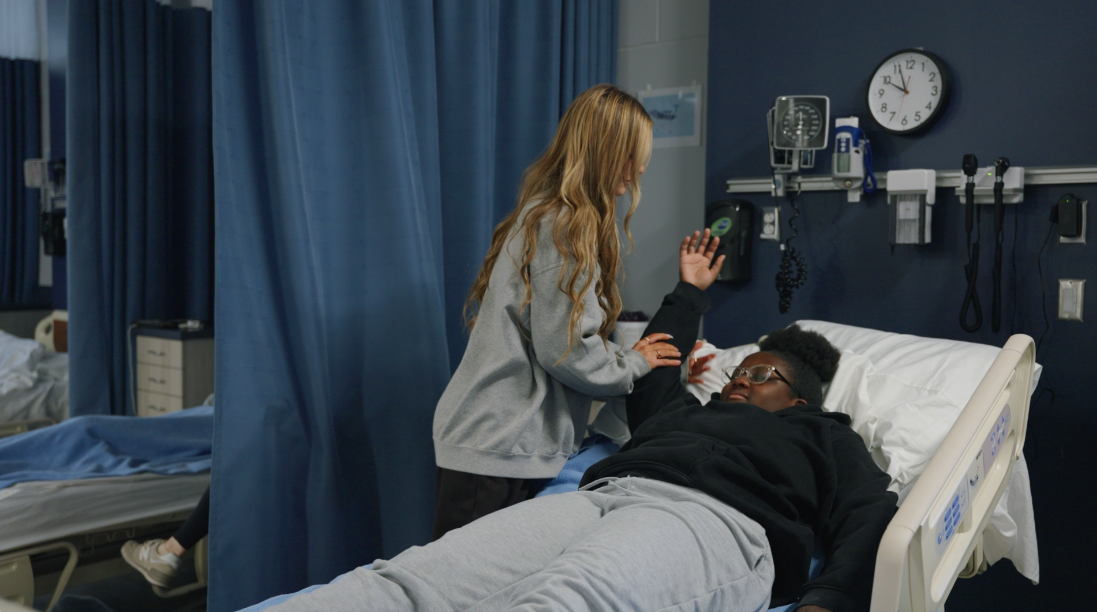
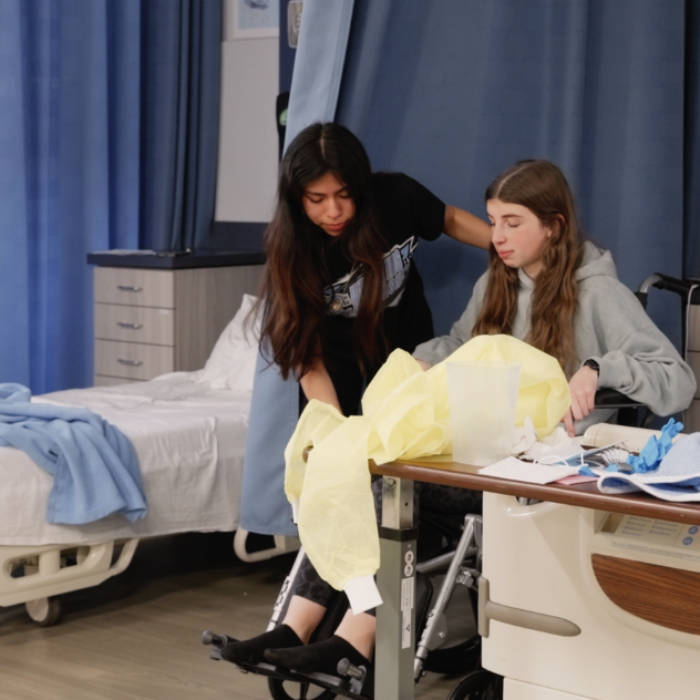
Apprenticeship numbers show a similar climb. When Eric took over the secondary success and innovation role in 2023, the district had two student apprentices; by 2026, it had 189, spanning skilled trades, healthcare and automotive fields.
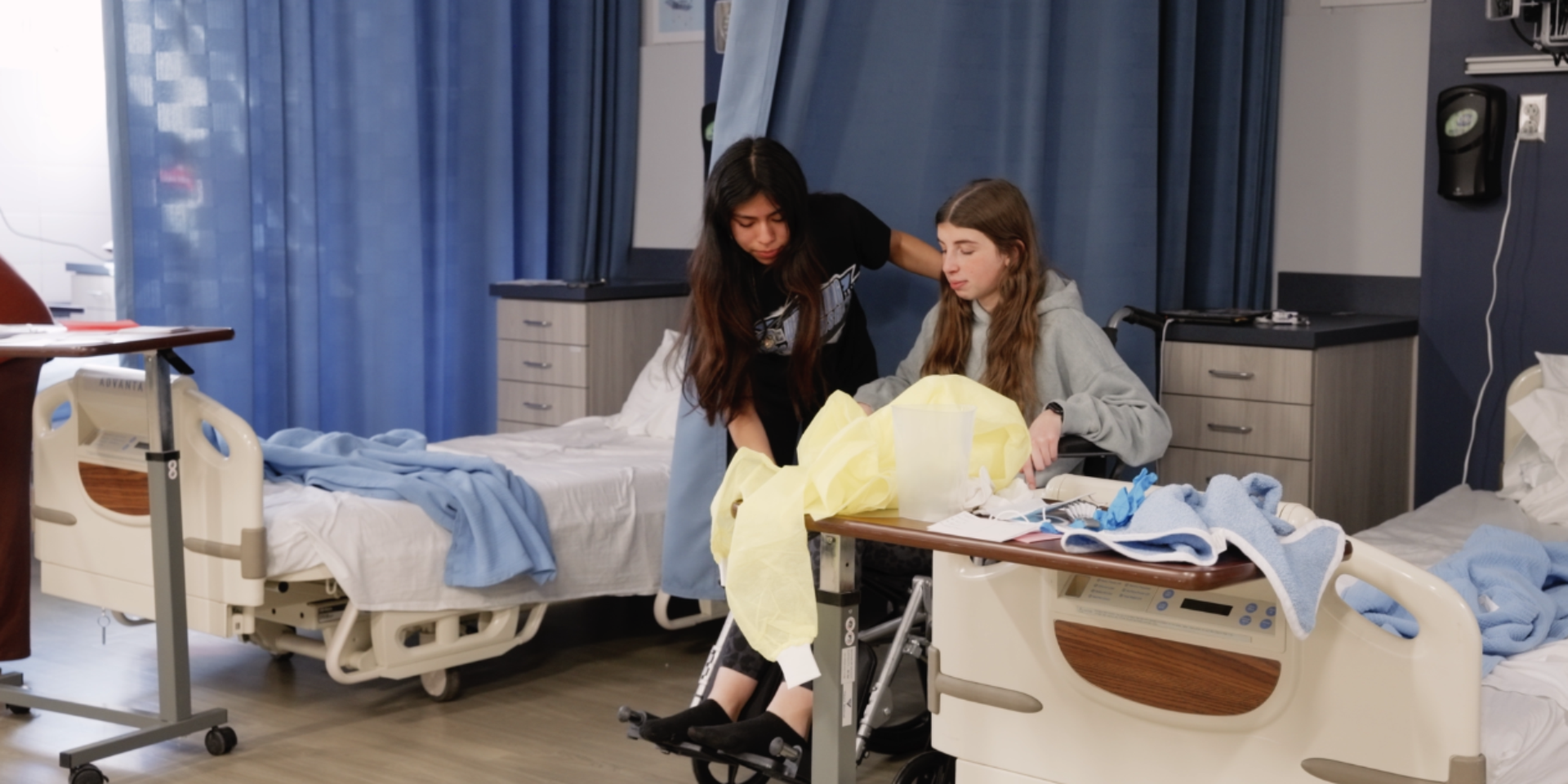
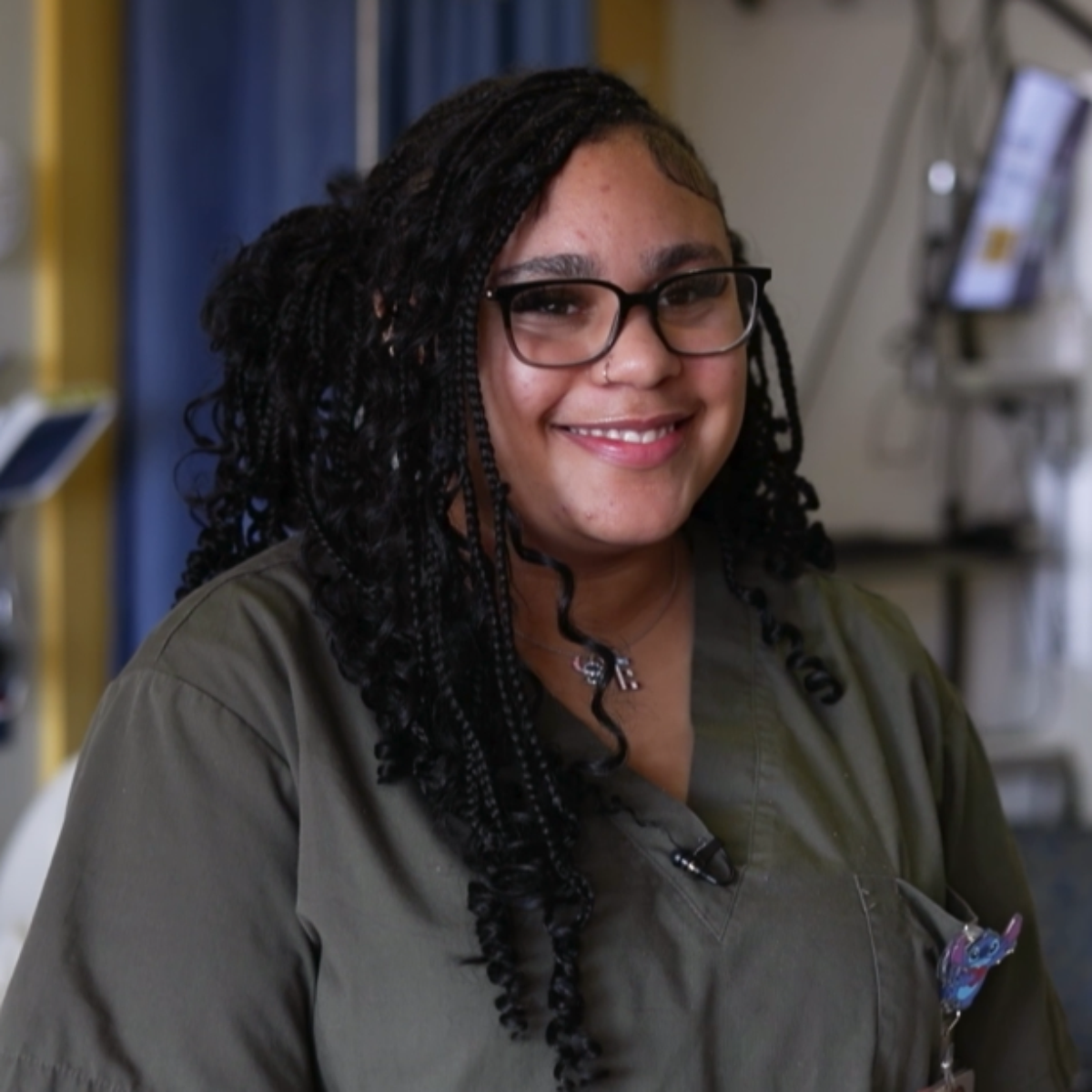
One of the apprentices behind those numbers is Erika, a Baltimore City Schools senior placed on the transplant unit at Johns Hopkins Hospital. “This program gave me a chance to explore and have a lot of opportunities,” she said.
After rotating through the operating room and working with transplant patients, she said the experience settled a question she’d struggled with for years. “It made me finally decide what I wanted to do, and all my college applications say pre-nursing.”
The connection runs deeper than the job. Her grandmother received a kidney transplant on that same unit years earlier, and it’s Jen Gurwitch, her mentor, who taught her how to take vitals. “Having this connection of her being on this floor and me being able to help patients, just like her, is what makes me, me,” Erika said.
This program gave me a chance to explore and have a lot of opportunities. It made me finally decide what I wanted to do, and all my college applications say pre-nursing.
Erika, a Baltimore City Schools senior apprentice at John Hopkins Hospital
Baltimore, Maryland
Completion as a Starting Point
“Employment outcomes are important for students because it changes the trajectory of students’ lives,” Eric said. “When they come out of school with livable wages, they’re able to change their environment and change the trajectory of their life.” He connected the work directly to the state mandate, framing the Baltimore City Schools pathway model as the district’s answer to it.
The partnership’s data infrastructure has yielded benefits in adjacent areas too. “We recognize that for every four program slots for elementary school students, there was only one program slot for older youth,” James said.
“Having that data allowed us to mobilize our community and advocate for more funding for older youth, which we were able to receive in the next summer. We had an increase of 83% funding for high school and older youth in the summer funding collaborative.” Those extra seats matter for completion because summer engagement keeps older youth connected to school and work rather than drifting into disconnection.
For Kumasi, that mix of aggregate data and individual outcome is the whole point. “I think the impact is so important because of how it impacts individuals’ lives and how they feel about themselves, how they feel about their ability to achieve,” he said. “That’s something that’s immeasurable, but it also feels really good.”
Future VisionFuture Vision
For all the data and infrastructure behind it, Baltimore’s Promise traces its next phase back to the young people the work is meant to serve. “Baltimore’s vision for postsecondary success for young people is really grounded in young people themselves,” Julia said. “They’re wonderful, they’re amazing, they have all sorts of dreams in front of them, and we want to make sure that our city and the systems that support those career-connected learning opportunities are set up for young people to be the most successful.”
Baltimore’s Promise describes its next phase in one word: scale. “We’ve been demonstrating effective strategies for the last decade,” Julia said, “and now we’re ready to ensure that all young people in the city of Baltimore, all young people across the state of Maryland, are benefiting from what we’ve learned.”
That decade of work is already showing up in the numbers that started this whole effort: the share of Baltimore youth ages 16 to 24 disconnected from both school and work has been cut roughly in half, from 21.3% in 2015 to 10.6% in 2024, the lowest rate on record, according to Baltimore’s Promise. That’s evidence cross-sector alignment is working, though 10.6% still means thousands of young people without a clear pathway.
None of that scaling happens in a vacuum. Baltimore’s Promise is a member of StriveTogether, a national network of nearly 70 similar community partnerships. “One of the things that StriveTogether does is give us some validity,” Julia said. “By connecting to a national network, folks know we didn’t just come up with this idea someday to do collective impact, but it’s grounded in a real theory of action and backed by national expertise.” StriveTogether also provided custom Training Hub landing page that gives partner organizations across Maryland access to courses and technical help.
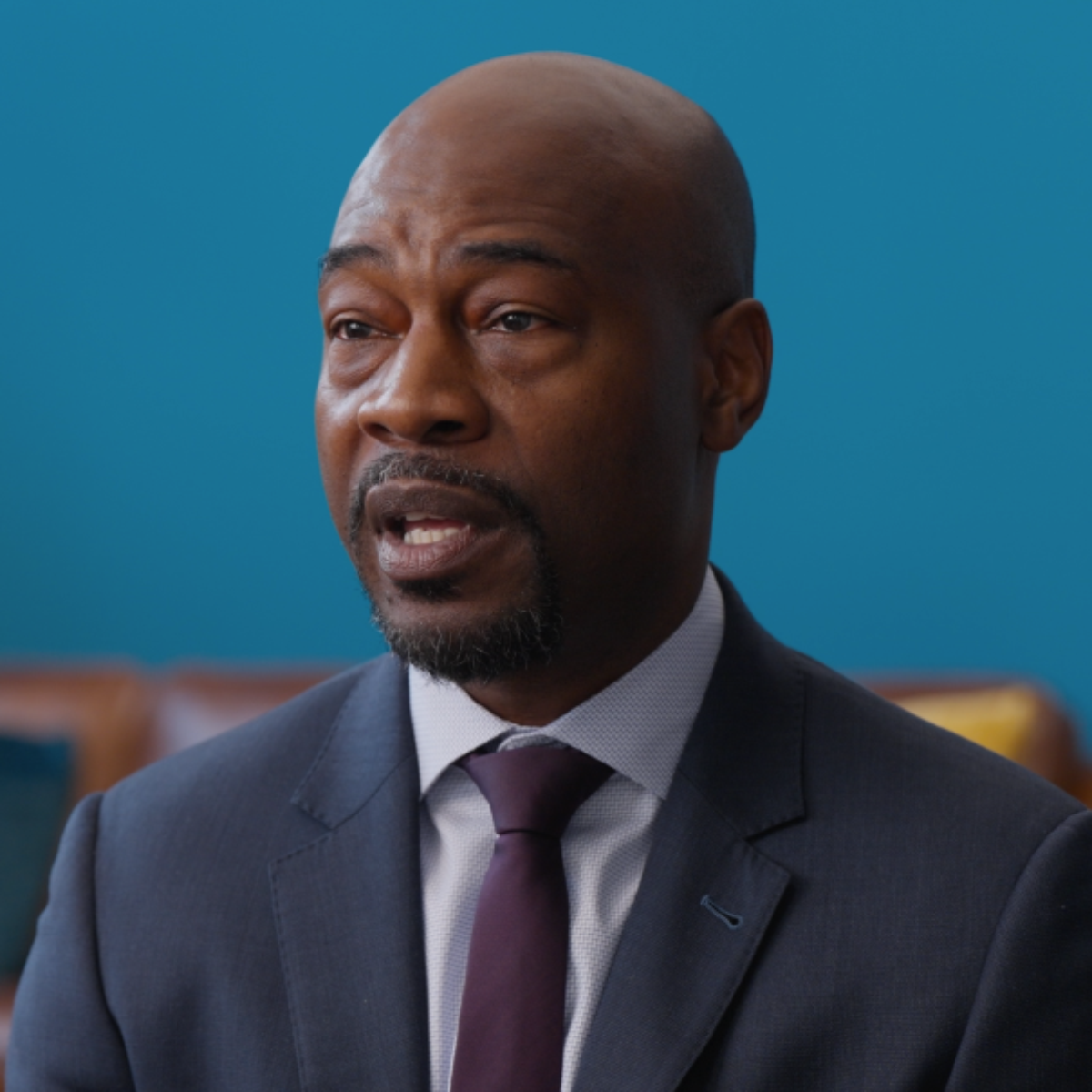
A very strong pipeline from education to the workforce is really about economic justice. I care because I live in this city, was born and raised in this city. I’m a city kid. I was one of the Baltimore City youth that programs like CareerBound and partnerships with Baltimore’s Promise helped. I see myself in these young folks.
Kumasi Vines, deputy director and chief of staff at the Mayor’s Office of Employment Development
Baltimore, Maryland
Inside Baltimore City Schools, Eric described the healthcare apprenticeship pilot as a template rather than an endpoint, pointing to plans to replicate it in skilled trades and business fields. That scaling is already underway. The 2026 summer bootcamp expanded to a six-week schedule with students earning $15 an hour, and enrollment more than doubled the previous year’s capacity, to 126 students.
The district’s broader goal is a seamless handoff from apprenticeship to full-time employment. “We want our employers now to say, ‘You know what? I want to hire them full time when they graduate,'” Eric said. Partner hospitals have committed to adding more apprentices next year, along with wage support of their own.
Meeting the state’s 45% goal would mean growing to somewhere between 1,800 and 2,000 registered apprenticeships citywide. The case for retaining that talent locally is substantial, given that 68.3% of jobs inside Baltimore City are filled by people who live outside the city, while 56.4% of working city residents commute out for their jobs. Closing that mismatch is part of what CareerBound aims to address. “Our hope is Baltimore is a city where young people can stay, live, and thrive,” Julia said simply.
For Kumasi, the stakes go beyond any single hospital unit or graduating class. “A very strong pipeline from education to the workforce is really about economic justice,” he said. “I care because I live in this city, was born and raised in this city. I’m a city kid. I was one of the Baltimore City youth that programs like CareerBound and partnerships with Baltimore’s Promise helped. I see myself in these young folks.”
Postsecondary completion has a national problem and a local answer. Nationally, the numbers have barely moved in a decade: nearly four in ten students who enroll still never finish, and the gaps between demographic groups stays as wide as it was years ago. In Baltimore, the answer isn’t a single program or a single grant. It’s three institutions still showing up for that answer, year after year, building the clear path and support that postsecondary completion has always depended on.
Additional Stories
Earning While Learning: Baltimore’s Path to Postsecondary Completion