Pathways Impact Fund in Boston: How EdVestors Connects Classrooms, Colleges and Careers
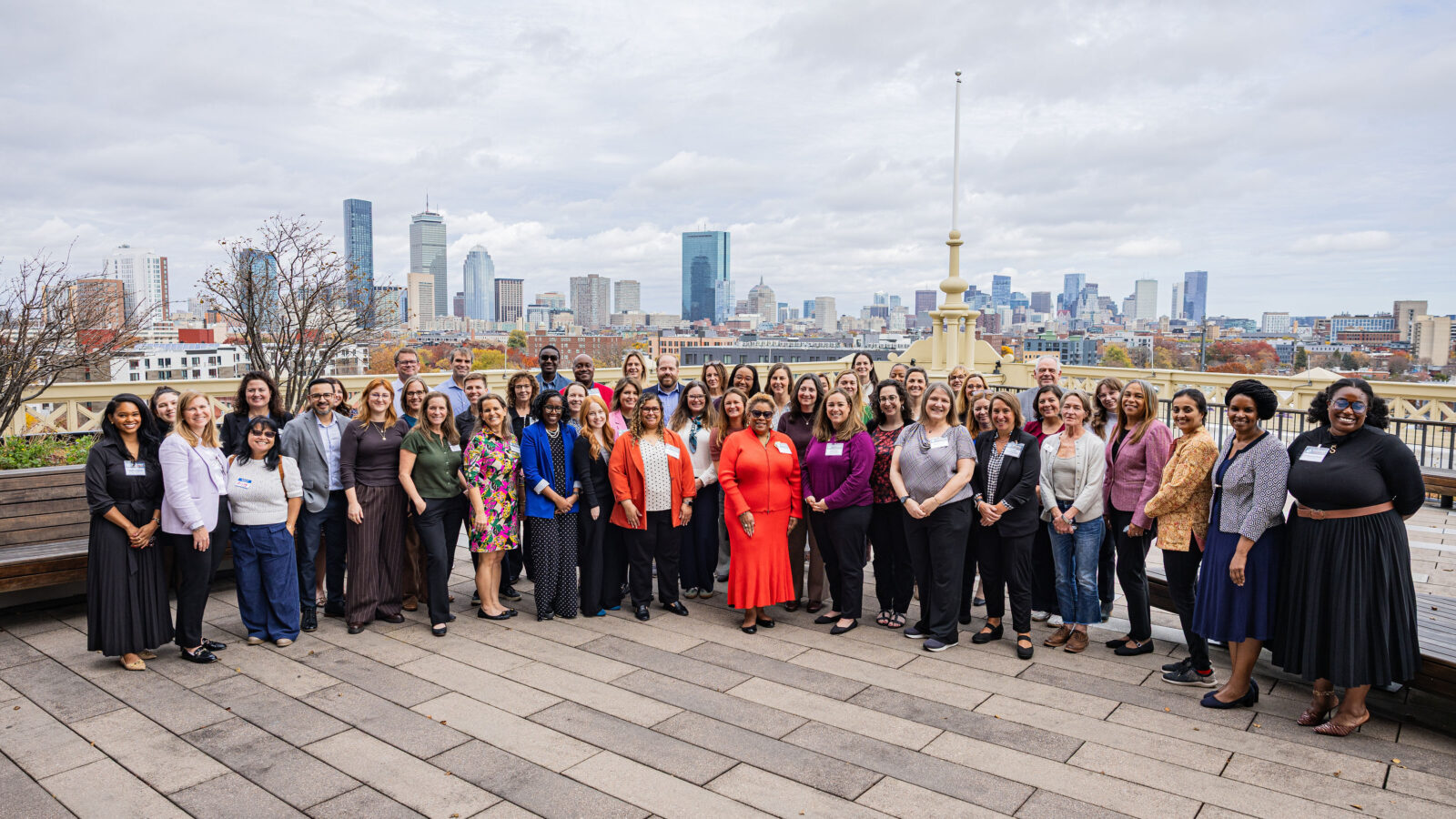
In November 2026, the Pathways Impact Fund and EdVestors brought school district leaders, postsecondary leaders, regional intermediaries and funders to Boston to see how the city builds career pathways for its students. Participants heard from state policymakers, Boston Public Schools leadership, postsecondary institutions, employers and students. They also saw pathways in action at the Edward M. Kennedy Academy for Health Careers.
EdVestors, a Pathways Impact Fund grantee, is a Boston nonprofit founded in 2002. Its mission is to advance meaningful education that prepares every Boston student to build their power and shape their future. EdVestors has partnered with Boston Public Schools (BPS) for more than two decades. It serves as the lead partner of New Skills Boston, a cross-sector partnership with postsecondary institutions, employers and philanthropy.
Over the past five years, pathways enrollment has doubled across the district. EdVestors reports that 96% of its pathway students graduate high school, 13 percentage points higher than traditional BPS seniors. With Pathways Impact Fund support, EdVestors aim for one in two BPS students to graduate with a pathway by 2030.
Research from the Boston Private Industry Council (PIC), a New Skills Boston partner, adds to the picture. Boston students who complete a private sector internship are more likely to improve their attendance, course performance and graduation rates.
Behind those numbers is a citywide system built over years of partnership, and attendees got to see how it works up close.
Stable State Policy Sets the Conditions
Attendees heard first from state leaders on a panel moderated by EdVestors President and CEO Marinell Rousmaniere. Panelists walked them through the conditions Massachusetts has built for pathways and where the seams still show. Robert LePage, assistant secretary for career education in the Massachusetts Executive Office of Education, explained that the state began building its system 10 years ago. It was a response to projections around Boston’s aging workforce.
Today, the state offers schools four pathway options:
- Chapter 74 programs: career and technical education with 900 to 1,200 hours of technical instruction.
- Innovation Career Pathways: two technical courses and a 100-hour work-based learning experience in a high-demand industry.
- Early College: college coursework and time on campus, with students earning at least 12 credits.
- Commonwealth Dual Enrollment Partnership: free or low-cost college courses for high school students.
Those flexible options now reach students at scale. According to the state, more than one in four Massachusetts high school students, 80,377 in all, took part in a pathway in the 2024-25 school year.
Panelists stressed that stable, shared definitions have kept the work durable through leadership transitions. “What it means to be a CTE student in Massachusetts doesn’t change,” said Lauren Woo, deputy commissioner of the Department of Elementary and Secondary Education. “How schools implement that is where more support is needed.”
That’s where intermediaries come in. “Intermediary work is the work you don’t miss until it’s gone,” said Alysia Ordway, the state’s undersecretary for workforce development. In Boston, EdVestors plays that role. Its pre-planning year for Boston schools launching pathways inspired the state’s phased designation process.
Now, it’s working with partners on a pathways roadmap for BPS that charts which pathways each school should offer and where current offerings fall short.
A Shared Planning Tool Gives Pathways a Home
In a session with BPS Superintendent Mary Skipper, attendees heard what that policy has made possible locally. Mary explained why the work matters. “High school work is most important because the kids have the shortest runway. And at the end of the runway is life,” she said. Today, one in four BPS students has access to a high-quality pathway.
Mary credited EdVestors with starting this work. “EdVestors kicked us off with New Skills Boston, and that gave us a system and a structure to work within,” she said. The “container” for that work is MyCAP (My Career and Academic Plan), a multiyear planning process that now begins in the middle grades.
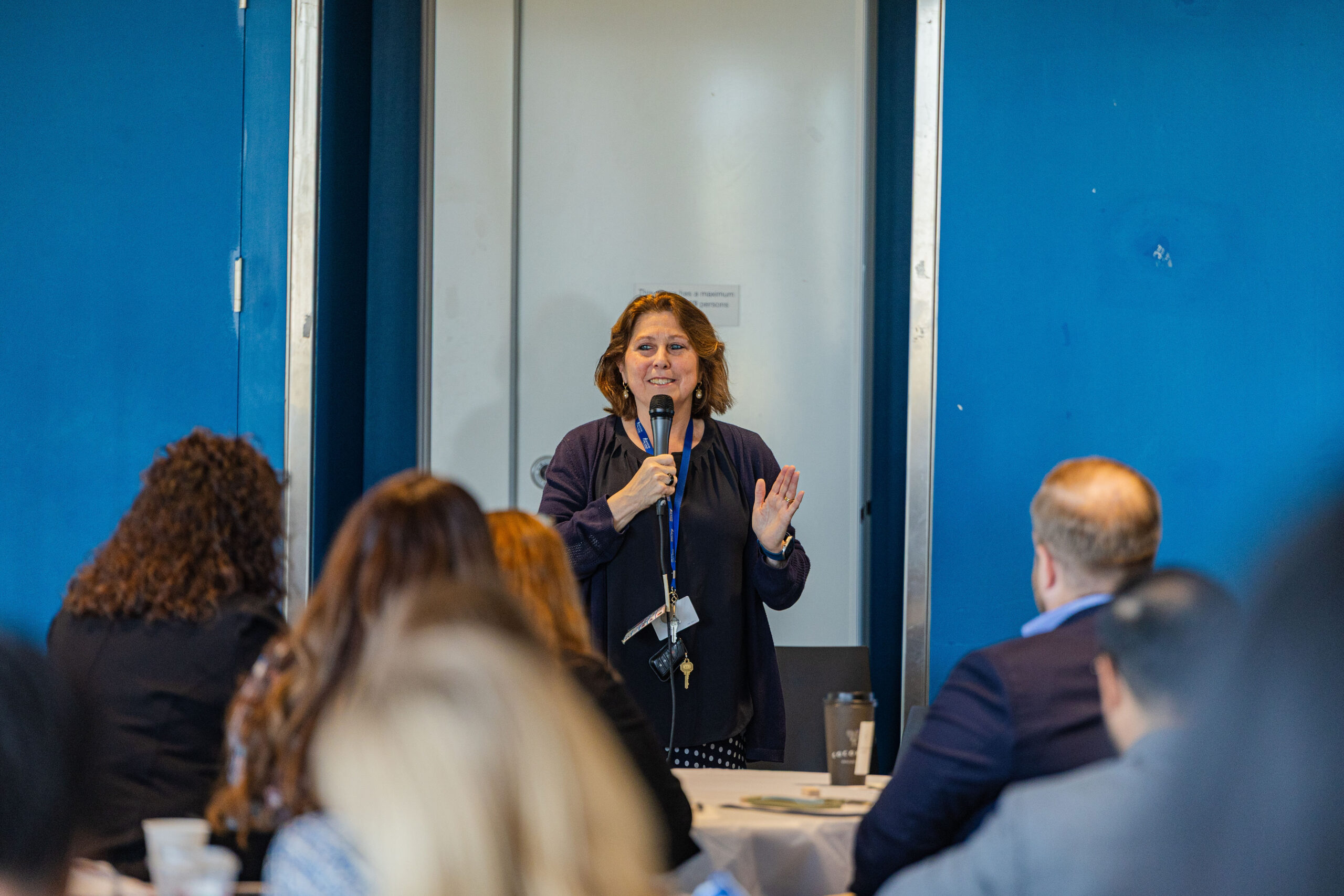
To fill it, BPS offers 32 Chapter 74 programs. Early College enrollment has grown from 179 students in 2022 to more than 1,200 in 2025. More than 4,000 students took an Advanced Placement course that year. EdVestors’ Seamless Advising Summit trains more than 400 advisors to help students reach their MyCAP goals.
Mary reminded attendees the importance of having that system stay flexible. “You have to give choice to the kids…create a pathway system that gives structure, but it’s nimble,” she said. Some students know exactly which career they want, while others are still exploring, and BPS is building pathways that work for both.
No Single Sector Can Do It Alone
A panel of postsecondary leaders showed how EdVestors’ partners in New Skills Boston work together. Joe Berger, provost of UMass Boston, described how the university, Roxbury Community College (RCC) and Bunker Hill Community College offer early college across the city. Formalizing those partnerships, he said, “helped us create a more seamless pathway for students, so that it was about the students and not about the organization.”
Through data-sharing agreements with BPS, the colleges can see whether graduating seniors who planned to enroll have registered. Those who haven’t are directed to the district’s Postsecondary Transition Center for help with registration and financial aid.
Ali, a BPS graduate who is now finishing her degree at UMass Boston, worked at the center this summer. She shared her experience on a student panel. “It was like everything was just in one room…that is exactly the type of environment, space that we want to provide for students,” she said.
RCC President Jonathan K. Jefferson previewed Beacon Bound, a new joint admissions and transfer partnership with UMass Boston. It offers advising, scholarships, waived fees and early access to campus resources. Bunker Hill President Pam Eddinger reminded attendees who these agreements are for. “The student doesn’t care if you have a joint admissions agreement…They just want to be able to go from one place to the other and continue with their lives,” she said. “It is our problem. It is not the student’s problem.”
We must be the barrier busters. Pathways must eliminate barriers. It has to make it easy. It has to make it seamless.
Jonathan K. Jefferson, president of Roxbury Community College
Boston, Massachusetts
Employers are the third piece of the puzzle. The PIC, a longtime EdVestors partner, connects students to jobs tied to their pathways. Vertex Pharmaceuticals hosts up to 2,500 students a year, and Mass General Brigham funds more than 100 internships. Many other employers take part, too. “What motivated me and kept me going was the opportunities that I had from the PIC. They really connected college and career together,” Ali said.
The City of Boston is also a key partner. In June 2026, the City and BPS launched the Boston Skilled Trades Initiative with $12.8 million from Bloomberg Philanthropies. The initiative aims to connect at least 100 students a year with Registered Apprenticeships. As the New Skills Boston intermediary, EdVestors works to connect investments like this one to the city’s broader pathways strategy.
Getting Employers Ready for Young People
On a visit to the Edward M. Kennedy Academy for Health Careers (EMK), attendees saw these efforts come together. EMK is a BPS high school that prepares students for college and careers in healthcare. The school partners with Mass General Brigham, the state’s largest private employer, and Bunker Hill Community College. They give students on-site training, internships and college credit.
Mass General Brigham made clear that the partnership puts as much responsibility on the employer as on the students. “The question shouldn’t be ‘are our young people ready for healthcare?’ but ‘is healthcare ready for our young people?’” said H. Kay Howard, director of health careers training at Mass General Brigham.
Mass General Brigham co-developed EMK’s pathways in health assisting, medical assisting and, soon, biotechnology, each tied to real hospital roles. Starting in 10th grade, students can join the Mass General Brigham Youth Program for multiyear paid internships. Through Early College with Bunker Hill, they can earn 12 or more transferable college credits at no cost to their families.
EMK is part of a $250 million Bloomberg Philanthropies initiative to launch healthcare-focused high schools in 10 communities across the country. A $37.8 million investment from Bloomberg Philanthropies is doubling EMK’s enrollment to more than 800 students. And last year, every EMK junior eligible to sit for the Certified Nursing Assistant exam passed.
Bringing Boston’s Approach Home
Boston’s approach offers lessons for any community building pathways: start with the assets already in place, keep definitions stable, invest in an intermediary and make barriers the institutions’ problem rather than the students’. As Marinell reminded attendees, Boston didn’t start out this way: “The pieces were there, but there wasn’t a system.”
Boston’s work is also reaching beyond the city. Gov. Maura Healey’s recommended graduation requirements now include a required MyCAP plan, so students across Massachusetts can map their own pathways to college and career. EdVestors helped make that case through the Postsecondary Pathways Policy Roundtable, a coalition of statewide advocacy organizations and Boston-based networks.
Boston’s hosts were also candid about the challenges ahead, from declining enrollment to fiscal pressures. “We want to learn as much from you all as you take away from this experience,” Marinell told attendees. Mary described the visit as a two-way exchange. “That’s the value of this work,” she said.
Boston showed what’s possible when partners build a system together. Every community’s path will look different. But Pathways Impact Fund grantees and Pathways Impact Collaborative members left Boston with new ideas, new connections and a shared sense of what’s possible.
Learn more about the work of the Pathways Impact Fund here.