Building the Foundation for Success: Learn4Life’s Systems Approach to Early Literacy in Georgia
Overview
Reading proficiency by third grade is one of the strongest predictors of long-term success. But across Georgia, most students are not meeting this milestone.
Learn4Life, a place-based partnership serving Metro Atlanta, is taking a systems-level approach to change that. Rather than creating new programs, Learn4Life identifies what’s already working and helps expand it across the region — aligning schools, early learning providers, health systems and community organizations.
-
A regional approach drives literacy gains
School districts, nonprofits, philanthropy and community partners are aligning around the science of reading for stronger outcomes.
-
Evidence-based strategies move the needle
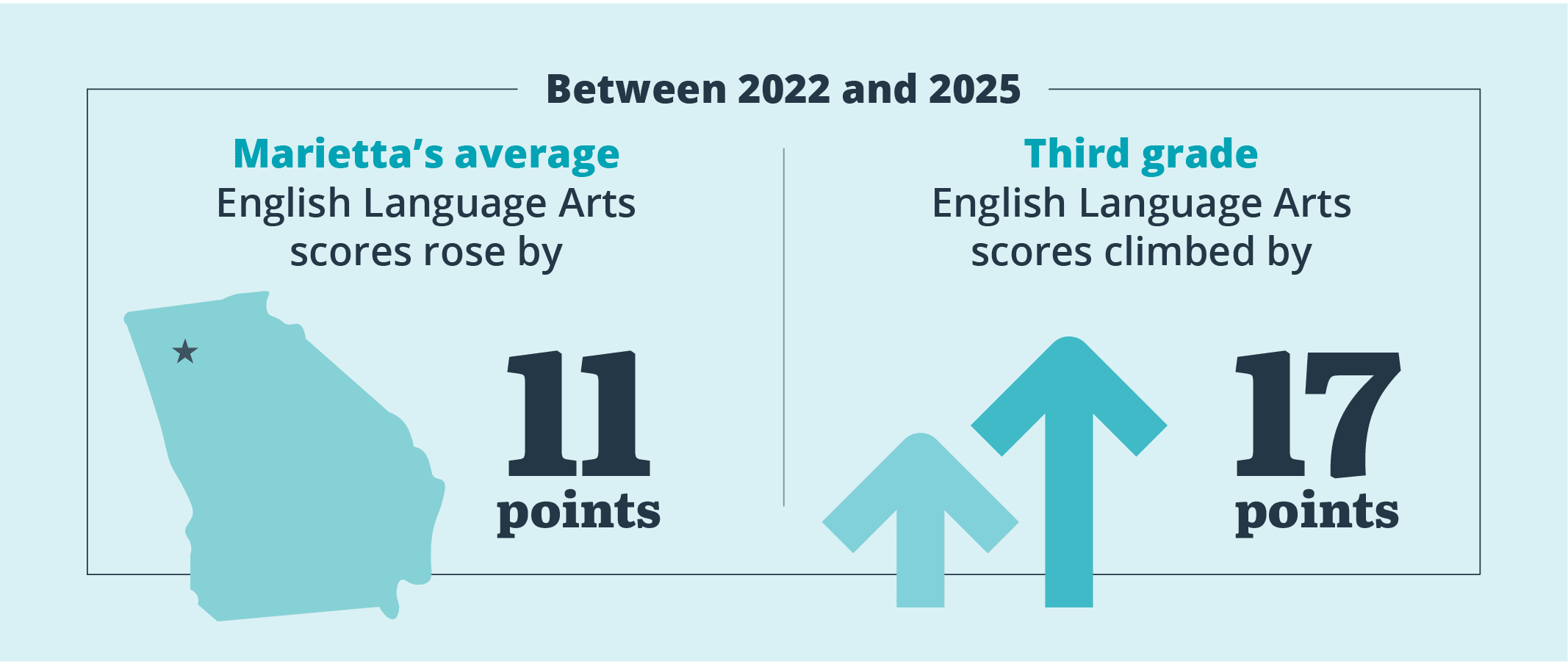
Teachers trained in structured literacy helped Marietta City Schools grow ELA scores five times faster than the state average.
-
Removing barriers unlocks student potential
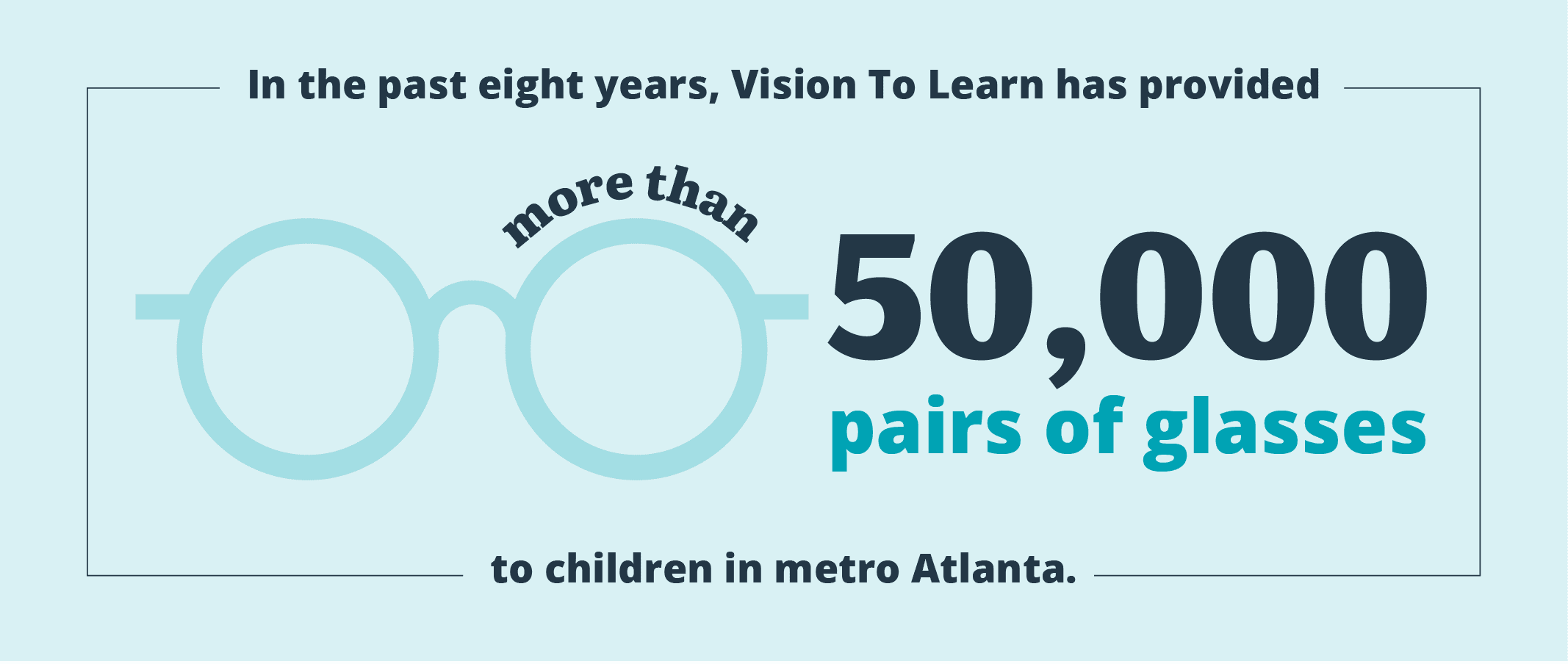
Learn4Life has provided 50,000+ pairs of glasses and cut teacher turnover by 50% to keep kids on the path to reading proficiency.


National Background
Reading proficiency by the end of third grade is one of the strongest predictors of lifelong success. Students who reach this milestone are four times more likely to graduate from high school, according to the Annie E. Casey Foundation, and are better positioned to pursue postsecondary education and access well-paying jobs.
Yet nationally, progress remains limited. In 2024, just 31% of fourth-grade students performed at or above the proficient level on the National Assessment of Educational Progress (NAEP), a decline from both 2022 and 2019.
The consequences of falling behind extend well beyond the classroom. Research from the Barbara Bush Foundation for Family Literacy estimates that bringing all U.S. adults to a sixth-grade reading level would add $2.2 trillion in annual income nationwide. In Georgia, nearly 800,000 adults have low literacy skills, making them 1.9 times more likely to be unemployed and reducing their lifetime earnings by about $1 million. More than half work in industries most vulnerable to automation, and children of low-literacy parents face a 72% chance of remaining at the lowest reading levels themselves. Literacy is an education issue and it is an economic one, shaping workforce readiness and regional prosperity for generations to come.
Our goal is to prove what’s possible, then make it part of our public infrastructure.
Dr. Rebecca Parshall, director of strategy and development at Learn4Life
Atlanta, Georgia

Local Context
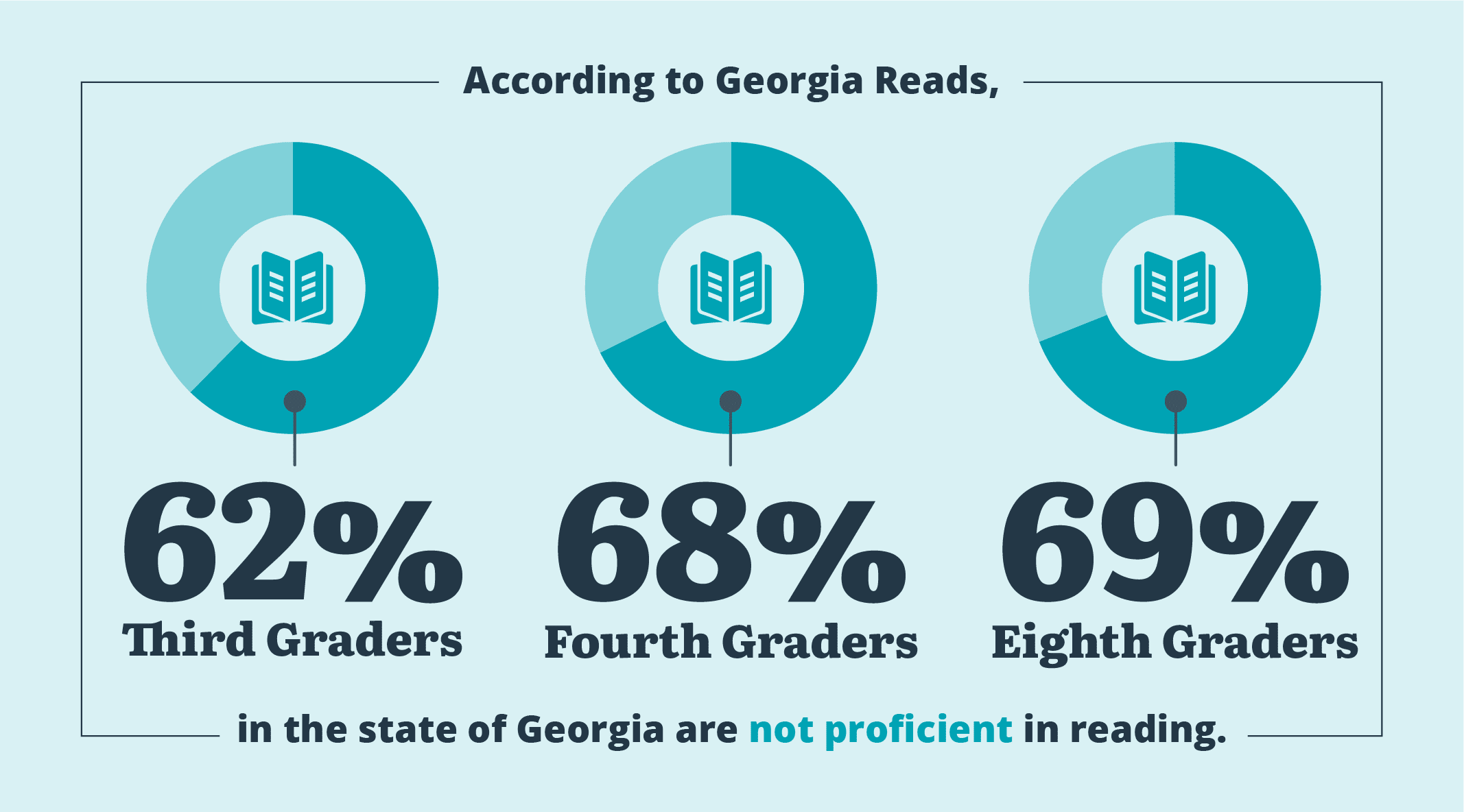
According to Georgia Reads, 62% of third graders, 68% of fourth graders and 69% of eighth graders in the state are not proficient in reading.
Across Metro Atlanta’s five counties and eight school districts, which serve nearly 600,000 K-12 students, reading outcomes remain uneven, with deep disparities for students of color and students from low-income families. Many children enter kindergarten already behind in language development and without coordinated systems of support, those early gaps grow wider each year. Inconsistent access to quality early learning, teacher training and family engagement compounds the problem, particularly in communities that have long been under-resourced.
Recognizing that no single district or program could reverse these trends alone, local leaders formed Learn4Life, a place-based partnership and member of the StriveTogether Cradle to Career Network. The partnership brings together education, business, philanthropic and community partners to align systems, build civic infrastructure and the connections needed for lasting change to ensure that every child in Metro Atlanta can read proficiently by third grade, a milestone that opens doors to economic mobility.
A Place-Based Partnership Driving Change
Learn4Life was created to transform how systems work together to improve outcomes for every child in Metro Atlanta. The partnership connects schools, early learning providers, health systems and community organizations around shared goals in early grade literacy, eighth-grade math and postsecondary success. By aligning data, resources and proven strategies, Learn4Life helps local leaders identify what works and expand it regionwide.
“Our role is to align what’s already working and help it grow,” said Dr. Rebecca Parshall, Learn4Life’s director of strategy and development. “Metro Atlanta is full of bright spots. The power of a place-based partnership is bringing those successes together at scale.”
Since 2017, Learn4Life has served as a regional backbone partner, helping schools, communities and organizations use data and shared learning to improve results for children and families. Rather than creating new programs, the team identifies local strategies that are already working and helps expand them across the region. This approach builds a regional framework for collaboration, where partners align around common goals and take collective action to achieve them.
Strategy and Impact
In Metro Atlanta, Learn4Life is building the conditions every child needs to become a reader. Grounded in the science of reading and driven by community data, the initiative works across classrooms, early learning centers, hospitals and neighborhoods to create a literacy ecosystem that reaches children at every stage of development.
Regional data has shaped every step of that work, revealing both what’s possible through strong instruction and what remains out of reach for too many children. Learn4Life’s response has been scaling what the evidence shows works while closing gaps that others have overlooked. The result is a growing regional model that is changing outcomes for children across Metro Atlanta.
Policy without strong implementation support doesn’t really mean anything. You can pass a law, but without the capacity and resources to make it real in classrooms, it won’t change outcomes for kids.
Dr. Rebecca Parshall, director of strategy and development at Learn4Life
Atlanta, Georgia
Learning Together Across the Network
Learn4Life’s success in Metro Atlanta is supported by its connection to the StriveTogether Cradle to Career Network. Through this network, Learn4Life exchanges data, tools and proven practices with peers across the country, gaining insight into how other communities scale what works.
One of the most valuable resources in this shared ecosystem is the Training Hub Powered by StriveTogether, an online learning platform that offers on-demand courses, tools and coaching. The Training Hub helps partnerships like Learn4Life build capacity in results-based leadership, data use and continuous improvement, skills that directly strengthen Metro Atlanta’s civic infrastructure.
“The network effects are real,” Parshall said. “We’ve learned so much from other communities about how to scale what works and how to stay focused on what’s measurable and sustainable.”
This shared learning culture has shaped key elements of Learn4Life’s approach, from identifying local bright spots to strengthening continuous improvement systems that keep partners focused on results.
By engaging with peers across the Cradle to Career Network, Learn4Life both deepens its own impact and contributes lessons back to the field. Each cycle of learning reinforces what’s possible when partnerships move beyond individual programs to create shared systems change.
Future Vision
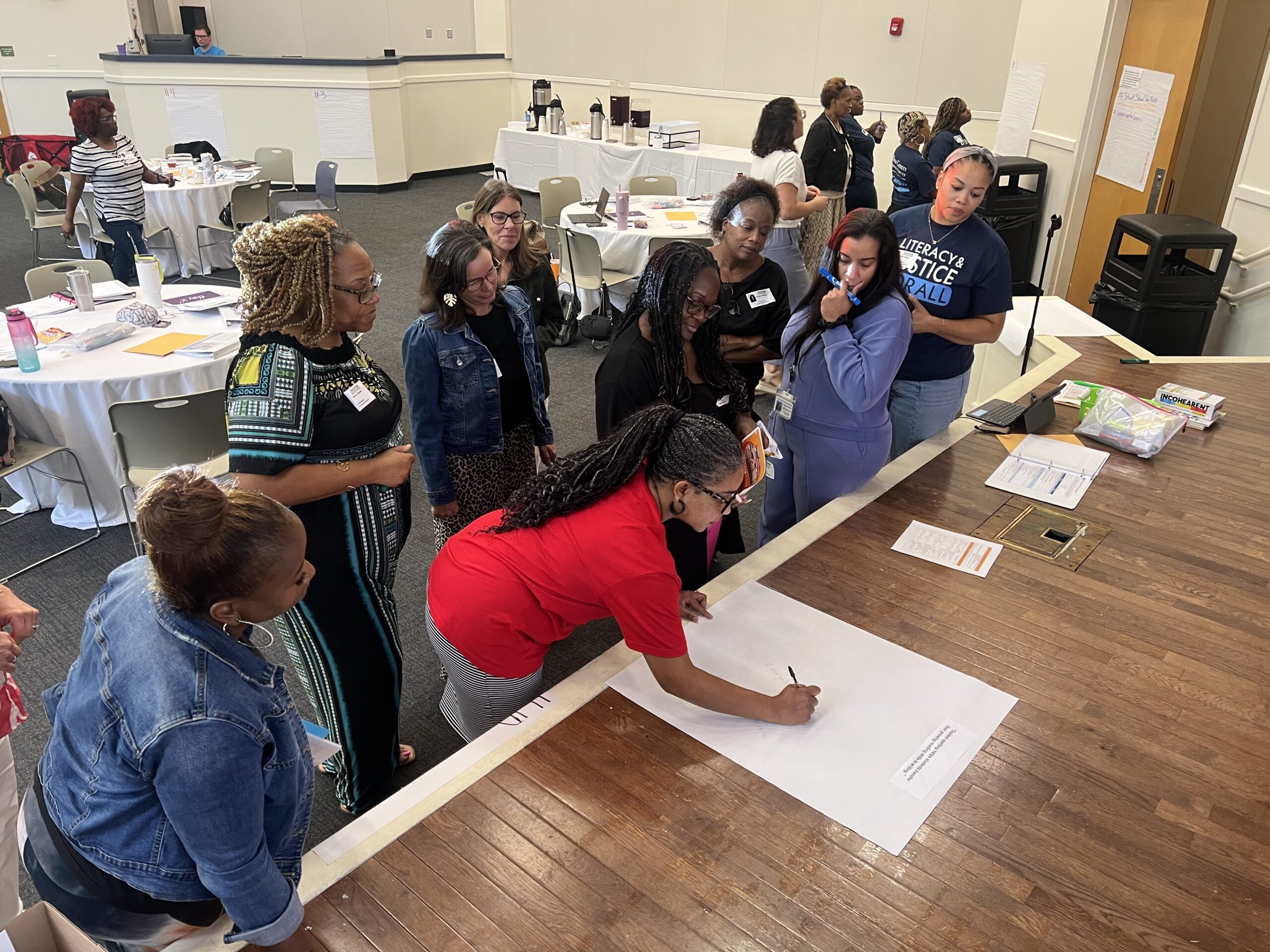
As Literacy and Justice for All expands beyond its pilot phase, Learn4Life is deepening implementation across Metro Atlanta by focusing on educator training and community alignment. The partnership continues to scale science of reading professional learning and coaching cycles in new districts, ensuring every teacher has the evidence-based tools that have been transforming Marietta City Schools. Through collaborations with the Rollins Center for Language and Literacy and The Cox Campus, Learn4Life helps districts adopt structured literacy materials, universal screeners and ongoing coaching, the full system of support needed for lasting change.
Beyond the classroom, Learn4Life is mobilizing a broader literacy network that includes early learning providers, nonprofits and families. Its microcredential program with Kennesaw State University gives nonprofit staff and volunteers access to free, accredited training in the science of reading.
“We started training nonprofit staff and volunteers who work with kids in language and literacy to make sure that what they were doing complements what’s happening in classrooms,” Parshall said. “It was our way of filling a gap, bringing community organizations into the literacy ecosystem.”
Learn4Life is also advancing long-term strategies that sustain progress over time. Its teacher retention initiative, developed with metro Atlanta school districts and the Georgia Leadership Institute for School Improvement (GLISI), has reduced turnover by more than 50% in participating schools by improving principal well-being and school culture.
Learn4Life’s work shows that improving early literacy means transforming the systems that support children and families. By aligning schools, early learning centers, health providers and community organizations, the partnership is creating the conditions every child needs to succeed. The progress in Metro Atlanta reflects more than improved reading outcomes. It represents a lasting shift toward systems that sustain opportunity and mobility from cradle to career.
More Stories of Impact
Stronger Future Spotlight: Erika Graham in Baltimore