Seeding Success Builds a Memphis Early Childhood System Rooted in Data and Strong Starts
Seeding Success in Memphis, Tennessee, has spent more than a decade proving what’s possible when a community commits to every child from the first days of life through a career. As a member of the StriveTogether Cradle to Career Network, Seeding Success brings together more than 100 organizations across Memphis and Shelby County, including schools, businesses, health systems, faith communities and civic groups, around a shared vision: that every child can thrive, regardless of race, zip code or circumstance.
For children growing up in Memphis, early data captured the scale of what needed to change. In 2017, kindergarten readiness stood at 34%, third-grade reading proficiency was just 24% and childhood poverty in Memphis reached nearly 37%, more than double the national rate. Thousands of children had no access to high-quality pre-K. The child care landscape, with more than 800 centers operating with little coordination, was fragmented and uneven in quality.
Seeding Success set out to change that by building the conditions, relationships and evidence base that made lasting change possible. Third-grade reading proficiency has grown from 24% in 2017 to 29% in 2024-2025. Kindergarten readiness among pre-K students climbed from 34% in 2017 to 62% in 2024-2025, with some partner programs reaching as high as 82%.
Memphis is proving what’s possible when a community comes together to invest in children early. The progress we’ve seen reflects years of partnership, shared accountability, and a commitment to ensuring every child, regardless of zip code or circumstance, has the opportunity to thrive.
Jamilica Burke, president of Seeding Success
Memphis, Tennessee
Advocacy efforts have brought more than $300 million in additional resources to Memphis and Shelby County. And in June 2025, Memphis and Shelby County Passed a pre-K for all ordinance with the goal of making 3- to 4-year-old pre-K free for all by 2030.
Building a system that starts at birth
Early in its work, Seeding Success recognized that no single program could deliver the change Memphis needed. What the community was missing was a coordinated early childhood system that supported children from birth through age 8 and wrapped families in the services they needed along the way.
This matters because the years between ages 2 and 6 are among the most meaningful in a child’s development. During this window, children develop language and communication skills, build the social-emotional foundations they need to function in group settings and begin forming the early literacy and numeracy skills that predict later academic success. It is also when the effects of poverty, housing instability and barriers to quality care start to shape a child’s future in ways that are hard to reverse. Reaching children during these years and supporting the families around them is one of the highest-leverage investments a community can make.
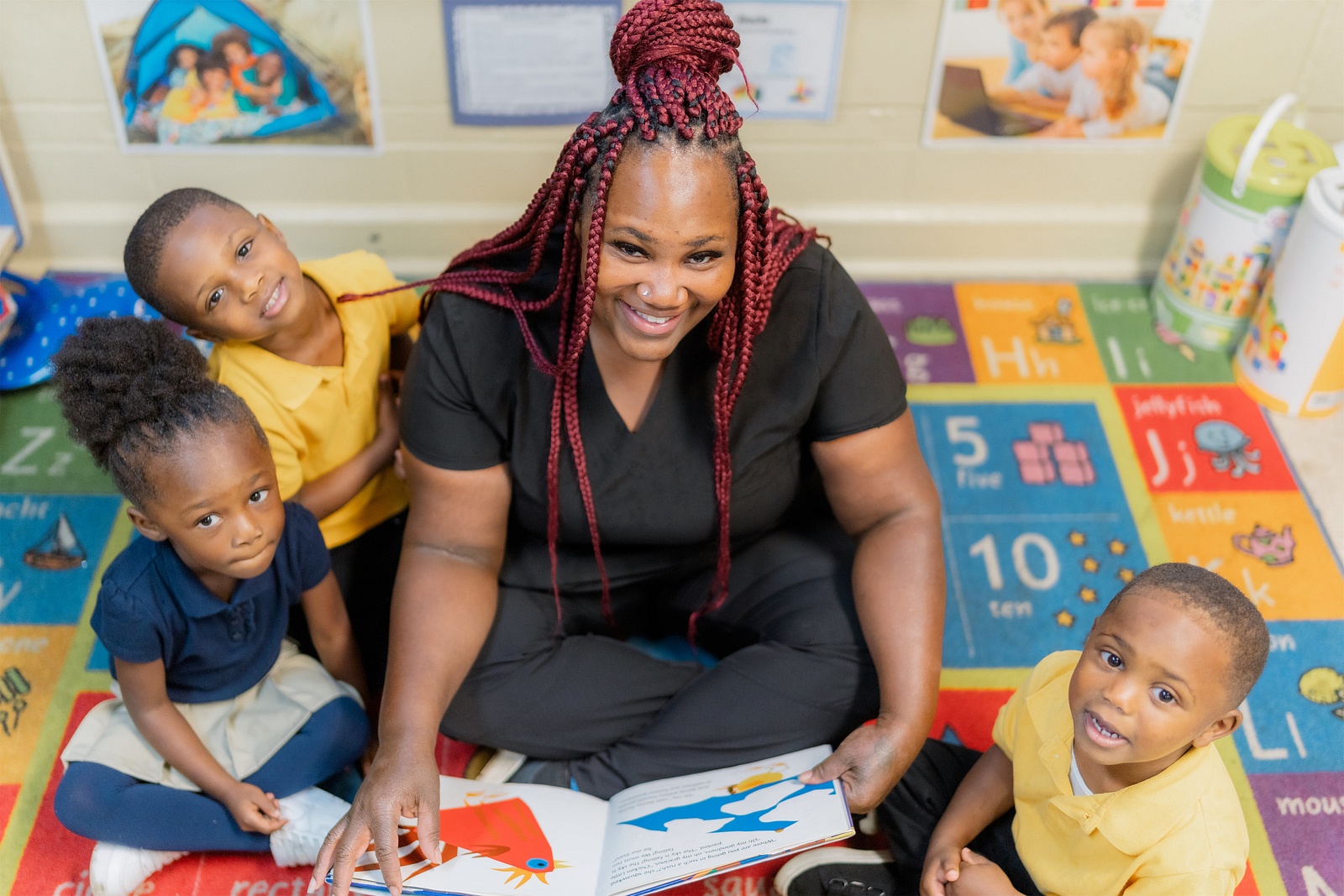
In 2014, community leaders took an important first step, creating 80 new classrooms through the federal Pre-K Development Grant. With that funding ending in 2018, Seeding Success designed and advocated for a joint ordinance between the city and county to create a dedicated fund providing high-quality pre-K seats for 4-year-olds from low-income families, free of charge. That advocacy gave rise to First 8 Memphis, a standalone nonprofit co-created by Seeding Success, to be the fiscal and accountability entity for city and county funds earmarked for pre-K.
First 8 Memphis now leads Shelby County’s efforts to develop a comprehensive early childhood system (prenatal through age 5) by strategically working to align early home visitation, child care, pre-K and wraparound services into one connected and comprehensive system of quality support, while Seeding Success continues as a key partner providing data infrastructure, policy advocacy, and collaborative support.
Seeding Success also pursued an innovative financing approach known as outcome financing, in which private investors fund social programs upfront and are repaid — with returns — only if measurable outcomes are achieved. Tennessee secured one of the first Pay for Success contracts in the country to fund high-quality pre-K seats for children from low-income families.
StriveTogether helped surface this opportunity by hosting an event where Maycomb Capital presented on the model, sparking the cross-sector relationships between state government, private investors and providers that made the financing structure possible.
In 2019, the partnership launched with the city of Memphis, Shelby County, First 8 Memphis, the Urban Child Institute and Seeding Success — financing roughly 3,000 seats of high-quality pre-K over three years for a total of $18 million, with repayment tied to outcomes. The model worked and as a result, the city and county committed to full public funding. The initial $18 million supported roughly 1,000 pre-K seats per year over three years, and First 8 Memphis now receives $20 million annually to serve more than 2,000 students.
First 8 Memphis annual reports capture what a well-built system looks like in action. Since 2019-2020, the program has expanded from 10 operators to over 45 operators. Enrollment capacity grew from 84% to 97% of available First 8 Memphis-funded pre-K seats. Attendance climbed from 65% in 2020 to 90% in 2025. Kindergarten readiness rose from 45% in 2021 to 62% in 2025. And per-child investment increased from $7,500 in 2020 to $9,063 in 2025.
Harnessing data to drive change
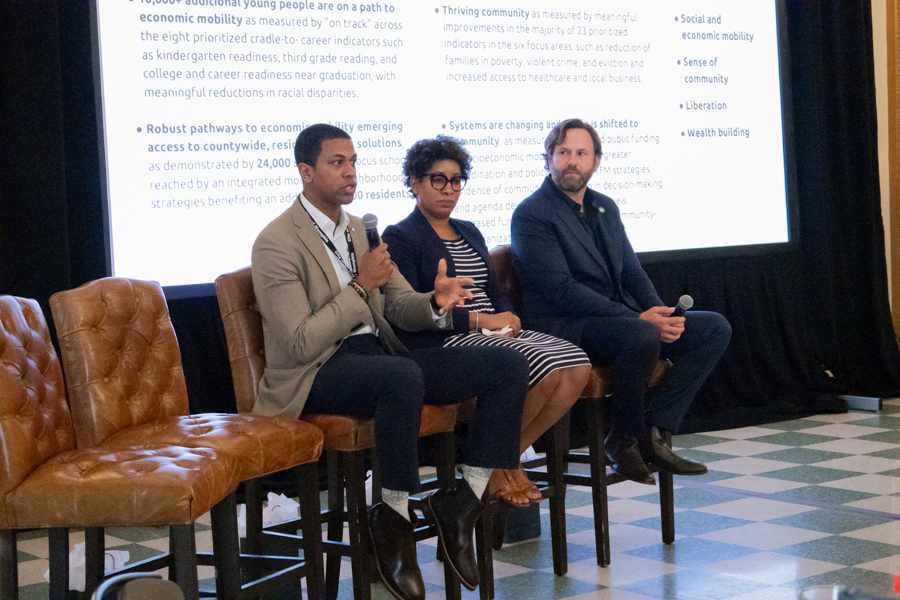
Data has always been at the center of Seeding Success’s work as a vital infrastructure for the entire Memphis community. At the foundation is a formal data sharing agreement with Memphis-Shelby County Schools, giving partner organizations, when consent is given, access to real-time, student-level data spanning the full cradle-to-career continuum.
To support a culture of continuous improvement, Seeding Success built out a Continuous Improvement approach grounded in Lean methodology and the plan-do-study-act cycle. Data and research analysts developed templates and step-by-step guides that help partners identify opportunities for change, test strategies, study results and scale what works.
For early childhood specifically, First 8 Memphis tracks student development across five domains — physical, language, academic, social-emotional and adaptive behavior — using the Brigance IED III assessment. The data tells a story of consistent improvement. Kindergarten readiness grew from 45% in 2020-2021 to 51% in 2022-2023, 58% in 2023-2024 and 62% in 2024-2025. In 2024-2025, students showed 17% average growth across all five Brigance domains and outperformed 62% of peers nationally, scoring 18% above the K-Ready threshold on average.
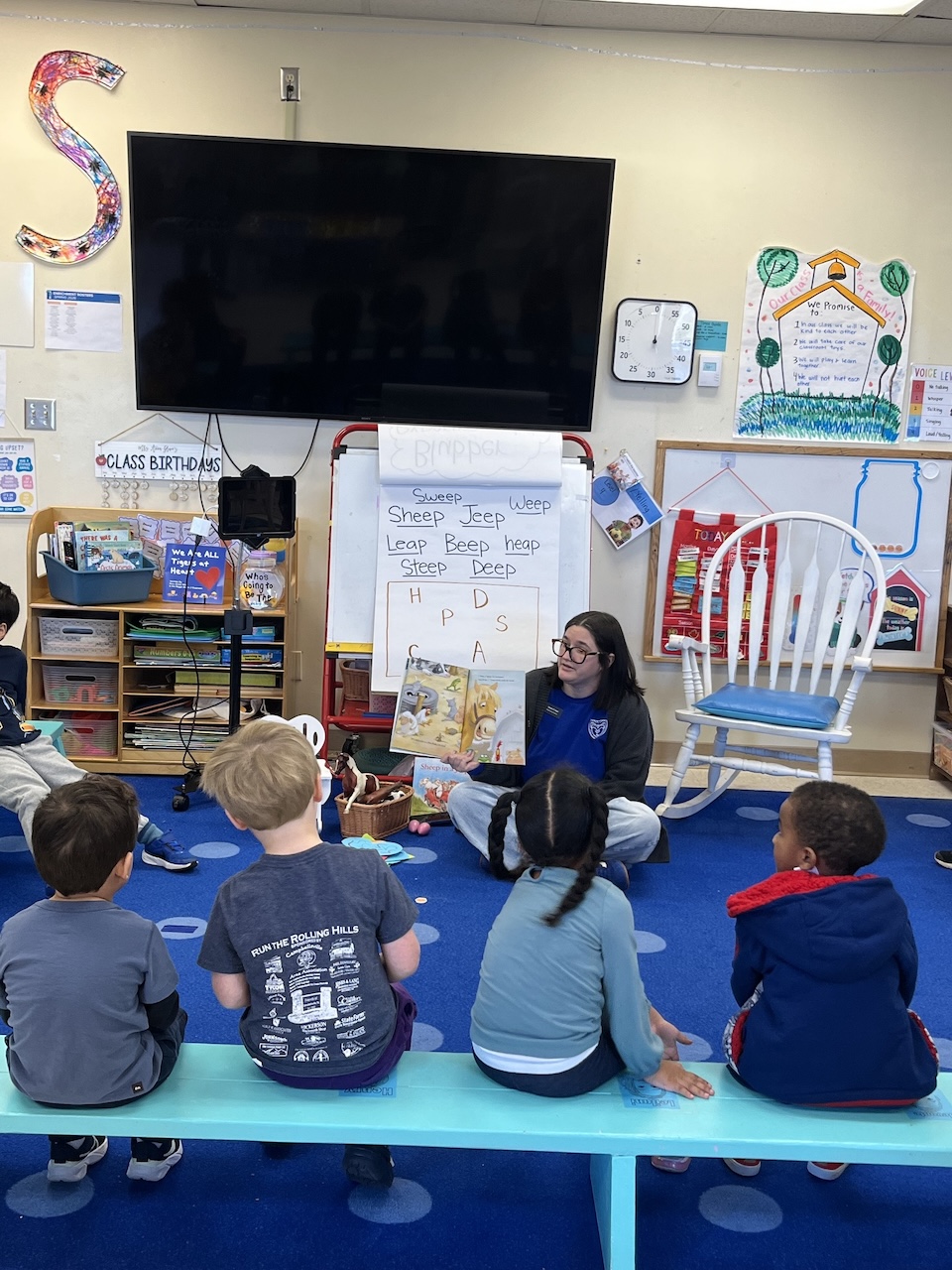
At Seeding Success, data reaches beyond organizational reporting and drives action for the people closest to children. When data showed that families frequently disengaged from home visitation programs after a change in their home visitor, Seeding Success worked with supervisors to redesign how those roles were structured.
When data revealed that chronically absent students often missed school due to untreated health conditions, partners placed school nurses in five Memphis schools with the highest absentee rates, and 93% of students seen by those nurses were able to return to class the same day. These are the moments where data stops being a report and starts being a tool that changes what a child’s day looks like.
Data also made the case for the community schools model. Seeding Success used its data infrastructure to secure the first multi-district Full-Service Community Schools grant in Tennessee — bringing $30 million in new resources into six schools in Memphis – Shelby County Schools and Millington Municipal Schools over five years. In the first two years of implementation, partnering schools, on average, have increased third grade English Language Arts by five percentage points and eighth grade math by 11 percentage points.
Turning local proof into statewide policy
One of the most significant evolutions in Seeding Success’s work has been its shift from local practitioner to statewide policy driver. The community-level proof it built in Memphis has become a foundation for systemic change across Tennessee.
In 2021, Seeding Success discovered that approximately $750 million in federal Temporary Assistance for Needy Families (TANF) and Child Care Development Fund dollars had gone unspent in Tennessee. Working quickly with state partners, Seeding Success policy staff drafted legislation to direct those funds toward children and families who needed them most, through evidence-based, place-based strategies. The resulting Tennessee Opportunity Act passed 92–0 in the House and 32–0 in the Senate and was signed into law in May 2021.
The Act directed $182 million from the state’s surplus TANF reserve to fund seven four-year pilot programs across Tennessee, each designed to test two-generation approaches to improving education, health and economic outcomes for children and the adults in their lives. Memphis received two of the seven pilots. Seeding Success supported the implementation of about $18.5 million in partnership with the United Way of the Mid-South, reaching families experiencing poverty.
The following year in 2022, Seeding Success helped shape the Tennessee Investment in Student Achievement formula, a reformed weighted school funding model that directed an additional $200 million to Shelby County. Combined with other policy wins, Seeding Success’s advocacy has brought more than $300 million in additional resources to Memphis and Shelby County.
A historic milestone: Pre-K for All
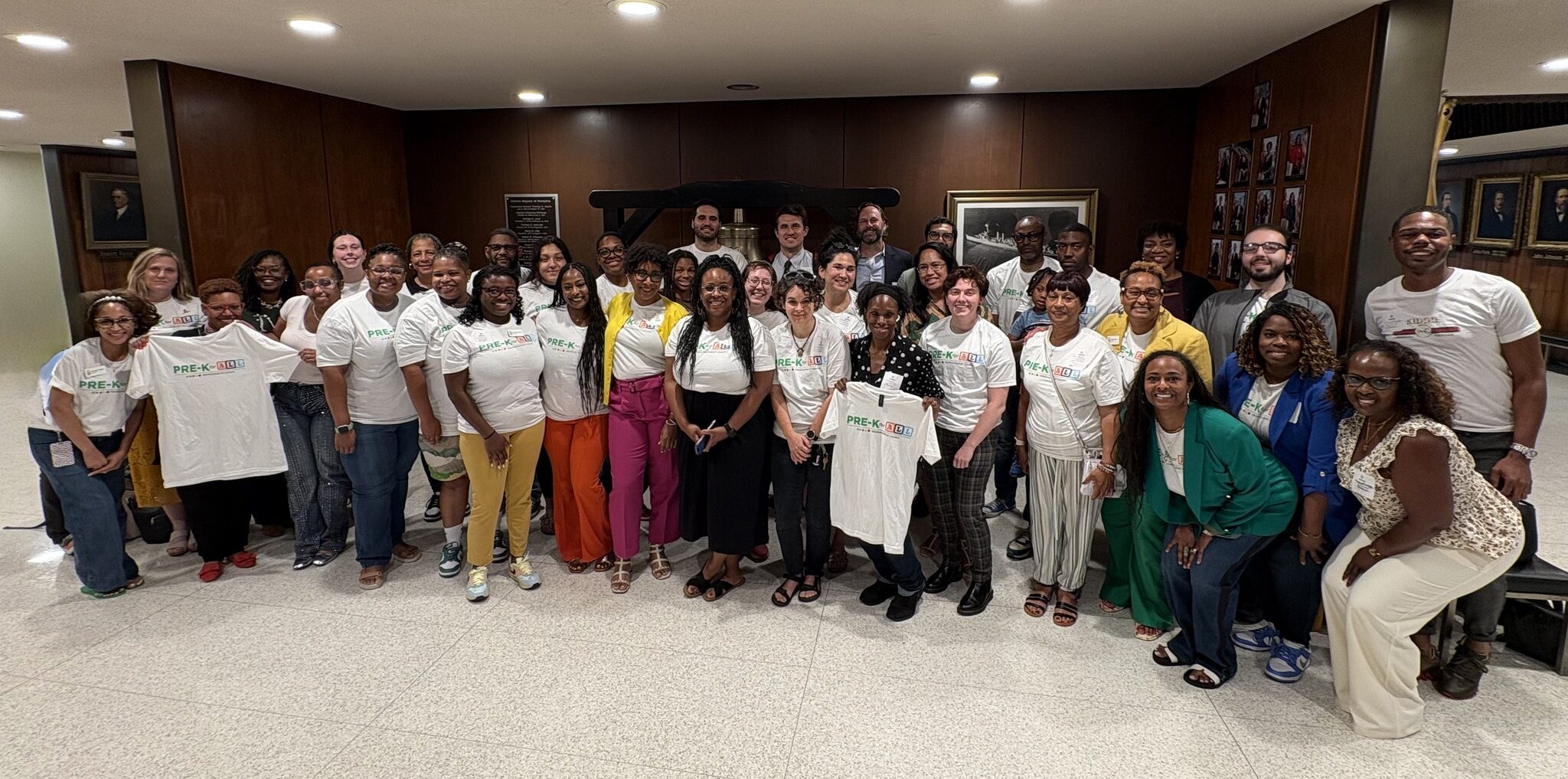
The work of more than a decade came together in June 2025, when both the Shelby County Commission and the Memphis City Council both voted unanimously to pass Pre-K for All. For the first time, Memphis and Shelby County offer free pre-K to all 3- and 4-year-olds, regardless of family income. “Pre-K for All is a historic step toward building a stronger future for children and families across Shelby County and strengthens our shared cradle-to-career pathway to economic mobility,” Jamilica said.
Previously, publicly funded pre-K programs required income eligibility, and seats were at risk when federal funding cycles ended. Pre-K for All changes that by empowering parents and guardians to pursue work or education knowing their children are in a high-quality program. The initiative started rolling out in phases beginning fall 2025, with First 8 Memphis at the center of implementation.
Behind the policy win is a clear record of results: 94% enrollment, 87% attendance, $16 million administered across 97 classrooms and more than 1,900 children served with more on the way.
Seeding Success’s story is a model for what place-based partnership can achieve when a community stays the course by building local proof, changing the systems that shape children’s lives and securing the policy and financing that make progress last. As the Cradle to Career Network works toward millions more young people on the path to economic mobility, Memphis shows what’s possible when a community decides that every child deserves a strong start.
More Stories of Impact
“Baltimore’s Promise, Maryland’s Partner”: How the ENOUGH Act Took a City’s Model Statewide