Stronger Future Spotlight: Seth from Alabama
Seth Walker did not set out to work in cybersecurity. Growing up in Lincoln, Alabama, in Talladega County, he had a plan to become an attorney. He liked to argue and he was good at it. And as far as he could see, that was where his future was headed.
Then a friend told him about something new, a cybersecurity pathway coming to their school. Seth resisted. “I had nothing to do with cybersecurity,” he says. But he listened and then he showed up. And during that first class, something shifted.
“I completely fell in love,” he says. “Not just with cybersecurity itself, but the continuous adaptation of having to learn more and to continuously grow and be better.”
What Seth did not know yet was that his school and the community around it had been building something intentional. Talladega County Schools, working alongside Digital Promise, had designed a pathway meant to do exactly what it did for Seth which was to open a door a student did not know existed and give them the belief to walk through it.
I completely fell in love. Not just with cybersecurity itself, but the continuous adaptation of having to learn more and to continuously grow and be better.
Seth Walker, University Student and Digital Promise Student Ambassador
A purposeful pathway is an intentionally designed progression that connects a young person’s experience in high school and beyond, linking education, training and career preparation to work with family-sustaining wages. It is a connected journey where each experience builds on the last. And it only works when the adults building it believe, before students do, that those students are capable of completing it.
The Gap Most Students Are Navigating Alone
Seth’s story begins with a feeling that is far more common than it should be. According to a 2025 Gallup survey, nearly six in ten middle and high school students say they feel prepared for the future. That still leaves 43% who do not. The students who are thriving share something in common: they have teachers who make them excited about the future and schools that give them the chance to do what they do best.
Nationally, fewer than one in three high schoolers say they know much about any post-secondary pathway other than a four-year college. According to the ECMC Group, 78% of Gen Z students want to determine their career plans before graduating. Only 13% feel prepared to do so. The gap between what young people want and what systems are delivering is a reflection of system design, and system design can change.
Cybersecurity sits in that gap. There are an estimated 8,000 unfilled cybersecurity jobs in Alabama and 750,000 vacancies across the country. The number of cybersecurity positions is expected to grow 33% by 2033. By 2031, Georgetown University’s Center on Education and the Workforce projects that 85% of good jobs, defined as those paying at least $43,000 a year, will require some form of postsecondary credential. For students in rural Talladega County, that opportunity was invisible until the pathway made it real.
Building the Program from the Ground Up
In 2023, Talladega County Schools joined Digital Promise’s inaugural Cybersecurity Pathways Cohort, one of 11 districts selected nationally to co-create a cybersecurity pathway in partnership with communities, industries and postsecondary institutions. During an edLeader Panel, Dr. Brooke Morgan, director of innovative learning at the district, shared how the program gave students real-world access to professionals and demonstrated the need for cybersecurity in their community. “We are a rural district with a high poverty rate,” she said. “This cyber track will make sure that all our students receive equitable education and career opportunities.”
The program now operates in four high schools across the district. Students learn how to problem-solve, analyze data logs and identify threats. Those who complete the program can go straight into the workforce in IT or network setup positions or choose to advance their skills at a two- or four-year college. They leave with a CompTIA Security+ certification, an industry-recognized credential that opens doors immediately after graduation.
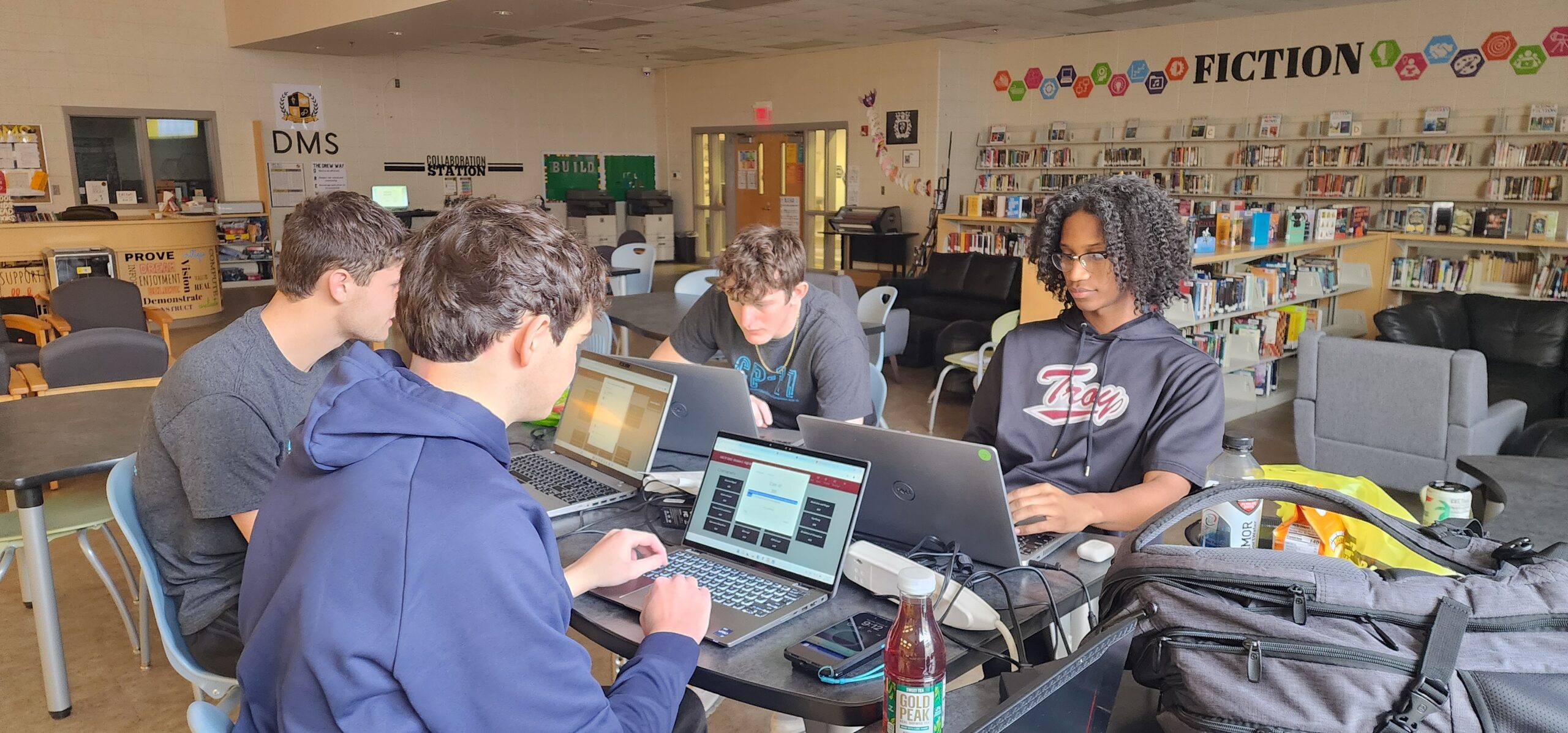
The program launched across three high schools and grew quickly. By its second year it had taught over 200 high schoolers cybersecurity fundamentals including cyber problem-solving, data analysis and incident response. The percentage of cybersecurity students who are chronically absent is lower than that of students not in the program, and teachers reported higher engagement across the board.
The program’s reach kept expanding. Talladega County joined six neighboring districts to form the East Alabama Regional Cybersecurity Alliance, known as EARCA. Backed by funding from the National Institute of Standards and Technology and a $2.5 million grant from the Walton Family Foundation, EARCA is now building a connected workforce pipeline across the region. Together the alliance reaches more than 35,000 students, more than half of whom qualify for free or reduced-price lunch.
What Belief Looked Like in Practice
The evidence of the program’s impact came fast. Before the end of his first semester, Seth had appeared on television three times. His class competed at the National Cyber Summit against 21-year-old college students from Ole Miss, Mississippi State and the University of Houston. Seth’s group of 16- and 17-year-olds beat them.
Then came the internships. Through partnerships made possible by Digital Promise, students were placed at electric companies, hospitals and schools, earning $15 an hour at a time when Alabama’s minimum wage sat at $7.25. “Going from 16- and 17-year-olds with hardly any jobs to getting paid $15 an hour, that was a big deal for us,” he says.
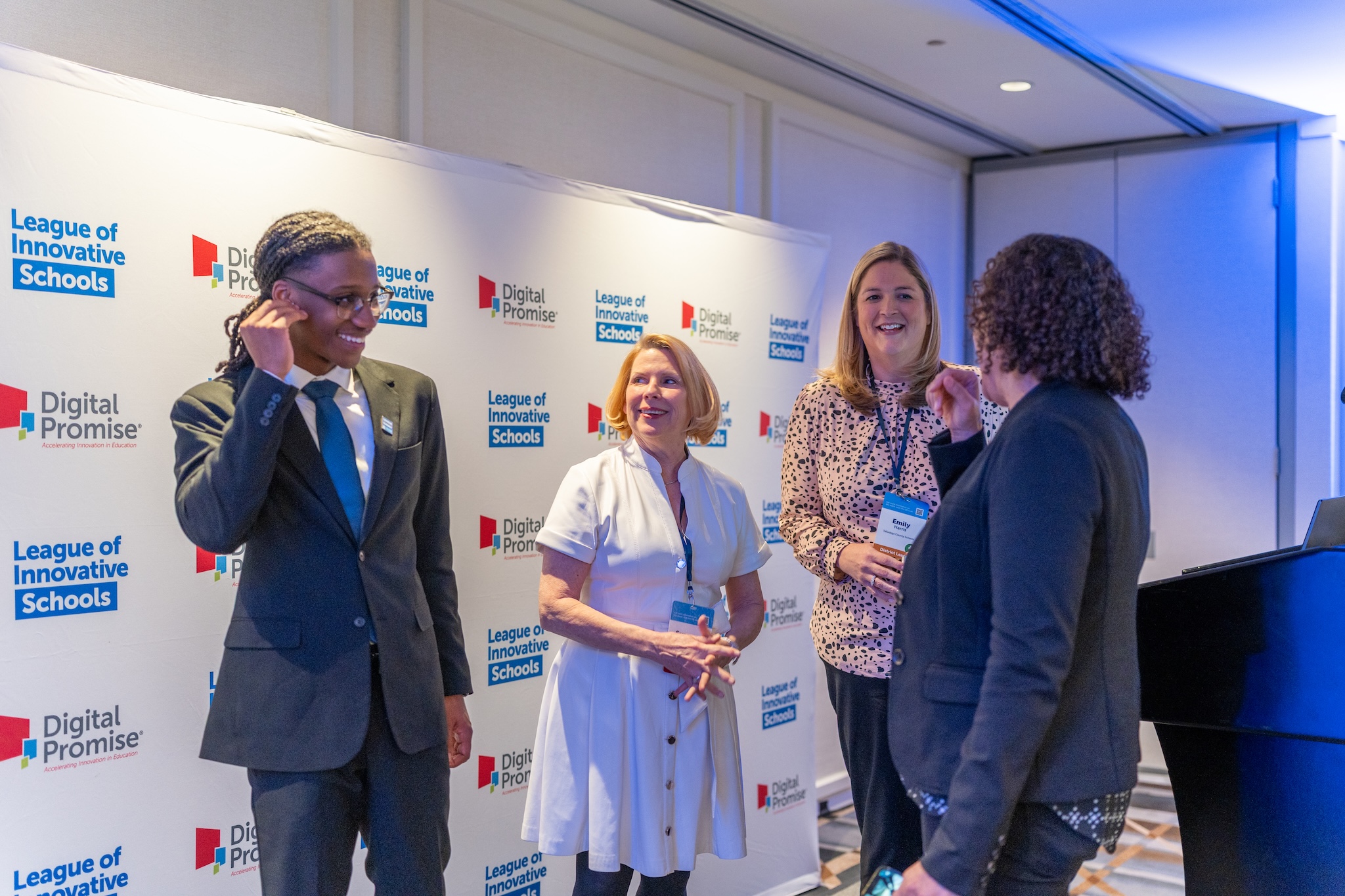
The first day of his internship, Seth went back to his superintendent and told her he could not do it. He was terrified. She told him they had prepared him and she believed in him. He went back.
“My classmates, my teachers, my superintendents, my CTE directors were the reason that I was able to believe that I could walk through the door they already opened,” he says.
By the time his class graduated, the results were measurable. Of more than 135 students, 98 earned a CRI, a Career Readiness Indicator requiring either an industry credential or a proficient score on a standardized assessment. Some students built on that foundation and earned two or three credentials including Microsoft certifications and CNAs. Students who complete the program leave with a CompTIA Security+ certification, an industry-recognized credential that opens doors to entry-level cybersecurity roles.
What Purposeful Pathways Make Possible
Seth’s story is one example of what becomes possible when the right infrastructure is in place. A purposeful pathway is an intentionally designed progression connecting a student’s high school experience to education, training and career preparation that leads to work with family-sustaining wages. It requires high-quality advising, accelerated coursework and career-connected learning, coordinated together so that each experience builds on the last. And it requires something harder to measure but just as essential: the belief of the adults around a student that they are capable.
When those elements come together, the impact extends well beyond a single student. It reaches families and communities. It breaks cycles. It builds the kind of economic mobility that changes what the next generation is able to imagine for itself. “There’s no story that special,” Seth says. “Because the opportunity should be given to all students.”
Purposeful pathways exist so that opportunity is not a matter of luck. So that every student has a door in front of them and someone beside them to help them through it.
More Stories of Impact
Earning While Learning: Baltimore’s Path to Postsecondary Completion