Stronger Future Spotlight: Tobius in Baltimore
Growing up in Northeast Baltimore, Tobius Nance had access to opportunities that felt ordinary to him. He had opportunities in school, in his neighborhood and eventually earned a full scholarship to the University of Maryland. His friends came from other parts of the city to attend his high school. He assumed his experience was everyone’s experience, but having access to Baltimore’s Promise’s data ecosystem would change that understanding.
In Baltimore, a young person’s zip code has long shaped their chances. For decades, the data that could have changed that sat scattered across dozens of agencies with no shared infrastructure to connect it. Baltimore’s Promise, a StriveTogether Cradle to Career Network member, set out to solve that problem.
“We spent a lot of time being really frustrated that we couldn’t answer critical questions around what was happening with young people in the city,” said Julia Baez, chief executive officer of Baltimore’s Promise. “We didn’t know how many opportunities they had. We didn’t know what interventions were leading to strong outcomes. We were making a lot of decisions without having real actionable data.”
Today, Baltimore’s Promise connects data across more than 100 organizations — from Baltimore City Public Schools to city agencies to community nonprofits. The Baltimore City Youth Data Scorecard tracks how young people are doing across more than 20 indicators from birth through early career. The Youth Opportunities Landscape maps every youth program and service across the city so partners can see where resources are concentrated and where they’re missing. And the Baltimore City Youth Data Hub links individual-level data across institutions, giving the city its first comprehensive view of a young person’s full journey.
Tobius has seen firsthand what that picture can reveal. “Looking at the data, I was shocked to see that different areas in Baltimore City had different opportunities,” he says. What he saw would eventually move him from the young person the data described to one of the people using it to drive change.
What the Data Revealed
Before joining Baltimore’s Promise, Tobius had only ever seen his slice of the city. The Youth Opportunities Landscape showed him the rest, cataloging youth programs across every Baltimore neighborhood and mapping where the gaps are widest, and what he saw didn’t match the city he thought he knew.
“When I got to Baltimore’s Promise, I started looking at the data, especially the Youth Opportunities Landscape. What I saw was that when I got to other regions in Baltimore, you would see fewer opportunities depending on the area,” he shared. “For example, someone wanted to do robotics in Cherry Hill, they have to go downtown, they may have to go over West. I really saw what communities were thriving in the city, what communities were not thriving and kind of the why — depending on demographics, income level, rates of poverty. It was very eye opening.”
Across Baltimore’s neighborhoods, child poverty rates range from 0% in Canton to 74.3% in Poppleton/The Terraces/Hollins Market. In Cherry Hill, nearly half of the children (49%) live below the poverty line. Across the city, Black or African American young people ages 16 to 24 are nearly two and a half times more likely to be out of school and out of work than their white peers.
The data also revealed how little existed for young people Tobius’s age. There were 2.3 times more opportunities for elementary-age children than for older youth ages 19 to 24, and 70% of opportunities that did exist for older youth were only available during the summer.
Young people had also been asking for something the data confirmed was missing: safe spaces focused on mental health and wellness. By 2023, the number of Health and Wellness programs had grown from 54 to 270, driven directly by feedback from young people themselves, according to the Baltimore City Youth Opportunities Landscape 2023 report.
He thought about his friends from high school, young men from other parts of the city who he had assumed were on the same footing — but the data told a different story.
“I was doing a lot of assuming,” he says. “I was like, you don’t want it. And when I looked at the data, I realized actually, no. These are the circumstances of where he lives. His zip code.”
From that moment, Tobius understood what data could do. It could replace assumption with clarity. And clarity, backed by community, could shift what was possible for young people in Baltimore.
A Voice at the Table
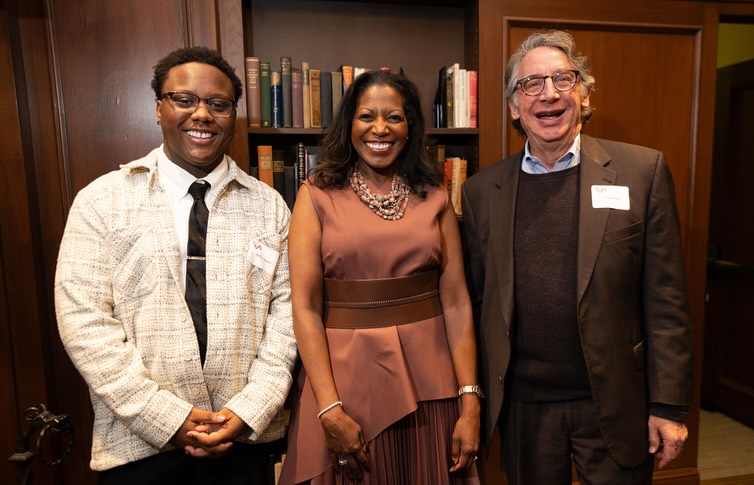
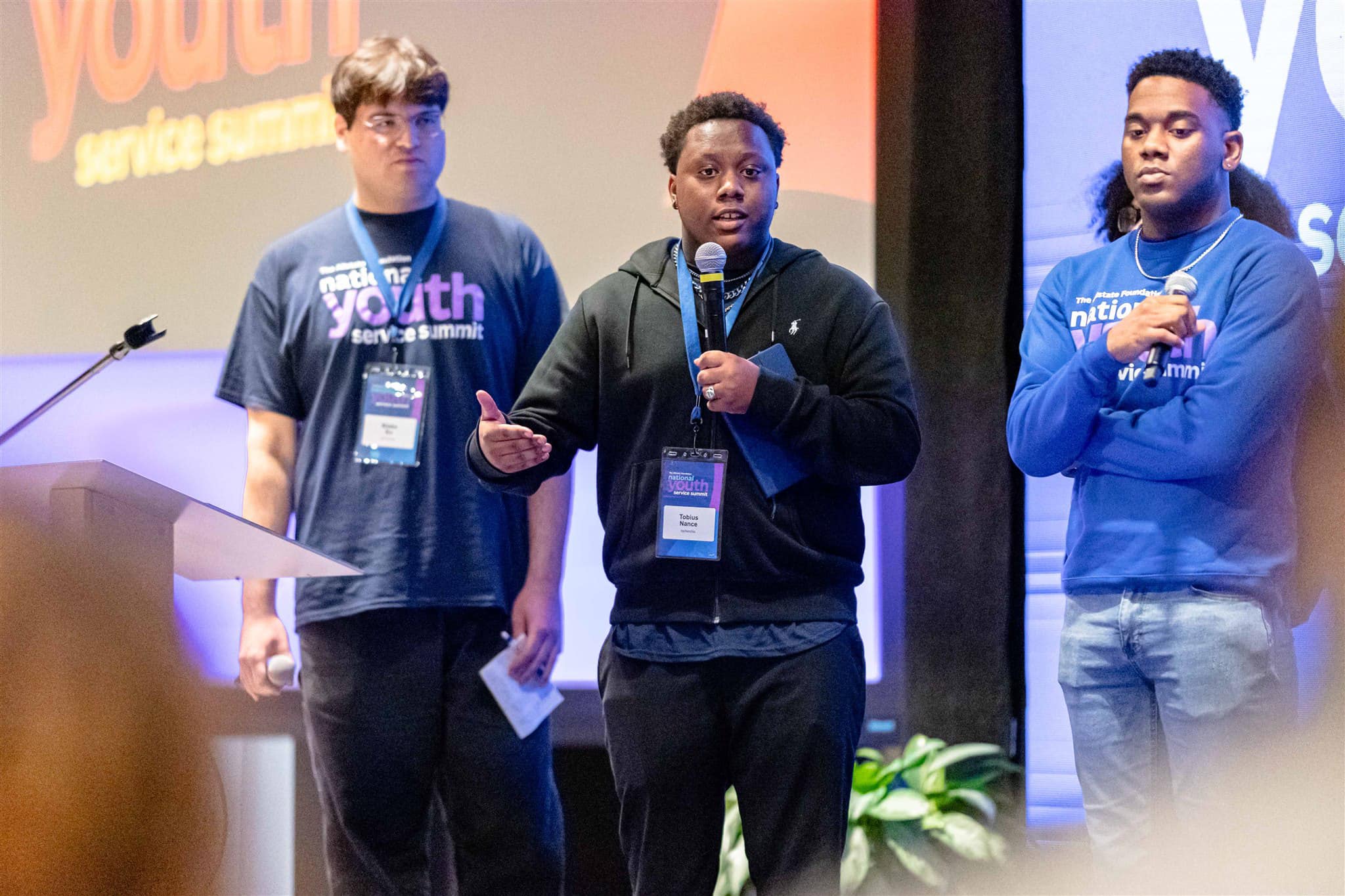
For Tobius, understanding the data was only the beginning. That curiosity and the advocacy work it sparked eventually brought him to become Youth Co-Chair of the Community Advisory Board at Baltimore’s Promise, representing the board at the Board of Directors level. The Community Advisory Board brings together Baltimoreans from across the city, half over age 25, half under, who ground the organization’s work in the realities of the neighborhoods it serves.
“All of us are from different walks of life in Baltimore City, different communities, different populations,” Tobius says. “We have firsthand experience with how Baltimore’s initiatives actually show up in our communities.”
Tobius also helped shape the Community Research and Action Committee (C-RAC), a governance body within the Baltimore City Youth Data Hub that centers community members and young people in decisions about how data is collected, interpreted and acted on.
Community voice was designed into Baltimore’s data ecosystem from the start. Theresa Jones, chief achievement and accountability officer at Baltimore City Public Schools, says that principle guided the work from the beginning.
“Community voice is critical,” Theresa says. “We’ve captured from the very beginning that youth in particular, as well as community members, are core stakeholders and should be a part of the governance structure, as well as the decision-making process.”
James Sadler, senior director of actionable data at Baltimore’s Promise, frames it as a matter of ownership. “We strongly believe that we need community members, including young people, to help with the interpretation of our data because in the end, it’s their data. It belongs to them,” James says. “They need to be an equal partner in this process.”
Data Into Action
Tobius understands that data is only as good as what it changes. He has seen it redirect funding, expose gaps that had long gone unaddressed and open doors for young people left out of the decisions that shaped their lives.
“A lot of times people just have their assumptions and they stay in their assumptions,” he says. “Data will show in real time what’s going on in the community. And I think people need to see that.”
Julia agrees. “Oftentimes what happens in communities is we work off of a lot of assumptions and good feelings, which can get us to some good places, but doesn’t get us to the sustainable change we need to see for young people over time,” she says. “What a data ecosystem allows us to do is to know better, to do better.”
For Assi Sy, a Youth Corps researcher at Baltimore’s Promise, that principle is personal. “Data points are young people’s experiences,” she says. “And having young people in the room provides more context to the data that is being presented, which is usually about their lived experiences. Having that context allows for a deeper understanding of what the data is trying to present.”
That change is visible in Baltimore’s results. The 2021 Youth Opportunities Landscape revealed that for every four program slots available to elementary-age children, there was only one for older youth ages 19 to 24. The data drove a coordinated push among city stakeholders, including Baltimore’s Promise’s Community Advisory Board, to expand programming for older youth. By the time the 2023 report was published, opportunities for older youth had more than doubled, from 7,952 to 17,482, narrowing the gap from four times to 2.3 times that of elementary-age youth.
That finding drove an 83% increase in summer funding for high school and older youth. Across the city, Baltimore’s Promise had mapped 2,725 program sites offering 124,115 opportunities, which gave partners, funders and advocates the clearest picture yet of where resources were flowing and where they were falling short.
The data also captured what young people themselves had been saying for years. Focus groups with youth revealed a hunger for safe mental health spaces and programming focused on well-being. Program providers and funders responded. By 2023, Health and Wellness programs had grown from 54 to 270, and the number of young people those programs reached had grown more than eight times, reaching 23,133 opportunities.
Giving Back What Was Given to Him
Growing up, Tobius was heavily involved in STEM programs, including FIRST Robotics and VEX Robotics. He just had to walk around the corner to get there. He didn’t think much about why that was possible until Baltimore’s Promise helped him see the map. Now he wants to make sure it’s possible for kids in every part of the city.
“I hope that my community gets more of a choice,” he says. “A lot of times, people just don’t have one. Where you’re born — what the data shows is you’ll end up a certain type of way. And I kind of want that to be skewed in another direction.”
That hope is the same vision that drives the whole organization. “Our vision is for young people in Baltimore to have everything they need to be who they want to be,” Julia says. “We want to make sure all of the opportunities, the resources, the people, the places are available to them.”
Baltimore’s Promise gave Tobius the data to see past his assumptions. Now he’s helping build a stronger city where no young person’s zip code determines their future.
More Stories of Impact
“Baltimore’s Promise, Maryland’s Partner”: How the ENOUGH Act Took a City’s Model Statewide