2026 Policy Summit: Moving Public Dollars Toward Cradle-to-Career Outcomes
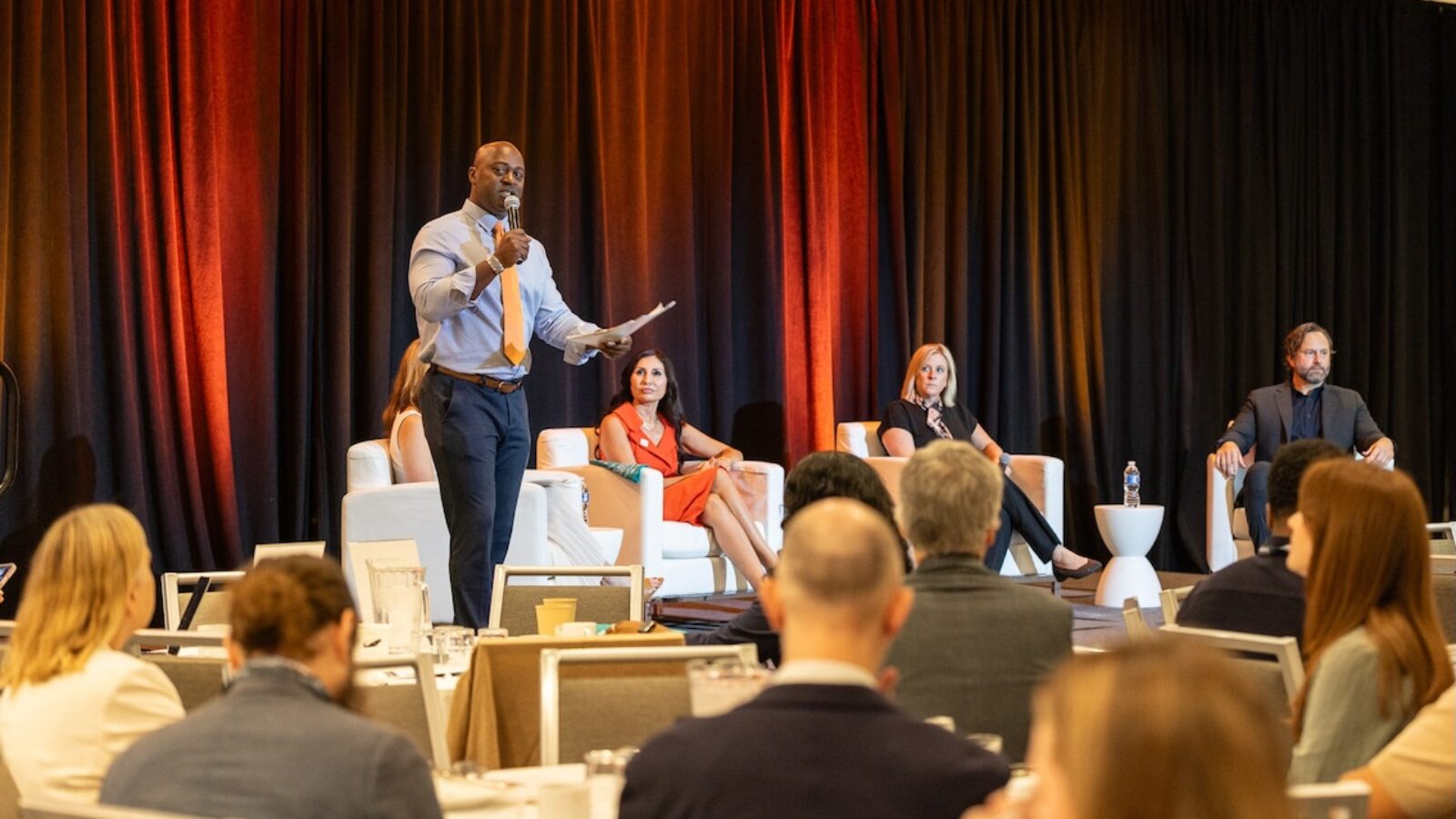
More than $150 billion in federal economic mobility funding is spread across 450 programs with no shared goals, metrics or accountability. Federal grant postings dropped 73% in 2025. And across the country, the policies meant to expand opportunity for children and families are at risk of being decreased or eliminated entirely. With so much in motion, more than 175 network members, national partners and investors gathered in Washington, D.C., from June 10 to 12 for StriveTogether’s annual State Coalitions Policy Summit. They came ready to act.
The three-day summit brought together coalitions from 16 states — groups of StriveTogether network members, advocacy organizations, legislators and other partners who coordinate to influence state-level policy, data systems and funding. Redesigned this year around collaborative working sessions, the summit gave coalitions time to do the actual work: refining shared policy priorities, connecting community data to specific budget lines, taking coordinated asks to Capitol Hill and leaving with concrete action plans. The through line across all three days was a commitment to turning priorities into something real and fundable.
Why Coalitions Focus on Policy
A single program can only improve outcomes for the children it reaches. A policy changes the rules for everyone. When a state like Ohio passes a literacy law, it reaches every student in the state, not just in one single classroom. When Utah passes SB165, it creates the legal infrastructure to align education, health and workforce systems statewide. That difference in scale is what drives the work of StriveTogether’s state policy coalitions.
The 2026 summit surfaced how much is made possible when that work succeeds. In New Jersey, 62% of fourth graders are not reading proficiently and 15% of students are chronically absent. In Wisconsin, 430,000 children are at risk of losing childcare access when federal stabilization funding expires, threatening provider closures and employer workforce pipelines across the state. These are policy gaps — places where rules, funding structures and accountability systems have not kept pace with what communities need. Place-based coalitions are uniquely positioned to close them, bringing different partners into different roles with some providing data, others activating community voice, and others building relationships with decision-makers.
With federal funding growing more uncertain and fragmented, StriveTogether made a strategic decision to concentrate on state infrastructure, creating more coalitions in more states so that place-based work could connect upward to shape state policy and flow back to improve local implementation. Communities that have figured out what works need state-level infrastructure to spread and sustain it.
Local impact will hit a ceiling without aligned state infrastructure. That’s the policy, data, communication and coordination that has to connect the state and local levels to actually scale what works.
Bridget Jancarz, vice president of network impact at StriveTogether
Washington, D.C.
From Priorities to Plans
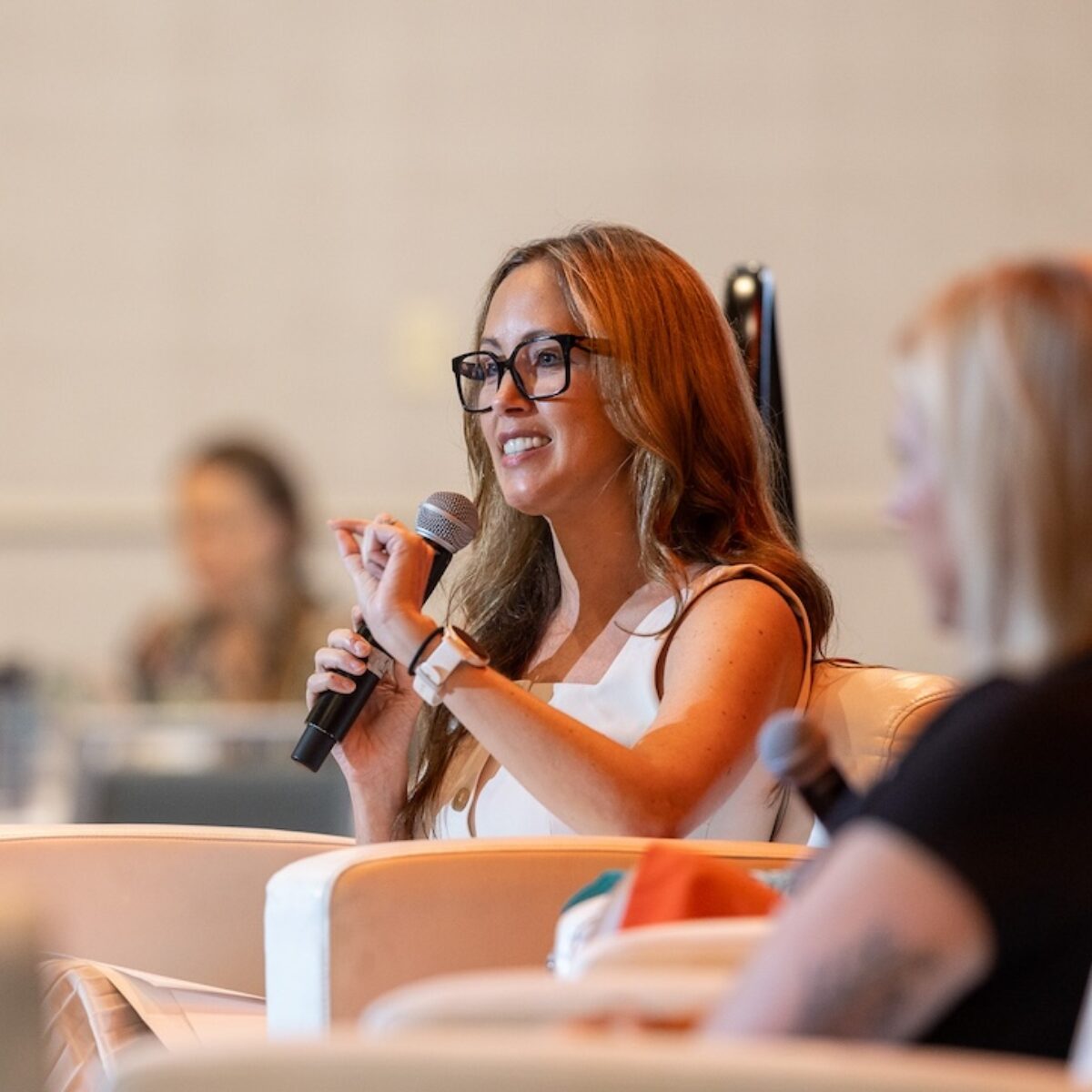
When local and state infrastructure are working together, communities can move from proving what works in one place to spreading it across an entire state. Proven local practices can become statewide accountability standards. Apprenticeship models with strong returns can become state budget line items. Coalitions with deep community trust become the implementation partners when new laws need to reach families. The conversation set a shared foundation for the work ahead: local impact is the starting point, and state infrastructure is what allows it to scale.
From there, the work of the summit began. Coalition teams spent time mapping priorities to real state funding lines across five budget pillars, Early Childhood, K–12 Education, Higher Education, Public Welfare and Workforce, and selected an influence category: Connect, Repurpose or New Resources. The goal was to leave with a specific, testable funding hypothesis tied to a 90-day action plan.
“If everybody walks out with a clear sense of what you do over the next 90 days — the conversations you need to have, the people you need to involve — and commits to keeping the momentum going when you get back home, that’s what success look like,” said Josh Davis, vice president of policy and partnerships at StriveTogether, in his opening remarks.
Three themes emerged from that work and each one points to a place where coalitions have both the evidence and the urgency to act.
The Work in Action
Policy change does not happen in a single conversation or a single session. It is the product of years of relationship building, community trust and outcomes data that coalitions bring to the table long before a bill gets a hearing. The wins celebrated at this summit did not begin in Washington. They began in communities, in research sessions with families, in meetings with agency officials and in rooms where coalitions made the case, often repeatedly, that place-based approaches produce results worth investing in at scale.
That is what makes this work different from traditional advocacy. StriveTogether’s state coalitions arrived on Capitol Hill with data on what is working, relationships with the decision-makers who can move dollars and a track record of implementation that gives funders and legislators reason to believe the investment will hold.
Across the 16 states that attended and numerous national organization, the wins, the legislation advanced and the dollars moved across the StriveTogether network this year reflect a network that is showing up and moving the needle on outcomes for children across the country. A few examples from the past year reflect the range of what place-based coalitions have been able to accomplish.
- In New York, coalition research on child care return on investment contributed directly to the Governor’s $4.5 billion commitment to universal child care. ROC the Future Alliance in Monroe County and Poughkeepsie Children’s Cabinet in Dutchess County were selected for $20 million in multi-year pilot funding, with a cross-county action plan due by January 2027 and recommendations to state partners by March.
- In Dallas, Texas, voters approved a $6.2 billion bond for Dallas ISD by a 3 to 1 margin on May 2, 2026, the largest school bond in Texas history, creating new schools, expanding pre-kindergarten and adding career and technical education facilities aligned with living wage pathways. Commit Partnership publicly championed the bond alongside civic and faith leaders, making place-based coalitions visible as civic infrastructure. Commit to Students, Commit Partnership’s 501c4 advocacy organization, led the campaign that secured the strongest voter approval margin for a Texas school bond of this size.
- In New Jersey, BRICK Education Network, New Jersey Promise and the Family Success Institute testified before the NJ Senate Subcommittee in support of S2617/A4295, the Community Recovery and Family Success Act. This bipartisan legislation would establish a statewide council to shift New Jersey’s social services from a reactive, crisis-driven model to proactive, community-based prevention, backed by $4 million for early support networks. With 62% of fourth graders not reading proficiently and 15% of students chronically absent, the testimony made the case that the current system responds to crises when it should be preventing them. The bill advanced with bipartisan backing, a meaningful step for a coalition that has spent years building the evidence and the relationships to make it possible.
Beyond the Summit
Passing a policy is the beginning of a different kind of work. When implementation goes well, a cycle takes hold: local practice generates data, which shapes policy, which creates new resources that flow back to communities to implement and scale. Implementation generates new learning, which shapes the next round of policy development. When that cycle is working, it is what systems change actually looks like: not a single win, but a continuous loop between what communities are learning and what state systems are doing in response.
“The moments of chaos across federal policy and state work are actually a huge opportunity,” said Mark Sturgis of Cradle to Career Tennessee. “We are the architects of what we’re building next. And if we build it right by designing from local communities up then gravity will push policy in our direction.”
That orientation, designing from communities up rather than from policy down, is what StriveTogether’s approach to policy has always been built on. The summit ended, but the work did not. States and network members left Washington with something more than inspiration: a strategy, a timeline and a coalition committed to seeing it through.
To learn more about StriveTogether’s policy work, visit our webpage. To explore the Policy toolkit, visit Policy toolkit: A guide to systems transformation through policy change.