Pathways Action and Learning Summit: The Work Ahead for Purposeful Pathways
According to a joint report by Gallup, the Walton Family Foundation and Jobs for the Future, only 1 in 3 high school graduates in the United States enters a pathway that leads to a living-wage job, and fewer than 3 in 10 Gen Z students say they feel prepared to pursue a pathway they are interested in. On June 3, 2026, more than 220 leaders from philanthropy, policy, education and regional intermediaries convened in Washington, D.C. to address what has become one of the most pressing challenges in education and workforce development.
The Pathways Action and Learning Summit, hosted by the Pathways Impact Fund, a national initiative at StriveTogether, brought together practitioners, policymakers and young people to examine what is working, where there are gaps in the field and what it will take to move from policy momentum to real implementation for students.
According to a Gallup study, college enrollment remains below its 2010 peak and nearly 40% of first-time undergraduates do not complete a degree within eight years. Meanwhile 78% of Gen Z students say they want to determine their career plans before graduating. Only 13% feel prepared to do so. A purposeful pathway, the intentionally designed progression connecting education, training and career preparation to work with family-sustaining wages, remains out of reach for most students.
The Gaps Driving the Urgency
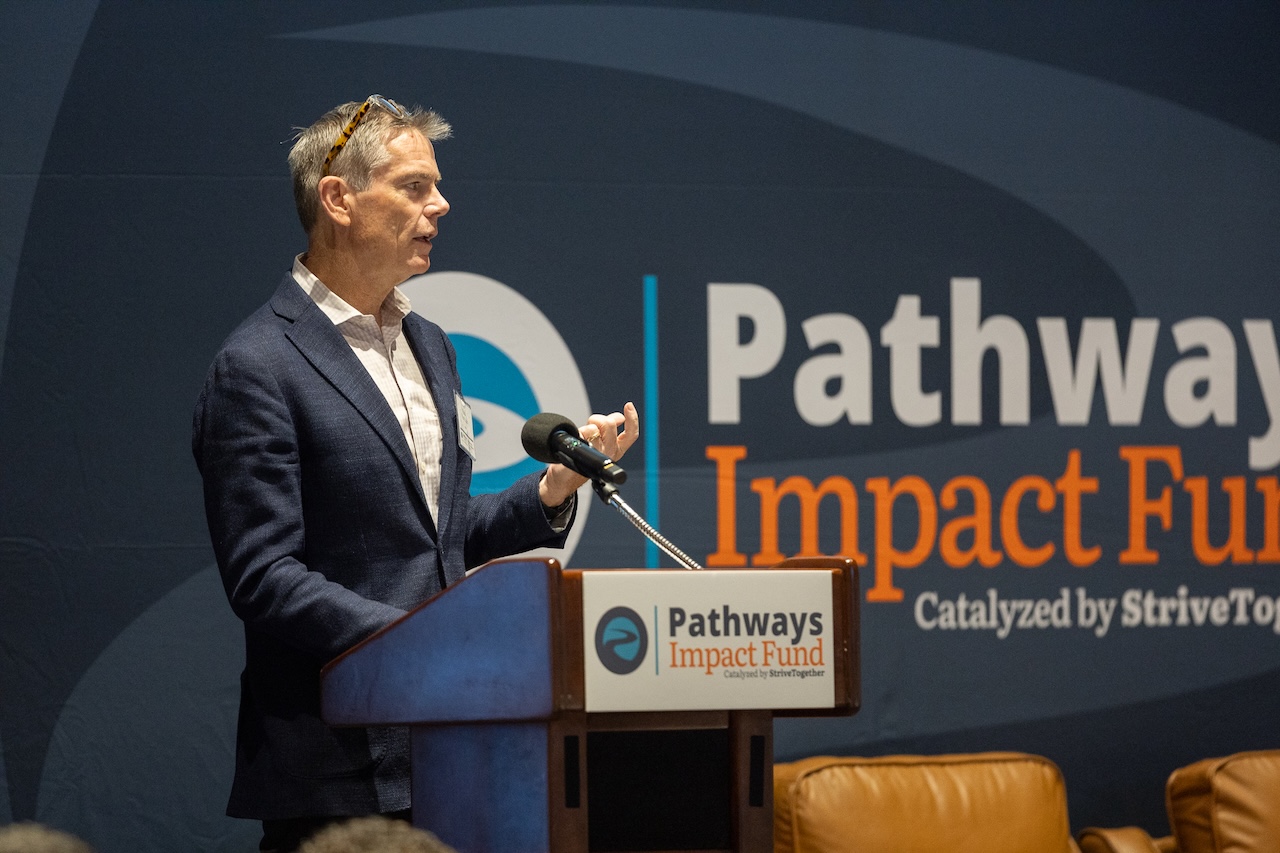
Paul Herdman, president and CEO of Rodel, opened the summit by identifying three gaps defining the current moment for young people.
- The education gap: Georgetown University research shows 85% of good jobs, defined as those paying $43,000 or more per year, will require education beyond high school by 2030. Currently only about 60% of recent graduates have that education.
- The experience gap: Organisation for Economic Co-operation and Development research across 10 countries found young people today are more educated than previous generations but significantly less experienced. They are three to four times less likely to be employed than older peers globally.
- The human gap: Centers for Disease Control and Prevention data from 2023 found that 4 in 10 students had persistent feelings of sadness or hopelessness. A young woman Paul met in a focus group in Australia captured the broader mood in one word: lonely. “You think we’re hyperconnected,” she said. “But we’re more disconnected than you know.”
The Gallup research reinforces all three. Students with a mentor, exposure to work-based learning and a clear sense of purpose are more likely to thrive, but those experiences are concentrated among students who already have access to strong networks and resources. Students with even one caring adult who encourages their goals are more likely to feel hopeful about their future, a relationship that is less common among first-generation students, those from lower-income households and those attending under-resourced schools.
A set of ideas, innovations and work that was happening was disconnected from each other. That is what the Pathways Impact Fund was built to change
John Garcia III, executive director of the Pathways Impact Fund
John Garcia III, executive director of the Pathways Impact Fund, pointed to fragmentation as the field’s defining challenge. “A set of ideas, innovations and work that was happening was disconnected from each other,” said John. “That is what the Pathways Impact Fund was built to change.” The fund’s inaugural Pathways Impact Collaborative, comprising 43 regions across 20 states and Washington, D.C., is designed to serve as a home for place-based intermediaries, organizations that connect schools, employers and community partners at the regional level to expand opportunity for students, to learn and problem-solve together.
Young people are ready, systems are not.
Two young speakers offered some of the summit’s most direct testimony.
Alex Edgar, founder of Youth 250, said he has spent several years as the youngest person in rooms like the one at the summit, often representing hundreds of thousands of young people with no real infrastructure to participate meaningfully. “Gen Z is not a problem to be solved,” Alex told attendees. “Young people are saying we are ready to contribute but our institutions are not supporting that process.”
Alex pointed to examples where institutions got it right by designing with young people rather than for them. The National Archives consulted students before building a new exhibit and learned they did not want another interactive screen, they wanted to take learning home. The result was a digital backpack with photos, videos and documents. Campus Compact ran a student design fellowship where young people co-designed an engagement model now used by institutions across the country. In both cases, young people were in the room from the beginning.
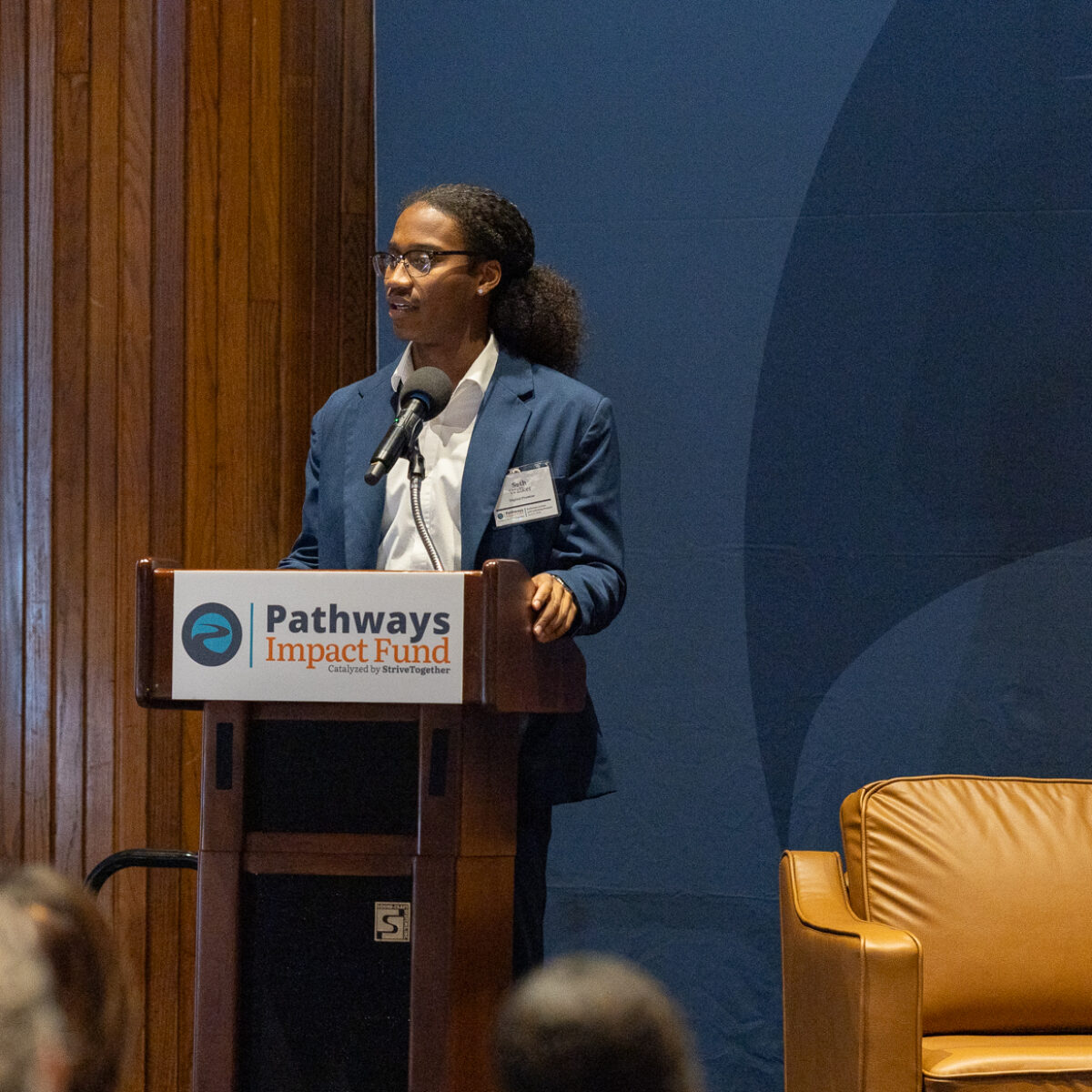
Access will open a door but it takes belief to get a student to walk through it. When you invest in people, progress follows.
Seth Walker, recent graduate from Talladega County, Alabama
The throughline in both accounts was consistent. The experiences that built confidence, purpose and direction made all the difference, but right now they are the exception, not the norm. Too many students never encounter them at all. The systems meant to provide them were never designed to reach every student. That is what the Pathways Impact Fund is working to change.
The Role of Intermediaries in Closing the Gap
Practitioners at the summit identified regional intermediaries, which are organizations that sit between schools and employers to manage relationships, logistics and coordination that neither side has the capacity to handle alone, as essential to closing the gap between what students need and what systems currently provide.
De’Niece Harrison-Hudson, director of Community Affairs at One America Financial, described her company’s experience. “Talent is universal, opportunity is not,” said De’Niece. “We wanted youth to understand what we do and how they can get into opportunities here.” One America Financial partnered with EmployIndy, an Indianapolis-based intermediary, to build a pathway program that started with five weeks of job shadowing across 13 departments and grew into a full apprenticeship pipeline. Students who entered at $18 an hour have stayed for six years and built careers they did not previously know were available to them.
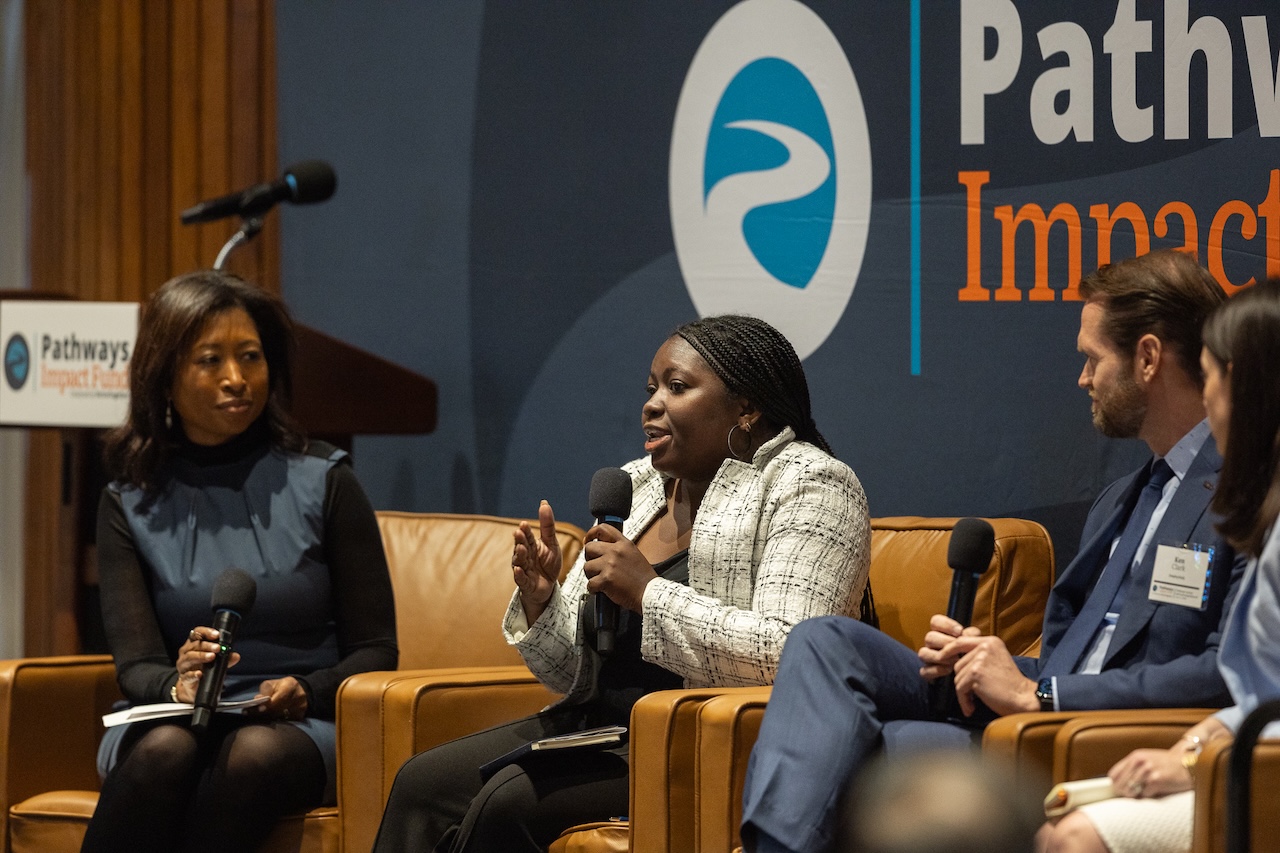
Panelists noted that exposure must precede interest. Students from communities with less social capital can only name interests they have already encountered. Learn to Earn Dayton pairs interest with aptitude, when a career navigator identifies a student’s natural strength in a field they have never considered, the possibilities expand. Research supports the urgency. Fewer than 1 in 3 high schoolers say they know a lot about any postsecondary pathway other than a four-year college and half or more say they know little to nothing about apprenticeships, certificates or internships.
Data infrastructure was identified as a critical gap. Without linking K-12 outcomes to postsecondary completion and employment, the field cannot determine whether students who earned credentials are earning family-sustaining wages. Kyle Westbrook, CEO of EdSystems, recalled a young man who stood up at a community meeting in 2015 with a certificate in hand, unable to find work that supported his family. “We failed that student because we didn’t have the data to know that program wouldn’t lead to family-sustaining income,” said Kyle. Without data, the field repeats what feels right instead of what works.
From Summit to Action
The summit made clear that the field has the knowledge, the practitioners and the urgency. What it needs now is sustained investment in the organizations doing the coordination work at the regional level and the infrastructure to connect them.
That is the work of the Pathways Impact Fund at StriveTogether. The Fund invests in place-based regional intermediaries, providing the resources, shared learning and national connectivity that allows communities to do this work at scale rather than in isolation. Through the Pathways Impact Collaborative, grantees are learning from each other, spreading what works and building the field’s collective capacity to reach more students with the experiences that change trajectories.
The goal is straightforward. More students graduating with the agency, credentials and connections they need to achieve economic mobility. The infrastructure to get there is being built now.
To learn more about the work of the Pathways Impact Fund, visit strivetogether.org/pathways-impact-fund.