Over 700 Leaders Gather in Baltimore to Keep a 250-Year-Old Promise to Young People

Two hundred fifty years after the Declaration of Independence promised life, liberty and the pursuit of happiness, that promise remains out of reach for too many young people. Only half of children today will earn more than their parents, and zip code largely determines the odds. That reality brought more than 700 leaders to Baltimore in September for the 2026 Cradle to Career Network Convening, the largest in the Network’s history.
Under the theme 4 Million Futures: Fulfilling our Promise for America’s Youth, StriveTogether network members, national partners, government leaders, funders and young people spent three days in plenaries, workshops and peer exchanges. A shared question ran through all of it: what does it take to turn local progress into lasting, system-level change?
What We Owe Our Young People
StriveTogether CEO Jennifer Blatz opened the convening by asking what it takes to make the country’s 250-year-old promise real for every young person. The answer is the steady, behind-the-scenes labor of building the civic infrastructure that makes opportunity possible. Past policies, she explained, reduced poverty — “But they didn’t build mobility.” She called them “top-down solutions, designed by well-meaning people far from the communities they were meant to serve.”
Place-based partnerships take a different path, connecting schools, employers, funders, government and families around shared outcomes, work Jennifer compared to roads and bridges, which “don’t build themselves.”
This work is not adjacent to the health of our democracy, it is a load-bearing part of it.
Jennifer Blatz, CEO of StriveTogether
2026 Cradle to Career Network Convening | Baltimore, Maryland
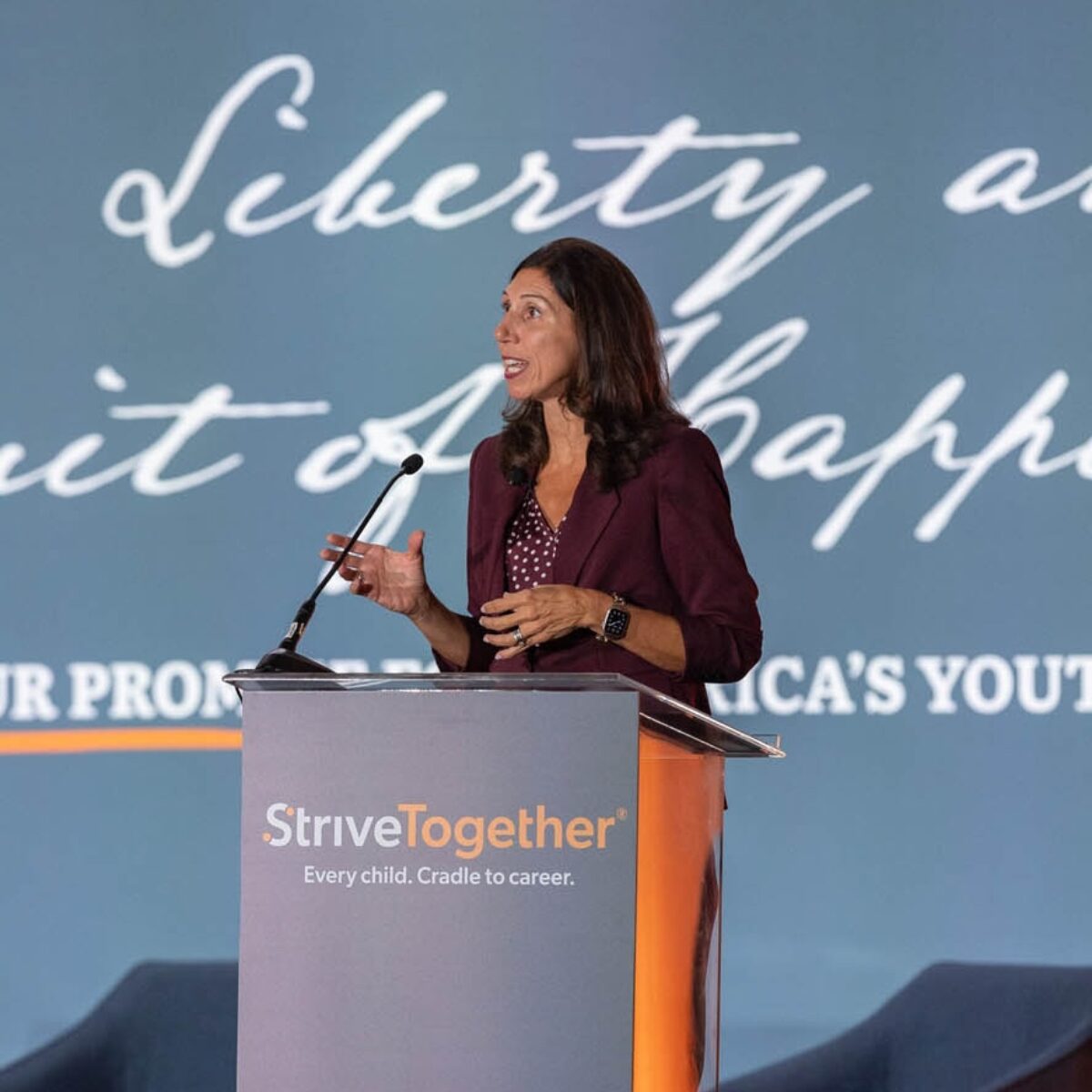
With the network at the midpoint of its 2030 strategy, Jennifer said the moment is an inflection point, not a finish line. “Four million futures isn’t someday,” she told the room. “It’s on our watch.”
The convening was grounded in the reminder that this work is not separate from our country’s prosperity. “This work is not adjacent to the health of our democracy,” Jennifer said, “it is a load-bearing part of it.” When communities feel that opportunity is out of reach, trust collapses and people disengage.
Keynote speaker George Packer, author of The Unwinding and Last Best Hope, described the same fracture. Americans under 30 years old rank 60th in the world in happiness, he noted. “I think much of the turmoil in the country today is a struggle for dignity, for recognition, for having a place in the national story,” he told attendees. Place-based partnerships respond to that need close to home. Building civic infrastructure around shared outcomes for young people is democracy at its most practical, because it means deciding together what we owe our children and then building the systems to deliver it.
Where Local Meets State
The opening plenary showed how local proof points can become lasting policy, an approach StriveTogether calls Nested Civic Infrastructure™. Contributing authors from Do What Works, a new bipartisan essay collection from Results for America, shared the stage.
In Tulsa, Mayor Monroe Nichols has set a goal of putting 15,000 more children on a path to economic mobility, backed by data and built to outlast any one leader. He co-wrote a chapter with his Republican predecessor on keeping that work going across administrations. Michele Jolin, CEO of Results for America, noted that 94% of voters want evidence to drive policy, regardless of party.
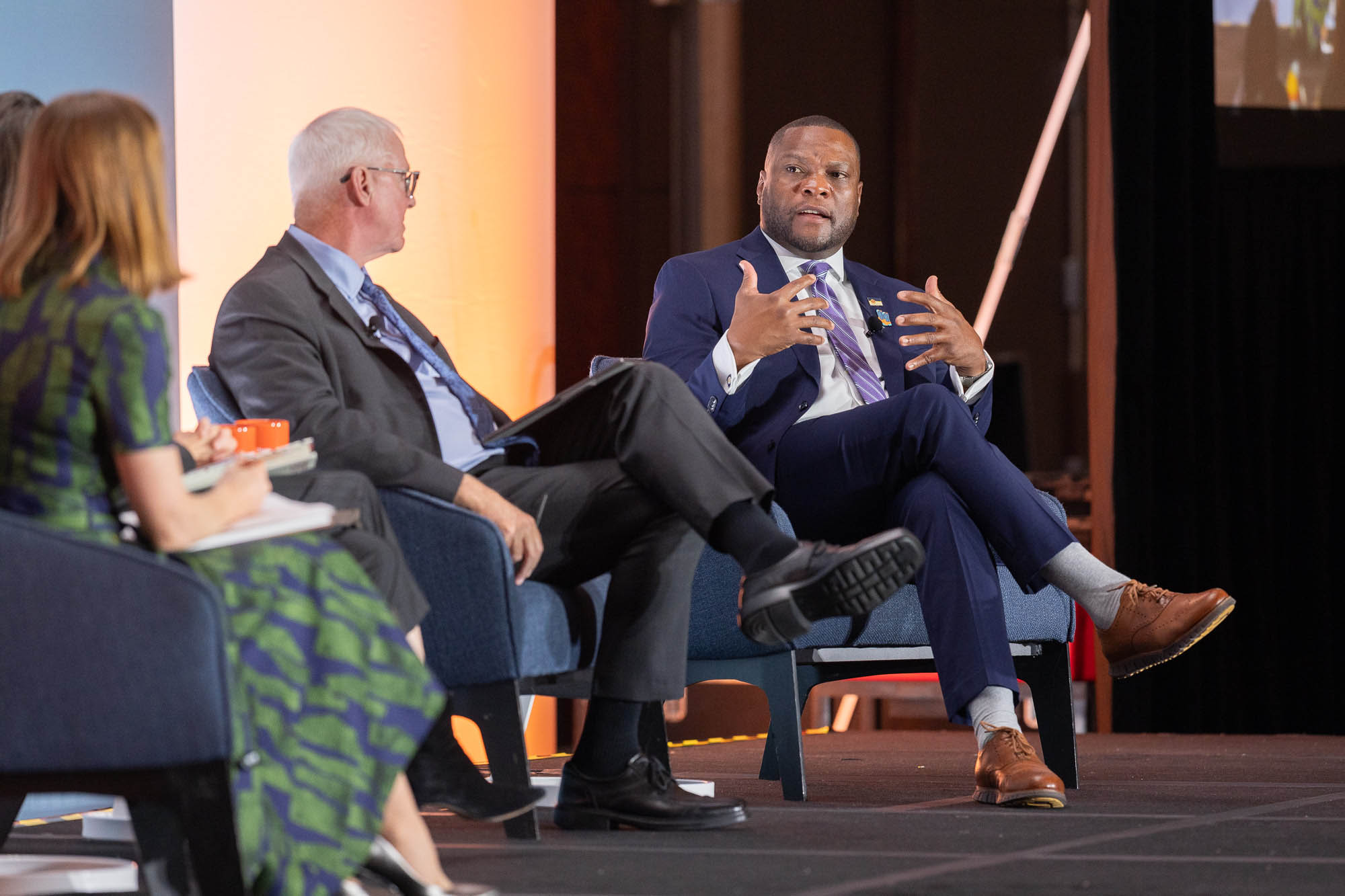
Nested Civic Infrastructure connects neighborhood, regional and state work into one system. Attendees heard how that idea is becoming policy in Ohio. After Learn to Earn Dayton and Summit Education Initiative proved the approach locally, the legislature passed Senate Bill 208, which will bring cradle-to-career partnerships to all eight of the state’s economic development regions. Steve Dackin, director of the Ohio Department of Education and Workforce, joined the opening plenary panel and is leading the rollout.
For some leaders, the work started a day early. State coalitions and the Network’s policy community of practice each held a pre-session on what it takes for policy progress to outlast any one administration. With midterms approaching and several governors’ seats in represented states possibly changing hands, state coalitions tested each milestone strategy against one standard: does it survive a change in leadership? The takeaway was that work lasts when a partner in the coalition owns it, not an administration.
That question of who carries implementation was also the focus of the policy community of practice at the convening. The policy community of practice brought state teams at the planning, early implementation and scaling stages together. Each team named the change its policy needs to create, built a scorecard to track who the policy reaches, whether it works, who adopts it, how well it is carried out and whether it lasts, and named what government and local partners each need from the other to move forward.
A panel of leaders from Tennessee, Ohio and Utah shared lessons from moving state legislation into practice, from proving the concept with a pilot first to building in evaluation early and starting design work before a contract is signed. Each team closed with a 90-day action plan and a public commitment.
Sessions Turn Data into Dollars, Pathways and Proof
Beyond the main stage, dozens of sessions put these ideas to work. Three themes stood out.
Turning data into dollars and policy:
Several sessions showed how members put data to work on funding and policy. On one panel, Cradle to Career Partnership Tucson, Aligned Impact Muscatine County, Learn to Earn Dayton, Marin Promise Partnership and Chattanooga 2.0 showed how fiscal maps and cost models reveal funding gaps and opportunities for investment. In a separate session, Chattanooga 2.0 shared how it braids Title I, philanthropic and other federal funding to build a citywide tutoring system. Cradle to Career Tennessee helped participants evaluate public investments and build funding strategies, and StriveTogether workshops guided teams from a local priority to a testable policy hypothesis.
Building pathways from classroom to career:
Workforce sessions focused on connecting schools, employers and communities. In one, the Healthcare Anchor Network joined Spartanburg Academic Movement, Oakland Promise and Promise Partnership Utah to describe a WorkAdvance pathway that trains residents for healthcare jobs, as the U.S. faces a projected shortage of two million frontline workers by 2034. In another, Growing Inland Achievement and its regional partners described aligning K–12, community college and workforce systems across the Inland Empire. Career-connected learning was the focus of another session, where shift_ed and cross-sector partners showed how an aptitude assessment can align students’ strengths with pathways.
Using data to find what works and spread it:
In its Bright Spots Early Literacy Project, Spartanburg Academic Movement used statistical process control to find schools where students experiencing poverty outperform their peers in third grade reading, then used listening sessions to learn what those schools are doing. Summit Education Initiative described how it built a data ecosystem across 17 districts, with data-sharing agreements that let it track more than 65,000 students. And Opportunity Boston shared how bringing community voice into its rebranding reshaped how it communicates and reports data.
Together, the sessions showed that the Network’s progress doesn’t come from any one model. It comes from communities learning from one another and adapting what works to their own place.
Baltimore’s Young Leaders Take the Stage
Young people shaped the conversation. In a plenary moderated by Maryland Senator Cory McCray, Baltimore Promise’s youth leaders described what it takes to move from inviting young people to the table to real, meaningful inclusion. “There’s a very big difference between just including young people and actually sharing your power with them,” said Camila Calero, a Community Advisory Board member and former Youth Grantmaker with Baltimore’s Promise.
The panel gave an example of how youth can make a difference. When Chanya Anderson, director of youth wellbeing and intergenerational governance at Baltimore’s Promise, asked students what they would change, one young man said he needed a driver’s license to complete his apprenticeship requirements. Young people then testified in Annapolis, and Gov. Wes Moore signed legislation that created a recurring $2 million state appropriation for driver’s education.
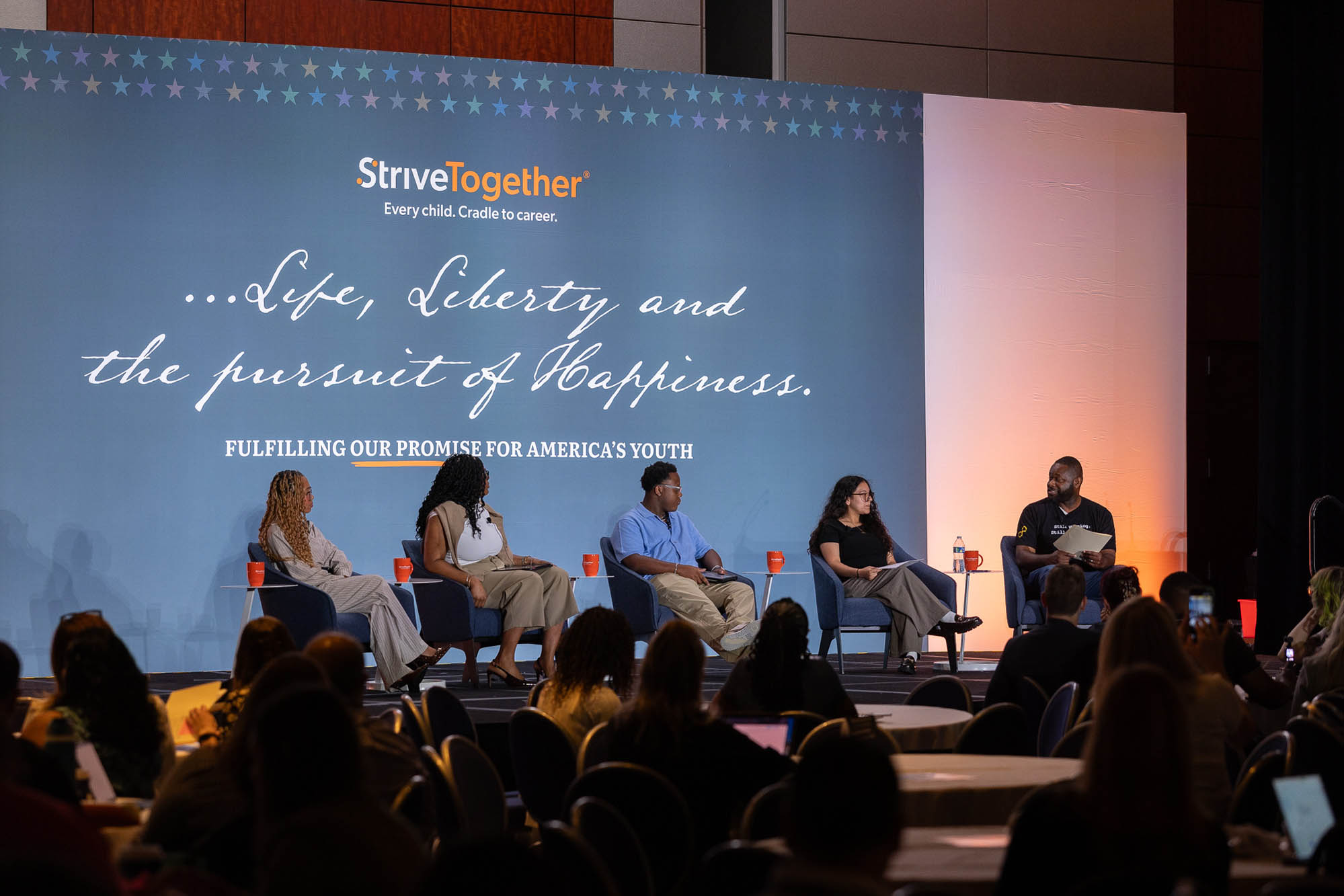
Former Youth Grantmaker Tobius Nance, who now serves on the Baltimore’s Promise board, helped direct more than $1 million to roughly 20 organizations. Panelists said this kind of leadership depends on compensation, transportation and food — and governance seats with real voting power.
Other sessions showed resident and family leadership in action. ImpactTulsa‘s Parent Advocates reached more than 9,000 families to boost pre-K enrollment, and United for Brownsville showed how a resident-led Family Advisory Board helped eliminate disparities in access to early intervention services.
Preparing for an AI World
Themes around AI sprouted up throughout the week, from a session on using it responsibly for added capacity to the closing keynote. Rebecca Winthrop of the Brookings Institution who co-authored The Disengaged Teen, a book on student engagement, shared findings from Brookings’ global study of generative AI and learning. The risks she described include cognitive “stunting,” weaker social development and lower motivation. Her research found that about half of middle and high school students say they are mostly in “passenger mode,” coasting through school, while fewer than 4% describe themselves as regular “explorers.”
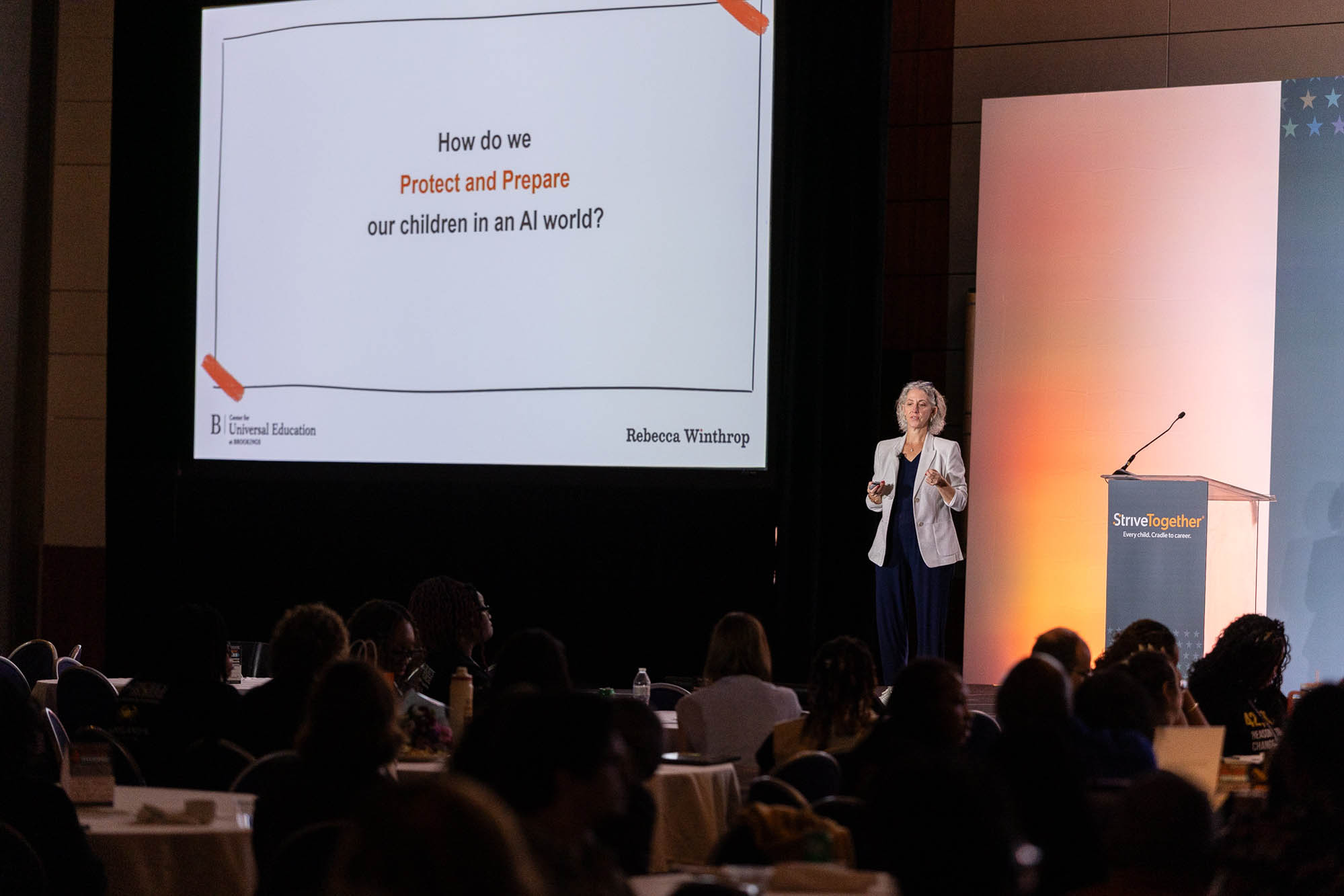
AI can help, Rebecca said, when it is used narrowly, as a tool that teaches rather than tells. She urged the Network to prosper, prepare and protect: redesign teaching and learning, build AI literacy for young people and adults, and put common-sense safeguards in place. “If we’re not at the table,” she said, “we’re definitely going to be on the menu.”
When Jennifer took the stage to close the session, she returned to that framing, noting she had deliberately put ‘prosper’ first, encouraging the network to approach this technology the way it approaches everything: by choosing action over fear.
Three Leaders Honored as the Network Heads to Austin in 2027
The convening closed with StriveTogether’s three annual awards, which recognize leaders and partnerships that show what the Network makes possible.
Bill Henningsgaard Cradle to Career Champion Award:
Dr. David James, Summit Education Initiative (Akron, Ohio)
Dr. James was honored for a career spent bringing an entire community together around a shared vision for students. He spent 13 years as superintendent of Akron Public Schools, where he led the rebuilding or renovation of every APS building. He now serves as executive director of Summit Education Initiative.
Cheryl Broadnax Award for Innovation and Results:
Dr. Sonja Santelises, Baltimore City Public Schools
Dr. Santelises was recognized for her deep partnership with Baltimore’s Promise to build critical civic infrastructure across the city, including a shared data hub.
Nancy Zimpher Courage in Leadership Award:
Rocky Mountain Partnership Cradle to Career (Colorado)
The partnership was honored for deepening partner commitments through shared accountability, and for centering the leadership of young people. Its work exemplifies the courage this award celebrates.
The 2027 convening will be held September 22–24, 2027, in Austin, Texas, in partnership with E3 Alliance.
Learn how to put these ideas to work in your community with StriveTogether’s free tools, explainers and courses.
Tools, explainers and courses
Why Postsecondary Completion Matters
Why It Matters: StriveTogether® Collaborative Improvement™