Why It Matters: StriveTogether® Collaborative Improvement™
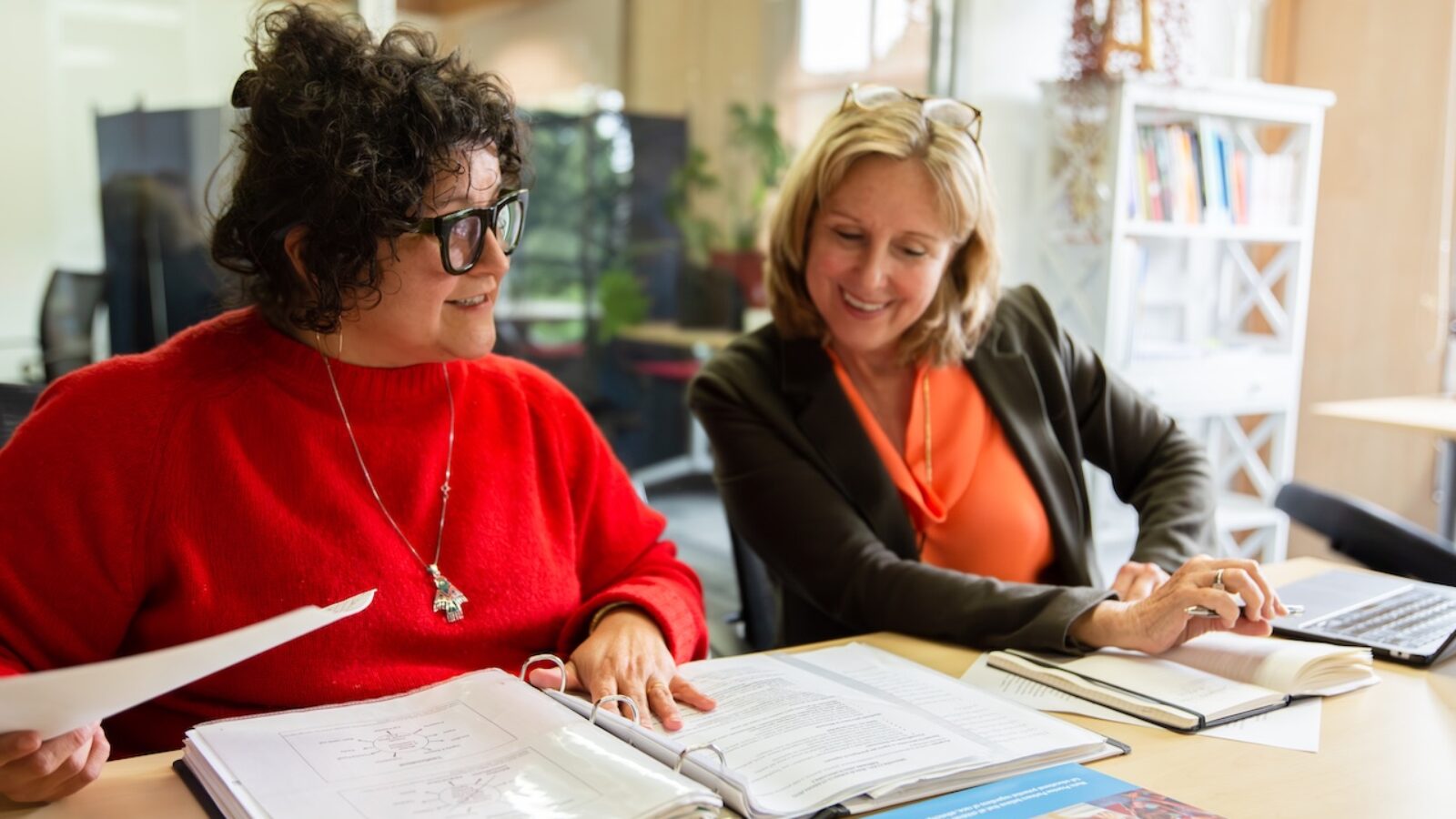
Communities across the nation are trying to solve problems like chronic school absences, low reading scores and food insecurity. Most of the time, different organizations work on these problems separately. A school district runs its own program, a nonprofit runs another and a health clinic runs a third. Each group means well, but the efforts rarely connect and progress stays slow.
Collaborative Improvement is a different way of working. Instead of one organization acting alone, multiple groups in a community come together around a shared goal. They test small changes, study the data closely and adjust their approach based on what actually works. Over time these small, tested changes add up to real, measurable progress for kids and families.
The approach, known as StriveTogether® Collaborative Improvement™, was developed by StriveTogether, a national network that partners with communities across the country to improve outcomes for young people from birth through career. StriveTogether built Collaborative Improvement by combining ideas from two different fields: the broader world of social change work and the health care industry’s long-standing approach to continuous improvement. The result is a practical method that any community can use, whether the partners involved are school leaders, case managers, nonprofit staff or local government officials.
The approach has been studied directly. From 2015 to 2017, the research firm Equal Measure surveyed more than 4,000 partners across 14 communities in the StriveTogether network to track how this kind of cross-sector, data-driven work takes hold over time. The study found a consistent pattern: communities built their collaborative capacity in stages, tending first to a shared vision and shared data use before moving on to harder shifts like changing everyday practice. Looking at 10 of those communities, Equal Measure also found that the ones making the strongest gains in this collaborative capacity tended to see the biggest improvements in the specific outcomes they were targeting, like preschool attendance or FAFSA completion rates, suggesting that the stronger a community gets at working this way, the more progress it makes for kids.
From Idea to Evidence
The starting point of Collaborative Improvement is recognizing that change only happens through action. A community cannot improve something by planning forever. It has to try something, watch closely and learn from what happens.
But before people can test solutions, they have to understand why the problem exists in the first place. Collaborative improvement asks communities to look honestly at the systems around young people — things like schools, transportation, healthcare and social services — and ask where those systems are failing and who is being left out. The problem is rarely one broken program. More often it is a set of policies, practices and spending decisions that together produce unfair results. The work then becomes changing those conditions through shifts in policy, practice, funding or power, rather than adding new programs on top of a system that was never built to serve everyone.
This is why finding the root cause comes before testing any solution. People have to know what is actually driving the problem before they can fix it. Take chronic absenteeism for example. Students might be missing school not because they do not want to be there, but because bus routes do not reach their neighborhood, their family has no washer or dryer at home so the student has no clean clothes to wear, or school simply does not feel welcoming. Each cause calls for a different response. That might mean adjusting bus routes, putting washers and dryers in schools or changing how staff treat and talk to students. No matter how well a strategy is designed, it will not work if it is aimed at the wrong problem.
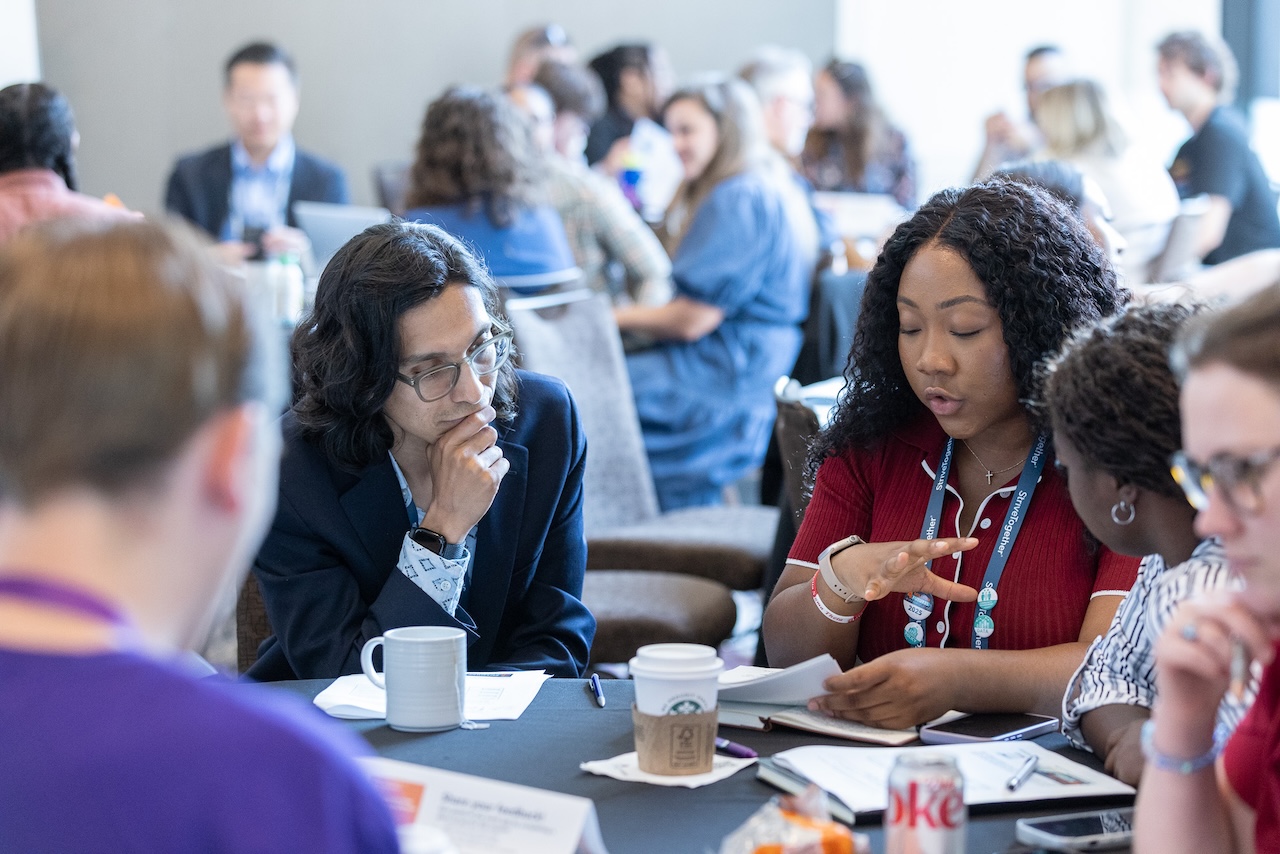
Once the root cause is clear, this is where small tests of change come in. Rather than rolling out a massive new program across an entire city and hoping it works, people pick one strategy, try it with a limited group and watch the results before deciding what to do next. If it works, they expand it. If it does not, they adjust the approach or drop it and try something else. This cycle repeats again and again, which lets communities learn quickly without wasting time or money on approaches that fall flat.
This testing cycle is often called Plan, Do, Study, Act, or PDSA for short. People plan a small change, do it on a small scale, study the results using data and act on what they learned by keeping, adjusting or abandoning the strategy. The PDSA cycle is the engine that drives collaborative improvement forward, and it sits at the center of nearly everything else the methodology does.
Four Elements That Hold It Together
Collaborative Improvement rests on four connected elements. Each one plays a distinct role, and together they shift the focus from a single organization trying to fix a problem on its own to multiple organizations working as one system.
- Data Disaggregation & Targeted Strategy: Changing systems to improve outcomes for every child drives the work. Communities are asked to look closely at who is being left behind and why, then tailor strategies for the youth and families facing the greatest barriers rather than applying the same approach to everyone. Teams study data broken down by group, listen to the people most affected by a problem and design strategies meant to connect people to opportunity and remove the structural barriers standing in the way.
- Results Count: Results Count is a leadership framework created by the Annie E. Casey Foundation. It helps leaders move from good intentions to real action by building five habits: staying focused on data and results, recognizing how factors like race, class and culture shape outcomes and opportunities, using their own influence to drive change across systems and sectors, developing the adaptive leadership skills that complex community change requires and building the kind of trust that lets groups align their actions and use resources strategically.
- Continuous Improvement: Continuous improvement is looking at what is working and what is not, understanding why things are working or not and then making small, steady changes instead of waiting for a big fix. It gives communities simple tools for setting goals, testing strategies and spreading what works to other parts of the community. Both numbers and stories matter here, since direct feedback from families and frontline workers often reveals why a strategy is or is not landing.
- Human-Centered Design: Human-centered design keeps the people most affected by a problem at the center of the solution. Instead of designing programs for families from the outside, teams involve parents, students and frontline workers directly in shaping and testing strategies. This element also provides tools for collecting, analyzing and using qualitative data to inform action and refine the process as it unfolds.
These problems are rarely caused by any single institution. Chronic absenteeism, for example, can be shaped by overlapping systems that include schools, health care, housing and family support services. Fixing it requires those systems to work together rather than in separate lanes, which is exactly what these four elements are designed to support.
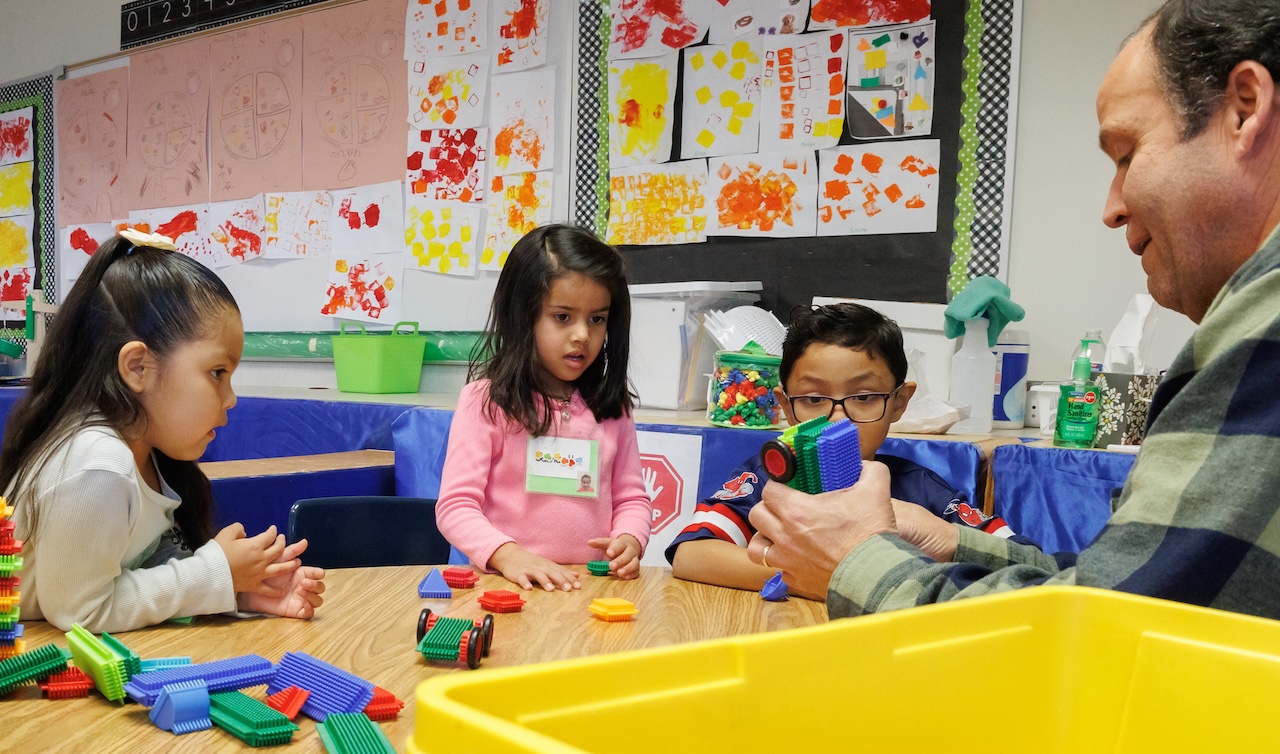
How It Works in Practice
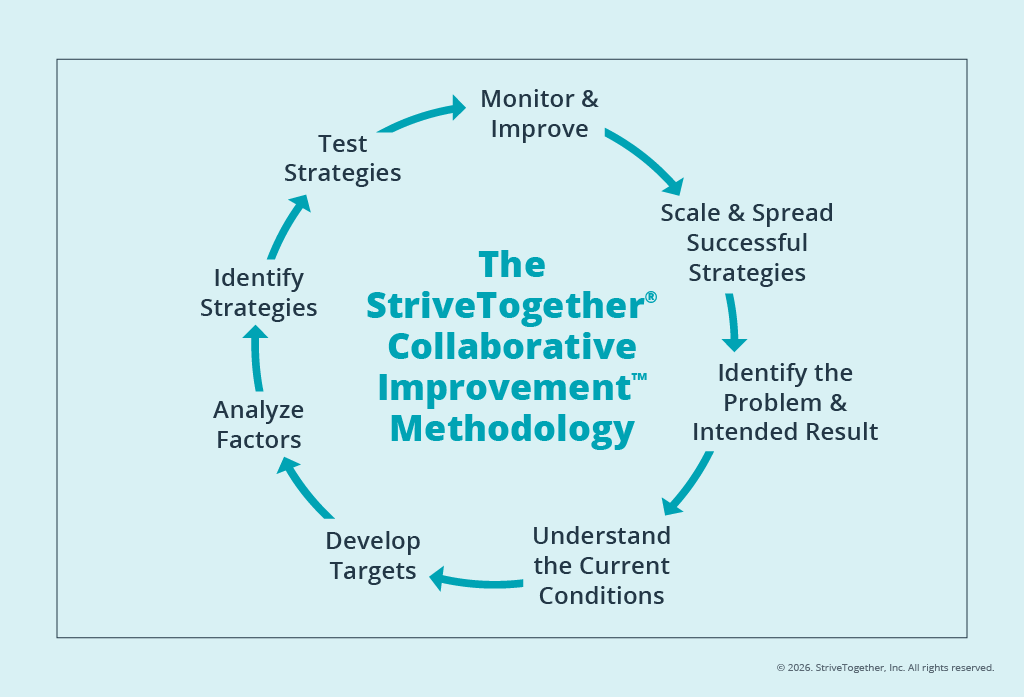
StriveTogether breaks the Collaborative Improvement process into eight steps that guide a community team from a vague concern to a tested, scalable solution.
- Agree on the result: The team first agrees on the overall result it wants to achieve and how it will know if that change has occurred.
- Study current conditions: From there, the team studies current conditions, reviewing qualitative and quantitative data broken down by group to understand the size and shape of the problem and who it affects most.
- Set a target: With that picture in hand, the team sets a specific, measurable target for the population it wants to help, including both a long-term goal and a one-year target.
- Conduct factor analysis: The team digs into the root causes behind the data instead of settling for surface-level explanations. This step is about finding systemic root causes, meaning the policies, practices and structures that have created the problem, not the behaviors or choices of the people experiencing it. A community dealing with low kindergarten readiness, for example, is not asking what is wrong with families. It is asking what the system around those families is failing to provide.
- Identify strategies: Once root causes are clear, the team identifies strategies, choosing both broad and targeted approaches aimed at those causes rather than searching for one perfect fix.
- Test: With strategies in hand, the team moves to testing, using small PDSA cycles to try out ideas and adjust them based on whether they produce the desired impact.
- Monitor and improve: People take time to reflect on and learn from what they are testing, looking at what worked, what did not and why. Those lessons shape how they adapt and adjust their approach before moving from a small test to a full-scale effort.
- Scale and spread: The final step is to scale and spread successful strategies, making clear, measurable commitments to expand what worked and sharing those lessons with the rest of the community.
These steps are not meant to be followed once and forgotten. Communities cycle through them again and again as they tackle new problems or refine their approach to existing ones. In Salt Lake City, Utah, for example, StriveTogether and the United Way of Salt Lake used this exact process to tackle chronic absenteeism among students in kindergarten through third grade. Teams made up of parents, school staff and community volunteers ran a series of learning sessions across three school districts, tested strategies and discovered that students with disabilities often did not feel like they belonged at school, which was contributing to their absences. After testing approaches aimed at building a stronger sense of belonging, chronic absenteeism among those students dropped sharply compared with the prior year, and the share of third graders meeting or exceeding reading benchmarks rose from 8% to 17%.
What This Makes Possible
Collaborative Improvement offers communities a practical alternative to working in isolation. By bringing multiple organizations together around shared goals, building a common language for using data and testing small changes before scaling them, communities can make real progress on problems that have resisted simpler fixes for years.
The Salt Lake City results show what is possible when school districts, nonprofits and community members commit to this kind of disciplined, collaborative testing. The work also built something less visible but just as important: a culture of testing ideas and using data to guide decisions, a mindset that has since carried over into other challenges those communities are tackling, including food insecurity and gaps in the social service system.
Collaborative Improvement is not a quick fix or a single program. It is a way of working that helps communities learn faster, adapt more effectively and ultimately deliver better outcomes for the young people.
To learn how your community can apply this approach, take the Onboarding for Collaborative Improvement Learning Journey on the Training Hub.
Additional Resources
Why Postsecondary Completion Matters
Why It Matters: StriveTogether® Collaborative Improvement™